The Invisible Signs of Burnout You Might Be Missing
3 November 2026
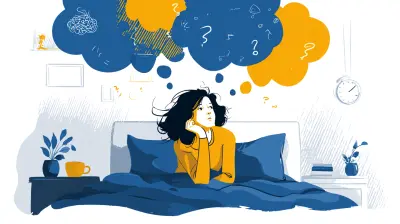
Burnout rarely announces itself. It does not arrive with a dramatic collapse or a single breaking point you can point to later. More often, it settles in slowly, disguised as ordinary tiredness, a dip in motivation, or a personality quirk you start attributing to yourself. By the time most people recognize what is happening, they have been running on empty for months, sometimes years.
This matters because the visible signs of burnout, the ones we associate with exhaustion and cynicism, tend to show up late. The earlier signals are subtle, easy to rationalize, and frequently mistaken for something else entirely. Missing them has a cost: prolonged exposure to chronic stress reshapes how you think, how you relate to people, and how you evaluate your own competence. Catching the invisible signs early gives you options. Ignoring them narrows those options down to one, which is usually a forced stop.
This article is about those early, quiet signals. It is written for people who suspect something is off but cannot quite name it, and for anyone who manages or cares for others and wants to recognize distress before it becomes a crisis.
Why Burnout Hides in Plain Sight
Burnout is a syndrome resulting from chronic workplace stress that has not been successfully managed, according to the World Health Organization's classification. The emphasis on "chronic" and "not successfully managed" is important. Burnout is not a reaction to a bad week. It is the accumulated result of sustained demands that outpace available resources, whether those resources are time, autonomy, support, or a sense of meaning.The reason it hides so well comes down to three mechanisms.
First, adaptation. Humans are remarkably good at normalizing gradual decline. If your energy drops by two percent a month, you do not notice the change from January to December because each day feels roughly like the last. You only notice when you compare yourself to a version of you from years ago, and most people never make that comparison.
Second, cultural framing. Many workplaces reward the behaviors that precede burnout: staying late, skipping breaks, responding to messages at all hours, treating rest as a reward rather than a requirement. In that environment, the early signs of burnout look like commitment. The person who cannot stop thinking about work is praised for dedication until the day they cannot get out of bed.
Third, misattribution. Early burnout symptoms overlap with depression, anxiety, thyroid dysfunction, sleep disorders, and ordinary life stress. People naturally reach for the most familiar explanation. "I am just tired." "I have always been a bit of an introvert." "This project is just intense right now." Each explanation is plausible in isolation, which is exactly why the pattern goes unrecognized.
The practical takeaway is that self-assessment based on how you feel on any given day is unreliable. What works better is tracking patterns over weeks and months, and knowing which specific changes to watch for.
The Early Cognitive Signs Most People Overlook
Cognitive changes are often the first invisible signs, and they are also the easiest to dismiss because they are intermittent.Decision fatigue that looks like indecision
Everyone has moments of indecision. The burnout signal is different: it is a shrinking tolerance for any decision, including trivial ones. Someone who once planned meals, booked travel, and managed a household budget without effort starts finding these tasks genuinely draining. They postpone small choices, default to whatever requires the least deliberation, and feel a flash of irritation when asked "what do you want for dinner?"The mechanism is straightforward. Decision-making draws on executive function, which is a limited resource that depletes under stress. When chronic work stress keeps executive function under constant load, the capacity left for everything else shrinks. This is why people in early burnout often report feeling "dumber" than they used to be. They are not. Their cognitive bandwidth is being consumed by work-related rumination and vigilance.
Reduced cognitive flexibility
Cognitive flexibility is the ability to shift between tasks, adapt to new information, and see problems from multiple angles. In early burnout, this narrows. People become more rigid, more attached to routines, and less able to improvise. A last-minute change to a plan that would once have been a minor inconvenience now produces disproportionate frustration.Watch for this in yourself: if you find yourself increasingly annoyed by interruptions, changes of plan, or colleagues who "do things differently," it may not be a personality shift. It may be a depleted system protecting itself by reducing the number of variables it has to process.
Memory lapses that are not age-related
Forgetting a name mid-sentence, losing your train of thought in meetings, walking into a room and not remembering why. These are normal at low frequency. At higher frequency, especially when combined with the other signs in this article, they point toward stress-related impairment of working memory. Chronic stress elevates cortisol, and sustained cortisol exposure is associated with measurable effects on memory and attention. The key word is sustained. A stressful afternoon does not do this. A stressful year might.
Emotional Signals That Get Mislabeled
Emotional signs of burnout are frequently misread as character flaws, both by the person experiencing them and by the people around them.Irritability with a short fuse
Irritability is one of the most common early signs and one of the least discussed, partly because it is unpleasant to admit to. The person who snaps at a partner over a minor inconvenience, or feels a surge of anger at a slow-loading website, is often experiencing a nervous system stuck in a low-grade threat response. When your baseline stress is elevated, minor triggers land on an already-primed system.This is distinct from being an angry person. The tell is the mismatch between the trigger and the reaction, and the fact that the person often feels guilty or confused afterward.
Emotional flattening
Less visible than irritability, and often more concerning, is the gradual loss of emotional range. Things that used to produce joy, curiosity, or satisfaction produce a muted version, or nothing. This is sometimes described as feeling "numb" or "flat." It is not the same as sadness. It is more like the volume on your emotional life has been turned down.Emotional flattening is easy to miss because it does not hurt. It just makes everything feel slightly gray. People often notice it retrospectively, when something good happens and they realize they felt less than they expected to.
A specific kind of cynicism
Burnout cynicism is not general pessimism. It is a targeted detachment from work, and often from the people at work. It shows up as increased sarcasm about your organization, reduced investment in outcomes, and a quiet sense that "none of this matters anyway." This is a protective response: when you cannot reduce the demands, you reduce your investment in them. It is psychologically sensible and professionally costly.The invisible version of this is subtle. It is not open contempt. It is the person who stops volunteering for anything, stops offering ideas in meetings, and stops caring whether a project succeeds. From the outside, they look calm and cooperative. From the inside, they have quietly disengaged.
Behavioral Changes You Might Rationalize Away
Behavior is where burnout becomes observable, but the observable changes are often framed in ways that obscure what is happening.Withdrawal from social contact, framed as needing "me time"
Everyone needs downtime. The burnout pattern is a progressive narrowing of social contact, especially contact that requires emotional labor. Someone who used to enjoy team lunches starts skipping them. Someone who used to call friends starts texting instead, then stops texting. Each individual choice is reasonable. The pattern is not.The reason this happens is that social interaction, even pleasant interaction, requires cognitive and emotional resources. When those resources are depleted, the brain prioritizes recovery over connection. The problem is that social connection is also one of the strongest buffers against stress. So the withdrawal that feels protective actually removes a key source of resilience, which accelerates the decline.
Procrastination that is not laziness
Burnout-related procrastination is different from the "I would rather do anything else" variety. It is closer to task paralysis. The person wants to work. They sit down to work. They cannot start. They feel a low-grade dread about the task that is out of proportion to its difficulty. They may spend hours doing low-value tasks, or stare at the screen, or reorganize their desk.This is often misread, by the person and by managers, as a discipline problem. It is more accurately understood as a sign that the task has become associated with threat or depletion. The fix is not more willpower. The fix is addressing the underlying load.
Increased reliance on coping behaviors
Watch for upticks in behaviors that provide short-term relief: extra alcohol, more caffeine, more screen time, more online shopping, more comfort eating. None of these are inherently problematic in moderation. The signal is a change in pattern and a change in function. When a glass of wine shifts from an occasional pleasure to a nightly requirement for winding down, that is a coping behavior doing the work that recovery should be doing.The Physical Clues That Do Not Show Up on Blood Tests
Physical signs of burnout are real but often vague, which makes them easy to attribute to something else.Sleep changes are common, in both directions. Some people in early burnout have trouble falling asleep because their mind will not stop processing work. Others sleep more than usual and still wake up tired. The second pattern is particularly telling: unrefreshing sleep despite adequate duration suggests the nervous system is not downshifting properly.
Tension held in the body is another clue. Jaw clenching, shoulder tightness, headaches, and digestive changes are all associated with sustained stress. Individually, they are unremarkable. Collectively, and especially when they appeared or worsened alongside a period of increased work demand, they are worth attention.
A subtler sign is a change in recovery time. A hard workout that used to take a day to recover from now takes three. A late night that used to be manageable now ruins the following week. This is a sign that your physiological reserve is lower than it used to be.
Why High Performers Are Often the Last to Notice
There is a paradox at the heart of burnout: the traits that make someone effective at work are often the same traits that make them vulnerable to burnout and blind to its early signs.High conscientiousness, strong internal standards, and a tendency to take responsibility for outcomes all correlate with professional success. They also mean that when things go wrong, the person blames themselves rather than the system. They push harder. They interpret early signs of depletion as evidence that they need to try more, not less. They are often surrounded by people who reinforce this interpretation, because their output is still good.
By the time high performers acknowledge burnout, they are usually further along than they realize. This is why external checkpoints matter more than self-assessment. A colleague, a partner, or a therapist can often see the pattern before the person living it can.
A Practical Framework for Catching the Invisible Signs
Knowing what to look for is only useful if you have a way to look. Here is a structured approach.Track three variables weekly
Once a week, spend five minutes rating three things on a simple scale: energy, sense of accomplishment, and connection to people who matter to you. Do this on the same day each week. The value is not in any single rating. It is in the trend over eight to twelve weeks. A slow decline across all three is a stronger signal than any single bad week.Use the "one year ago" comparison
Once a month, ask yourself a specific question: what did I do a year ago that I would find harder now? Not impossible, just harder. The answers are often revealing. Maybe you used to cook on weeknights. Maybe you used to read before bed. Maybe you used to say yes to social plans on Fridays. The gradual disappearance of activities you once valued is one of the most reliable early indicators, and it is almost invisible in the moment.Ask someone who knows you well
Pick one person who has known you for at least a few years and who will be honest. Ask them a direct question: "Have you noticed any changes in me over the past six months?" Most people will not volunteer this observation unprompted, but they will answer honestly if asked. Their answer is often more accurate than your own self-assessment, because they are comparing you to a baseline you have stopped referencing.Distinguish between load and recovery
A useful mental model is the ratio between demand and recovery. Burnout is not caused by high demand alone. It is caused by high demand without adequate recovery. So when you notice early signs, the first question is not "how do I reduce my workload?" It is "where has my recovery gone?" Sometimes the answer is that recovery has been squeezed out by work. Sometimes it is that recovery has been squeezed out by caregiving, or by a health issue, or by a schedule that has no slack. The intervention depends on the answer.
Common Misconceptions That Delay Recognition
Several widely held beliefs about burnout actively prevent people from catching it early."Burnout means you cannot function." This is the most damaging misconception. People function for a long time in burnout. They meet deadlines, attend meetings, and appear competent. The dysfunction is internal and cumulative. Waiting until you cannot function means waiting until the problem is severe.
"If I were really burned out, I would hate my job." Not necessarily. Many people in burnout still care about their work. The cynicism, when it appears, is often about the conditions surrounding the work rather than the work itself. A nurse who still loves patient care but has become bitter about staffing levels is a classic example.
"Rest will fix it." A weekend off helps with ordinary tiredness. Burnout requires more than rest. It requires addressing the mismatch between demands and resources, which usually means changing something structural: workload, autonomy, role clarity, or the boundary between work and the rest of life. Rest without structural change produces temporary relief followed by a return to the same trajectory.
"It is just stress." Stress and burnout are related but not identical. Stress is typically about too much, and the person can usually imagine feeling better if the stressor were removed. Burnout involves a sense of depletion and detachment that does not resolve simply by removing the stressor. The distinction matters because it shapes what kind of help is useful.
When to Involve a Professional
Self-monitoring is useful, but it has limits. There are situations where professional support is not optional.If the early signs have been present for more than a few months and are not improving despite deliberate changes to your schedule or workload, that is a signal to seek help. If you notice significant sleep disruption, persistent low mood, loss of interest in things that used to matter, or thoughts of self-harm, those warrant prompt professional attention. If you are relying on alcohol or other substances to manage stress, that is also a reason to involve a clinician.
The reason to act early is not alarmism. It is that burnout is easier to address in its early stages. Interventions that work well for early burnout, such as workload adjustment, boundary-setting, and structured recovery, are less effective once the pattern has become entrenched. The earlier you catch it, the more options you have.
Building a Buffer Before You Need It
The most effective strategy for burnout is not early detection. It is building the conditions that make burnout less likely in the first place. Three practices tend to matter most.First, protect recovery time as deliberately as you protect work time. This means scheduling rest, not just hoping for it. It means treating sleep as a non-negotiable rather than a variable. It means having at least one activity per week that has nothing to do with work or productivity.
Second, maintain at least a few relationships that have nothing to do with your job. Social support is one of the most robust buffers against stress, but it only works if the relationships are maintained before you need them. People in burnout often discover that their social network has narrowed to colleagues, which makes it harder to step back from work without also stepping back from connection.
Third, build in regular checkpoints. A monthly review, a quarterly conversation with a trusted person, an annual reflection. The purpose is not to optimize. It is to notice. The invisible signs of burnout become visible when you create regular opportunities to look.
The Bottom Line
Burnout is not a sudden event. It is a slow erosion that most people only recognize after it has gone too far. The early signs are quiet, plausible, and easy to explain away. They show up as small changes in how you think, how you feel, and what you do, and they accumulate so gradually that the person living through them is often the last to see the pattern.The good news is that the pattern is recognizable once you know what to watch for. Track the trends, not the days. Compare yourself to a year ago, not to yesterday. Ask someone who knows you well. And treat the early signs not as a reason to panic but as a reason to adjust, while adjustment is still easy.
all images in this post were generated using AI tools
Category:
Emotional BurnoutAuthor:

Ember Forbes
Discussion
rate this article
1 comments
Sawyer Phelps
Burnout often lurks in shadows, unseen but felt. It whispers in your thoughts and drains your energy. Pay attention to the subtle signs that creep into your daily life, and you might uncover what truly lies beneath.
November 3, 2026 at 4:40 AM