The Connection Between Social Media and Groupthink
24 August 2026
Groupthink is one of those psychological phenomena that sounds like a textbook concept until you see it happen in real time. And these days, you see it constantly. It is not just boardrooms and government panels anymore. It is your group chat, your Twitter feed, your LinkedIn comments, and the subreddit you check before bed. Social media has taken a classic social psychology theory and supercharged it, making groupthink faster, broader, and harder to escape.
The original idea came from Irving Janis in the 1970s. He studied historical fiascos like the Bay of Pigs invasion and Pearl Harbor, noting how cohesive groups made terrible decisions because they valued harmony over accuracy. The symptoms were clear: illusion of unanimity, self-censorship, pressure on dissenters, and a shared belief that the group was morally superior. What Janis could not have predicted was that we would build digital environments that manufacture these conditions on a global scale, every single day.

What Groupthink Actually Looks Like on Social Media
Groupthink on social media is not the same as a bad committee meeting. The stakes are different, and the mechanics are different, but the core driver is identical: the desire to belong outweighs the desire to be correct.On a platform like X or TikTok, you see this in the form of pile-ons. Someone posts an opinion that is slightly off from the dominant narrative. Within minutes, hundreds of replies tell them they are wrong, stupid, or morally corrupt. The person either deletes the post or issues a groveling apology. The group has just enforced conformity. Nobody learned anything. The only lesson is that dissent is costly.
Another common pattern is the echo chamber effect, but that phrase gets thrown around too loosely. An echo chamber is not just a space where people agree. It is a space where alternative viewpoints are actively excluded, either by algorithm or by social pressure. On Facebook groups and Discord servers, moderators often ban users for "derailing" conversations. Sometimes that is necessary for safety. But often it is just a way to protect the group's comfortable consensus.
Then there is the spiral of silence. This is a related but distinct concept from groupthink. It suggests that people are less likely to express an opinion if they believe they are in the minority, because they fear isolation. Social media amplifies this because you can see, in real time, which way the wind is blowing. The like counts, the retweet numbers, and the trending tabs all tell you what is safe to say. Even if you privately disagree, you stay quiet. And because everyone else stays quiet too, the group believes its view is unanimous. That is a textbook groupthink condition.
The Algorithmic Amplification of Consensus
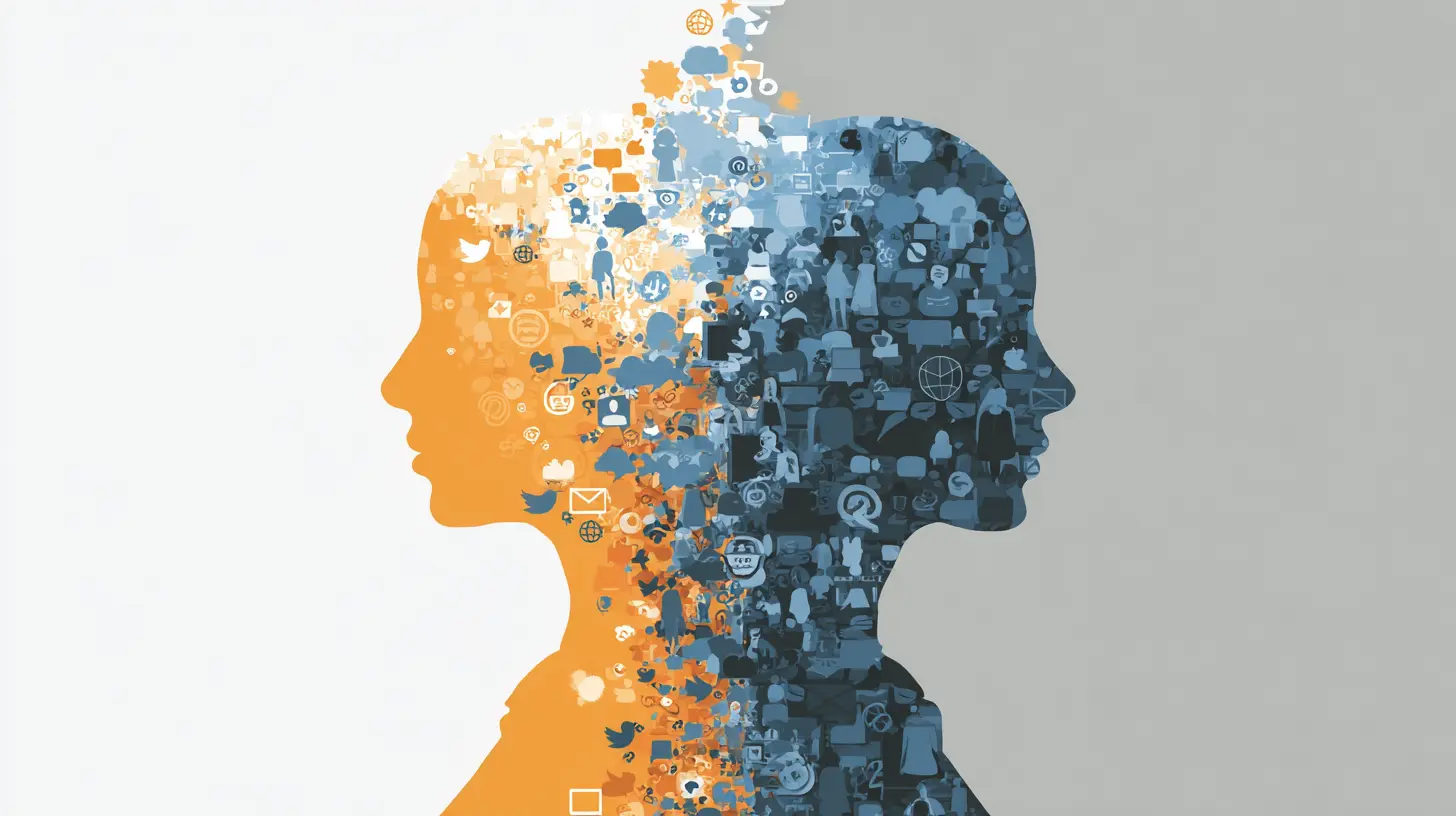
Social media platforms are not neutral conduits. They are engineered to maximize engagement, and engagement is highest when people feel strong emotions. Agreement feels good, but outrage feels better. So the algorithms tend to surface content that confirms what you already believe, and they especially surface content that makes you angry at those who believe otherwise.This creates a feedback loop. You see a post that aligns with your worldview. You like it. The algorithm shows you more like it. You start to think that everyone reasonable agrees with you. Then you see a post from someone outside your bubble, and it feels not just wrong but alien. The group's shared reality becomes more important than any external fact. This is exactly the kind of "mindguard" behavior Janis described, except the mindguard is a recommendation engine.
There is also the issue of social proof on a massive scale. When a post has thousands of likes, it signals that the opinion is correct. This is a cognitive shortcut, and it usually works fine in small groups where you know the people involved. But on social media, you do not know those thousands of people. They could be bots, paid trolls, or people who liked the post without reading it. Still, the sheer number creates a gravitational pull. It is easier to agree than to fight the tide.

Why Social Media Makes Groupthink Worse Than Face-to-Face Groups
In person, groupthink requires a cohesive group, a strong leader, and high stress. Those conditions are not always present. On social media, the conditions are almost always present.First, the groups are more cohesive in a superficial way. You follow people who share your interests, your politics, your profession, or your sense of humor. The algorithm curates your feed so that you rarely see people who challenge you. This is not the deep cohesion of a military unit or a corporate team. It is a shallow, identity-based cohesion, but it is enough to trigger the same psychological effects.
Second, there is no single leader, but there are influencers. These are people with outsized reach who set the tone for the group. Their opinions become the baseline. Followers do not just agree with them; they anticipate what the influencer would think and preemptively align themselves. This is a form of self-censorship that happens before any disagreement even arises.
Third, the stress is constant. In Janis's studies, stress came from external threats like war or economic pressure. On social media, stress comes from the fear of missing out, the fear of cancellation, and the constant pressure to perform your identity in public. This stress makes people more likely to cling to the group for safety, which is exactly when groupthink thrives.
The Role of Identity and Morality
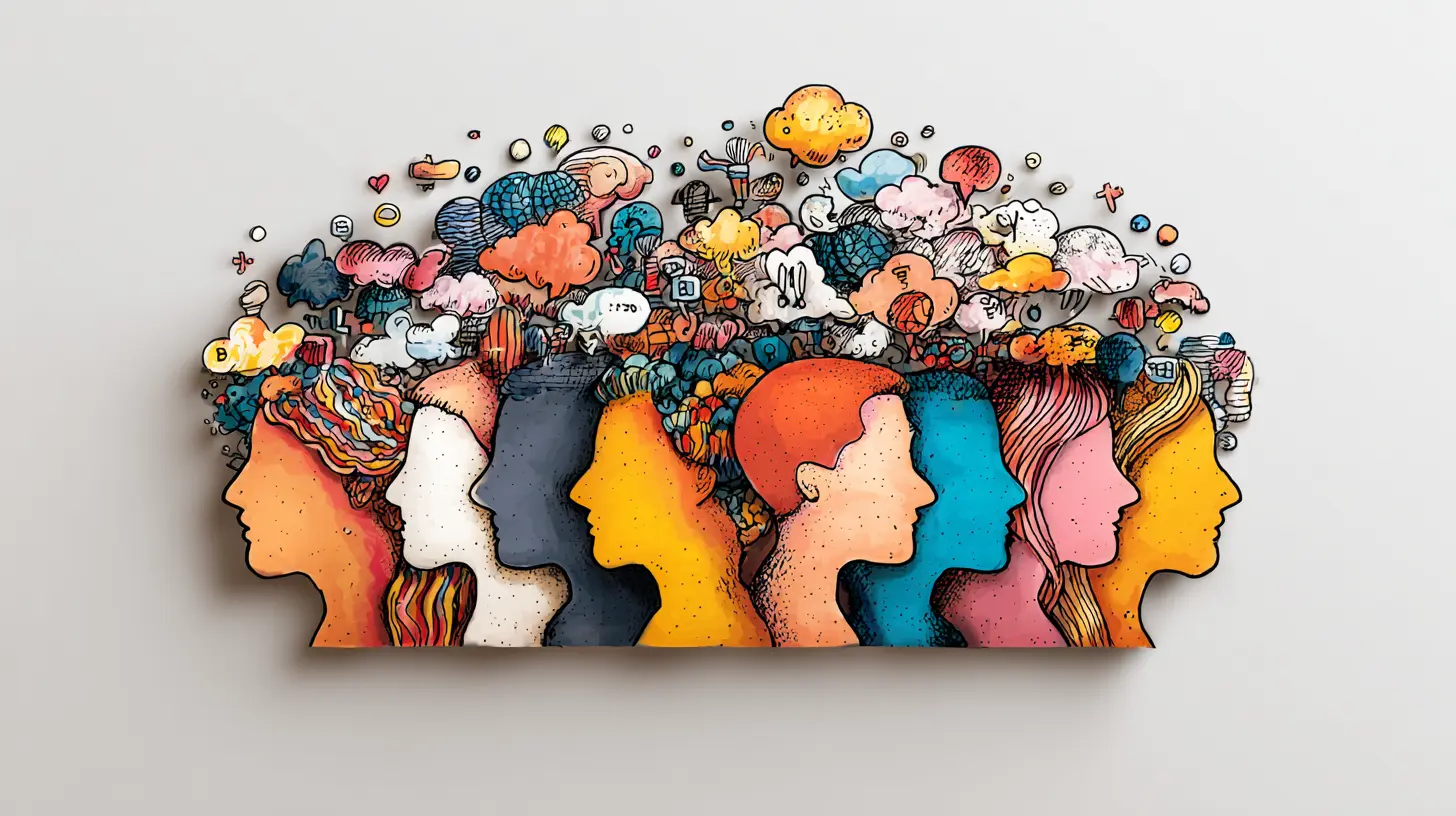
Groupthink on social media is not just about facts. It is about identity. When you join a community around a cause, a fandom, or a political ideology, your opinions become markers of belonging. To question the group's consensus is to question your own membership.This is why you see such intense emotional reactions to mild disagreements. If someone says, "I think this movie is overrated," and the group loves the movie, the response is not a reasoned debate. It is an attack on the person's taste, intelligence, and character. The group is not defending the movie. It is defending its own identity boundaries.
Morality makes this even worse. When a group believes it is on the right side of history, dissent becomes heresy. You see this in activist circles, where any critique of the movement's tactics is seen as siding with the enemy. You also see it in corporate settings, where employees are afraid to question diversity initiatives or sustainability claims because they do not want to seem regressive. The group has conflated agreement with virtue, and disagreement with vice.
This is a dangerous trap. It shuts down critical thinking, which is exactly what you need to make good decisions. A group that cannot tolerate internal criticism is a group that will make avoidable mistakes.
Real-World Consequences
The consequences of social media groupthink are not limited to online arguments. They spill over into real life.Take the stock market, for example. The GameStop saga in early 2021 was a case study in groupthink. A subreddit decided that a struggling video game retailer was undervalued, and the group's consensus drove a massive buying frenzy. Anyone who pointed out the risks was drowned out. The stock soared, then crashed, and many retail investors lost money. The group had created an illusion of invincibility, which is one of the classic symptoms of groupthink.
Another example is the cancel culture phenomenon. When a public figure says something controversial, the social media mob often demands immediate consequences: firing, deplatforming, public apology. There is no room for nuance, context, or due process. The group has already decided. This is groupthink operating at scale, and it has real effects on people's livelihoods and mental health.
In the workplace, social media groupthink can lead to bad product decisions. A product team sees a viral trend and decides to chase it, even though their data suggests it is a fad. They do this because everyone on their Twitter feed is talking about it. They are not making a decision based on evidence. They are making a decision based on social pressure.
How to Recognize Groupthink in Your Own Feeds
You cannot avoid groupthink entirely, but you can recognize it. Here are some signs to watch for.First, notice how quickly conversations turn hostile. If a simple disagreement escalates into personal attacks within minutes, you are in a groupthink environment. Healthy groups can handle disagreement without resorting to insults.
Second, watch for the illusion of unanimity. If you see a post with hundreds of comments and every single one agrees, that is suspicious. Real opinions are rarely that uniform. Someone is being silenced, either by the algorithm or by social pressure.
Third, pay attention to your own feelings. If you feel anxious about posting a dissenting opinion, that is a sign that the group has created a climate of fear. Ask yourself: Am I staying quiet because I genuinely agree, or because I am afraid of the reaction?
Fourth, look for mindguards. These are the people who actively police the group's boundaries. They call out "bad takes," they report dissenters, and they frame disagreement as betrayal. On social media, mindguards are often the most vocal members of a community.
Practical Strategies to Resist Groupthink
You can resist groupthink, but it takes deliberate effort. Here is what works.First, seek out genuine dissent. Not the kind of dissent that is performative or contrarian, but people who disagree with you in good faith. Follow them. Read their arguments. Try to steelman their position, which means presenting their argument in its strongest form, not the weakest. This is uncomfortable, but it is the antidote to the echo chamber.
Second, build your own opinion before you look at the group's opinion. When you see a news story or a controversial topic, write down your initial reaction before reading the comments. This forces you to think independently. Then compare your reaction to the group's. You will often find that you had a more nuanced view before the group got to you.
Third, practice intellectual humility. Remind yourself that you are probably wrong about something, and that the group is probably wrong about something too. This is not a weakness. It is a strength. The most reliable thinkers are the ones who are willing to change their minds when presented with good evidence.
Fourth, create a "red team" in your own life. This is a practice from military and corporate strategy where a designated group argues against the prevailing plan. You can do this informally by asking a friend to play devil's advocate, or by deliberately reading sources that challenge your views. The goal is not to convert you, but to test your reasoning.
Fifth, slow down. Groupthink thrives on speed. The faster you react, the more likely you are to rely on social cues rather than your own judgment. When you feel the urge to post something instantly, pause. Give yourself an hour, or a day. You will often find that your initial reaction was just the group's reaction, not your own.
The Trade-Offs of Group Cohesion
groupthink is not always bad. Cohesion is valuable. Groups that agree can move fast, make decisions, and build strong cultures. The problem is when cohesion comes at the cost of accuracy.The key is to balance cohesion with critical thinking. This is a hard balance to strike, especially online. If you constantly challenge the group, you will be seen as disruptive. If you never challenge the group, you will be a passive follower. The best approach is to be selective. Challenge the group when the stakes are high and the evidence is unclear. Defer to the group when the decision is low-stakes and the consensus is well-informed.
For example, if your online community is debating whether to boycott a brand, that is a high-stakes decision with real consequences. It is worth challenging the group to make sure the facts are right. But if the group is just deciding which meme format to use, let it go. Not every battle is worth fighting.
Common Misconceptions About Groupthink
There are a few misconceptions about groupthink that are worth clearing up.First, groupthink is not the same as conformity. Conformity is a broader concept. Groupthink is a specific type of flawed decision-making that occurs in cohesive groups. You can conform without groupthink, and you can have groupthink without obvious conformity.
Second, groupthink is not just about peer pressure. It is also about self-censorship. The group does not have to actively silence you. You silence yourself because you want to belong. This is why groupthink is so hard to fight. The enemy is not out there. It is in your own head.
Third, groupthink is not limited to "bad" groups. It happens in progressive groups, conservative groups, religious groups, atheist groups, corporate teams, and friend circles. It is a human tendency, not a political one. If you think your group is immune, that is a sign that groupthink is already operating.
Fourth, groupthink is not always about major decisions. It can be about small things too, like which movies are acceptable to like, which words are acceptable to use, and which opinions are acceptable to hold. These small conformities build the foundation for larger ones.
The Future of Groupthink in the Age of AI
Artificial intelligence is going to make groupthink worse before it gets better. Recommendation algorithms are already curating our feeds. Generative AI is now producing content that is optimized for engagement, which means it is optimized for consensus. AI-generated posts are often designed to trigger agreement or outrage, not to provoke thought.There is also the rise of AI-powered moderation. Platforms are using machine learning to remove "harmful" content, but the definition of harmful is often based on the prevailing consensus. This can lead to the silencing of legitimate dissent, which is a perfect breeding ground for groupthink.
On the other hand, AI could also be used to fight groupthink. Imagine a tool that shows you the strongest counter-arguments to your position, or a browser extension that highlights when you are reading a one-sided source. These tools exist in rudimentary form, but they are not widely adopted. The challenge is that most people do not want to see the other side. They want confirmation.
What You Can Do Today
You do not need to wait for the platforms to change. You can start resisting groupthink right now.First, unfollow the accounts that make you feel the most certain. If a feed is filled with people who agree with you, it is not making you smarter. It is making you more confident, which is not the same thing.
Second, post a dissenting opinion on purpose. It does not have to be provocative. It can be a small disagreement, like "I think this trend is overrated" or "I am not sure this take is correct." See what happens. You will likely feel anxious, and you will likely get some pushback. That is the point. It is a low-stakes way to practice intellectual independence.
Third, have a conversation with someone who disagrees with you, and actually listen. Not to win, but to understand. This is the most direct antidote to groupthink. It is hard, but it is worth it.
Fourth, remember that the group is not always right. History is full of examples of groups that were confident and wrong. The flat earth society is confident. The people who thought smoking was healthy were confident. The investors who bought tulips were confident. Confidence is not evidence.
Final Thoughts
Social media has made groupthink more common, more intense, and more consequential. It is easy to get swept up in the crowd, especially when the crowd is loud and the algorithms reward agreement. But the cost is real. You lose your ability to think for yourself, and you contribute to a culture that punishes independent thought.The good news is that you can opt out. Not by leaving social media entirely, though that is an option, but by changing how you engage. Question the consensus. Seek out dissent. Be willing to be wrong. And remember that the goal of a good group is not to agree, but to be right. Those are not the same thing.
all images in this post were generated using AI tools
Category:
Cognitive BiasesAuthor:

Ember Forbes
Discussion
rate this article
1 comments
Melody McNab
This article sheds much-needed light on how social media shapes our thinking. It's concerning how easily we can fall into groupthink online, often losing our individuality. Awareness is the first step toward fostering genuine dialogue and diversity of thought, which are so vital in today's interconnected world.
August 28, 2026 at 5:11 AM
Ember Forbes
Thank you for your thoughtful comment. It's crucial to recognize these dynamics in social media. Awareness truly is the first step to maintaining our individuality and encouraging diverse perspectives.