Why Your Brain Takes Mental Shortcuts Without Asking
31 July 2026
Your brain is a biological machine built for efficiency, not accuracy. Every second, it processes millions of bits of sensory information, but your conscious mind can handle only about 50 to 120 bits per second. That gap is where mental shortcuts live. They are not optional features you can turn off. They are the operating system of human cognition. And they work without your permission, without a notification, and often without your awareness.
Most people think they make rational decisions based on careful analysis. The evidence says otherwise. Your brain uses shortcuts called heuristics to simplify complex problems. These heuristics are fast, automatic, and mostly reliable. But they also produce systematic errors, biases, and blind spots. Understanding why your brain does this is not just an academic exercise. It is a practical necessity if you want to make better decisions, avoid predictable mistakes, and understand why other people behave the way they do.

The Core Problem: Information Overload Meets Limited Processing Power
The human brain accounts for about 2 percent of your body weight but consumes roughly 20 percent of your energy. Running full conscious deliberation on every decision would exhaust you in minutes. Evolution solved this problem by creating two systems of thinking, often called System 1 and System 2.System 1 operates automatically and quickly with little effort. It handles recognizing faces, reading emotions, driving on an empty road, and answering simple questions like "What is 2 plus 2?" System 2 allocates attention to effortful mental activities. It handles complex calculations, logical reasoning, and evaluating conflicting evidence. System 2 is lazy by design. It prefers to defer to System 1 whenever possible because conscious thought is metabolically expensive.
Mental shortcuts are the tools System 1 uses to make fast decisions. They are pattern-matching algorithms shaped by evolution and personal experience. When you see a dark shape in the corner of a room, your brain does not wait for System 2 to analyze its size, shape, and probability of being a threat. It triggers a fear response immediately. That shortcut saved your ancestors from predators. Today, it makes you jump at a shadow that turns out to be a coat on a chair.

The Availability Heuristic: Why You Overestimate What You Remember
One of the most powerful mental shortcuts is the availability heuristic. Your brain judges the frequency or likelihood of an event by how easily examples come to mind. If you can recall instances quickly, you assume the event is common. If you struggle to recall examples, you assume it is rare.This shortcut works reasonably well in many cases. Common events do tend to leave more memories. But the problem is that vividness, recency, and emotional impact distort availability. A plane crash shown repeatedly on news broadcasts makes flying seem more dangerous than driving, even though driving is statistically far riskier. The crash is more available in memory because of its dramatic nature and media coverage.
I have seen this play out in professional settings repeatedly. After a high-profile project failure in an organization, managers often become overly cautious about similar projects for months. They overestimate the probability of failure because the last failure is fresh and vivid. Meanwhile, dozens of successful projects that happened quietly are forgotten. The availability heuristic makes them misallocate resources toward avoiding a rare risk while ignoring more common problems.
When to Question Availability
You should question this shortcut whenever you are making a decision based on recent news, personal anecdotes, or emotionally charged examples. Ask yourself: "Is my judgment based on a representative sample, or am I using the most memorable examples?" If you are estimating risk, look at base rates and statistical data rather than relying on what comes to mind first. This is especially important for financial decisions, health choices, and career moves.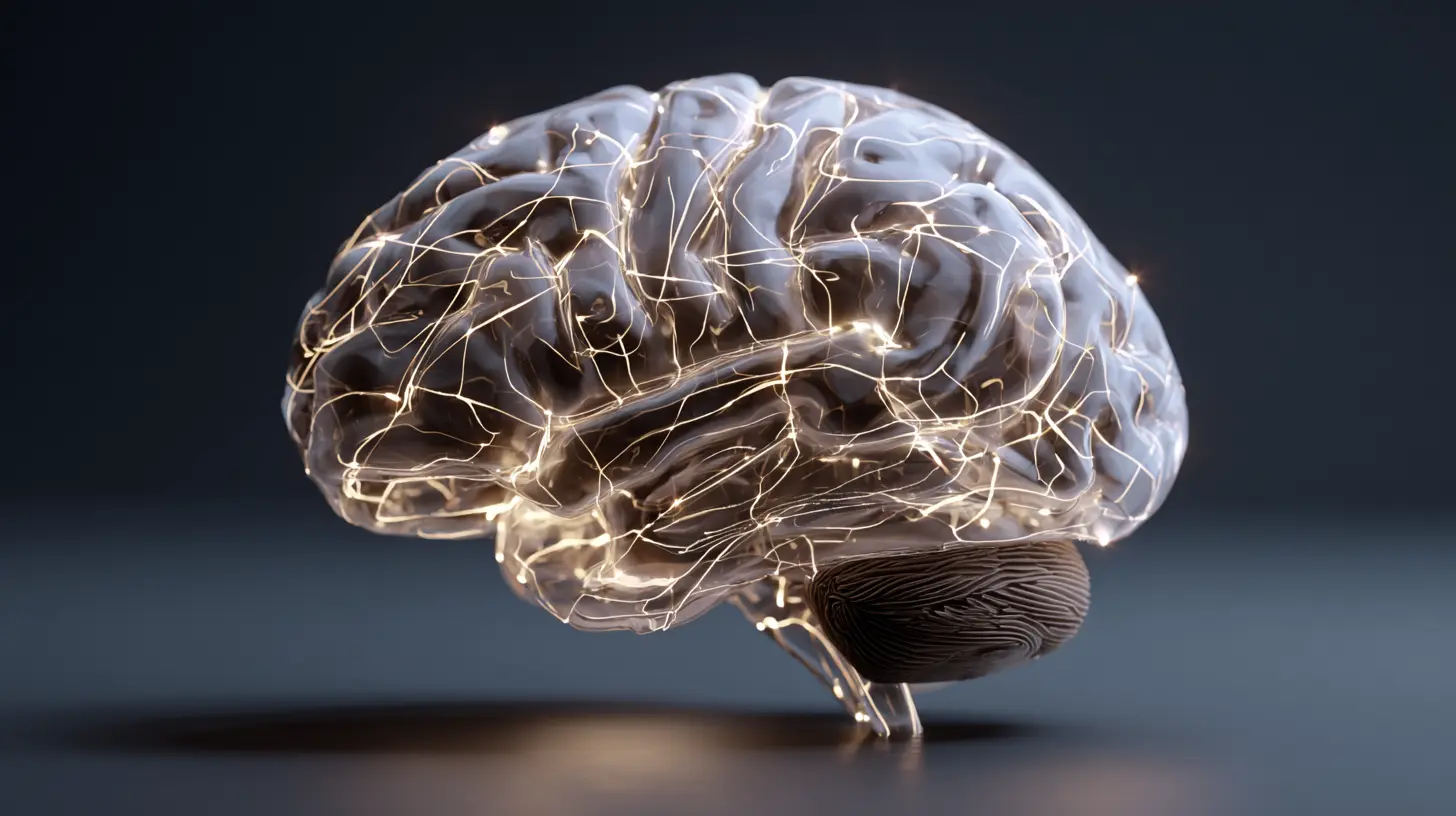
The Anchoring Effect: Why First Numbers Stick
Anchoring is a mental shortcut where you rely too heavily on the first piece of information you receive. That initial piece becomes the anchor, and all subsequent judgments are adjusted relative to it. The adjustment is usually insufficient, so the anchor exerts a powerful pull on your final decision.Real estate agents understand this implicitly. A listed price of 500,000 dollars for a house sets an anchor. Even if you negotiate down to 480,000, you feel like you got a deal. But if the house is worth only 400,000, the anchor made you pay more than you should. The same effect happens in salary negotiations, car purchases, and even courtroom sentencing.
The anchoring effect works because your brain uses the anchor as a starting point for mental calculation. It is not a conscious choice. Even when people are told about anchoring, they still fall for it. Studies have shown that asking people whether the Mississippi River is longer or shorter than 2,000 miles versus asking whether it is longer or shorter than 200 miles produces wildly different estimates. The anchor changes the entire range of plausible answers.
Using Anchoring to Your Advantage
You can use anchoring deliberately in negotiations. Make the first offer when you have a reasonable idea of the value. That sets the anchor in your favor. But when you are on the receiving end, consciously generate your own anchor before hearing the other side. Research the market, determine a fair range, and write it down. Then compare every offer to your own anchor, not theirs.
Confirmation Bias: The Shortcut That Protects Your Beliefs
Confirmation bias is not exactly a heuristic in the traditional sense, but it is a pervasive mental shortcut that operates through System 1. Your brain preferentially seeks out, remembers, and interprets information that confirms what you already believe. It also avoids or dismisses information that challenges those beliefs.This shortcut saves mental energy. If you had to question every belief from scratch each time you encountered new information, you would never make a decision. Confirmation bias allows you to maintain a consistent worldview without constant reevaluation. But the cost is that you become trapped in an echo chamber of your own making.
I have watched brilliant professionals fall into this trap repeatedly. A manager believes a certain strategy will work. They pay attention to data that supports it, explain away contradictory data as anomalies, and ignore warning signs. By the time the strategy fails, they have missed multiple opportunities to course-correct. The brain's shortcut protected their comfort but destroyed their accuracy.
Breaking the Confirmation Loop
To counteract confirmation bias, you need to actively seek disconfirming evidence. This is uncomfortable because it feels like betrayal of your own position. But it is the only reliable way to test whether your beliefs are correct. Before making an important decision, write down three reasons why you might be wrong. If you cannot think of any, ask someone who disagrees with you. This is not about being indecisive. It is about being thorough.The Representativeness Heuristic: Judging by Resemblance
The representativeness heuristic is your brain's tendency to judge the probability of something based on how similar it is to a typical case. If something looks like a duck, swims like a duck, and quacks like a duck, your brain assumes it is a duck. This shortcut works well for categorizing objects and situations that fit clear patterns. But it fails badly when base rates are ignored or when stereotypes are misleading.Consider a classic example. Imagine someone is described as "quiet, organized, and likes to read." Most people will guess this person is a librarian rather than a farmer. That is because the description matches the stereotype of a librarian. But there are far more farmers than librarians in the general population. The base rate probability is that the person is a farmer, regardless of the description. The representativeness heuristic causes you to ignore base rates and focus on similarity.
In investing, this shortcut leads people to buy stocks of companies that have "good stories" or fit a successful pattern, while ignoring financial fundamentals. In hiring, it causes managers to favor candidates who fit the mold of previous successful employees, even when different skills are actually needed.
When Representativeness Misleads
Use this shortcut for quick categorization, but never for final decisions involving important outcomes. Always check base rates. If you are evaluating a candidate for a job, look at the actual success rates of people with similar backgrounds rather than relying on how well they fit your mental image of a good employee. If you are diagnosing a problem, consider how common different causes are before jumping to the most representative one.
The Affect Heuristic: Emotions as Decision Shortcuts
The affect heuristic is perhaps the most primal shortcut. Your brain uses current emotional state as a rapid guide to decision-making. If something feels good, you tend to see it as low risk and high benefit. If something feels bad, you see it as high risk and low benefit. This happens in milliseconds, before any rational analysis can occur.This shortcut evolved because emotions are efficient summaries of past experiences. Fear tells you to avoid something dangerous. Excitement tells you to approach something rewarding. But the affect heuristic becomes problematic when the emotional response is triggered by irrelevant factors. A person who is in a good mood because the sun is shining might overestimate the chances of a successful business venture. Someone who is anxious from a stressful morning might underestimate their ability to handle a challenge.
I have seen this in medical decision-making. Patients who feel anxious about a procedure often overestimate its risks and underestimate its benefits. Conversely, patients who feel optimistic about a treatment may downplay serious side effects. The emotional state colors the entire risk-benefit analysis.
Managing the Affect Heuristic
You cannot eliminate emotional influence from decision-making. But you can create a delay. When you feel a strong emotional response to a decision, pause. Give yourself time for the emotional state to settle. Write down the pros and cons without relying on your gut feeling. If possible, sleep on it. The affect heuristic loses its grip when you force yourself to engage System 2.The Halo Effect: One Trait Colors Everything
The halo effect is a cognitive bias where your overall impression of a person or thing influences your judgment of their specific traits. If someone is attractive, you tend to assume they are also intelligent, kind, and competent. If a company has a successful product, you assume their other products are also good.This shortcut saves the brain from having to evaluate each trait independently. It is easier to form one global judgment and let it color everything else. But the halo effect leads to systematic errors in performance reviews, product evaluations, and even legal judgments.
In the workplace, a charismatic employee who delivers one great presentation might receive consistently high performance ratings, even if their actual work is average. An awkward but brilliant employee might be undervalued because their social presentation creates a negative halo. The shortcut makes you miss the nuance.
Separating the Halo from Reality
To counter the halo effect, evaluate each criterion independently. When reviewing someone's performance, rate each dimension separately before forming an overall impression. When evaluating a product, test it against your specific needs rather than relying on brand reputation. Force yourself to find evidence for each trait rather than letting one trait dominate.
The Sunk Cost Fallacy: The Shortcut That Keeps You Stuck
The sunk cost fallacy is not a heuristic in the strict sense, but it is a powerful mental shortcut driven by loss aversion and consistency bias. Your brain treats past investments of time, money, or effort as reasons to continue, even when the rational choice is to cut losses. The shortcut says: "You have already put so much into this. It would be wasteful to stop."This shortcut evolved because in ancestral environments, persistence often paid off. Giving up too early meant missing a reward that was just around the corner. But in modern contexts, sunkcosts are often unrecoverable. Continuing a failing project, staying in a bad relationship, or holding a losing stock because you have already invested heavily in it is irrational. The brain's shortcut traps you.
I have consulted with companies that poured millions into software projects that were clearly failing. The decision to continue was driven by the sunk cost fallacy. Executives could not bear to admit that the past investment was wasted. They kept spending, hoping to recoup their losses, which only made the losses larger.
Escaping the Sunk Cost Trap
The best practice is to make decisions based on future value, not past costs. Ask yourself: "If I had not already invested anything in this, would I start now?" If the answer is no, stop. This is brutally difficult because it feels like admitting failure. But it is the only way to avoid compounding losses. Set predetermined criteria for when you will abandon a course of action before you start. That makes the decision automatic when the time comes.The Dunning-Kruger Effect: The Shortcut of Overconfidence
The Dunning-Kruger effect is a cognitive bias where people with low ability at a task overestimate their ability, while people with high ability underestimate it. This happens because the mental shortcuts used to evaluate your own competence are the same shortcuts you use to evaluate the task itself. If you do not know what competence looks like, you cannot recognize your own lack of it.This shortcut protects your ego, but it also prevents you from seeking improvement. Someone who is bad at logical reasoning might think they are excellent because they cannot see the gaps in their own arguments. Meanwhile, an expert sees all the ways they could be wrong and underestimates their relative standing.
In professional contexts, this leads to poor hiring decisions, failed projects, and resistance to feedback. The person who most needs to improve is often the least likely to seek it.
Calibrating Your Self-Assessment
The antidote is external feedback with objective standards. Take tests, get peer reviews, and compare your performance against benchmarks. If you consistently score lower than you expected, you are likely overconfident. If you score higher than expected, you may be underconfident. Adjust your self-assessment based on data, not intuition.
Practical Strategies for Working with Your Brain's Shortcuts
You cannot eliminate mental shortcuts. They are hardwired into your neural architecture. But you can build systems that compensate for their weaknesses. Here are actionable strategies that work.First, create decision checklists for high-stakes situations. A checklist forces you to engage System 2 by breaking down a decision into discrete steps. Pilots use checklists not because they are stupid, but because they know their brains will take shortcuts under pressure.
Second, use precommitment. Decide in advance how you will respond to certain situations. This bypasses the shortcut because you are not making a decision in the heat of the moment. For example, decide that you will wait 24 hours before making any purchase over a certain amount. The delay reduces the influence of the affect heuristic and availability heuristic.
Third, seek diverse perspectives. Your shortcuts are shaped by your unique experiences. Other people have different shortcuts. By actively listening to people who disagree with you, you expose yourself to alternative mental models. This is not about consensus. It is about expanding the range of considerations before you decide.
Fourth, track your decisions and their outcomes. Keep a simple journal of important decisions, what you expected, and what actually happened. Over time, you will see patterns in where your shortcuts lead you astray. This feedback loop calibrates your intuition.
Fifth, embrace deliberate slowness for important decisions. Most decisions do not require System 2. Choosing what to eat for lunch is fine with a shortcut. But decisions about career moves, major purchases, relationships, and health deserve slow thinking. Recognize the difference and allocate your mental energy accordingly.
Common Mistakes People Make When Trying to Override Shortcuts
Many people try to fight their brain's shortcuts by sheer willpower. That almost never works. Willpower is a limited resource, and your brain's shortcuts are automatic. You cannot decide to stop using the availability heuristic any more than you can decide to stop breathing.Another mistake is assuming that being aware of biases makes you immune to them. It does not. Knowing about the anchoring effect does not prevent you from being anchored. Awareness only helps if you pair it with structural changes in how you make decisions.
A third mistake is overcorrecting. Some people become so afraid of biases that they refuse to make intuitive decisions at all. This leads to analysis paralysis. Shortcuts are not evil. They are efficient and often correct. The goal is not to eliminate them but to know when they are likely to fail and to have strategies ready for those situations.
The Trade-Offs of Mental Shortcuts
Every mental shortcut involves a trade-off between speed and accuracy. In most everyday situations, speed matters more. If you had to analyze every social interaction carefully, you would never form relationships. If you had to calculate every risk precisely, you would never leave the house. Shortcuts allow you to function in a complex world.But the trade-off becomes dangerous when the stakes are high and the shortcuts lead to systematic errors. The same heuristics that help you navigate a conversation can cause you to make catastrophic financial mistakes. The same pattern recognition that helps you spot a predator can cause you to discriminate against people who do not fit your mental templates.
Understanding the trade-off means knowing when to trust your gut and when to override it. Trust your gut when you have deep experience in a domain, when the situation is similar to ones you have handled before, and when the cost of being wrong is low. Override your gut when you are in an unfamiliar domain, when the situation is novel, or when the stakes are high.
Final Thoughts
Your brain takes mental shortcuts without asking because that is how it was designed. Evolution did not optimize for truth. It optimized for survival and reproduction. Those shortcuts helped your ancestors avoid predators, find food, and form social bonds. They still help you navigate daily life with minimal effort.But the modern world presents challenges that your brain did not evolve to handle. Abstract statistics, complex systems, and long-term consequences do not trigger the same shortcuts as immediate physical threats. That is why you need to understand the shortcuts, not to eliminate them, but to build a partnership with your own mind.
Respect your brain's efficiency. Use its speed for the thousands of trivial decisions you make every day. But for the decisions that truly matter, slow down. Engage System 2. Use checklists, seek feedback, and question your first instinct. Your brain will complain because it wants to be lazy. That is fine. You are in charge, not your shortcuts.
all images in this post were generated using AI tools
Category:
Cognitive BiasesAuthor:

Ember Forbes
Discussion
rate this article
1 comments
Tempra O'Neal
Our brains constantly seek efficiency, making split-second decisions that often skip deeper analysis. Understanding these shortcuts can reveal our biases and help us navigate choices more mindfully, ultimately guiding us toward better outcomes.
August 11, 2026 at 2:46 AM
Ember Forbes
That's a great observation. Recognizing these shortcuts can really help us make more thoughtful decisions.