Understanding Confirmation Bias Before it Costs You
5 August 2026
There is a quiet moment that happens just before you make a decision. It feels like clarity, but often it is something else entirely. It is the moment when your mind gathers every piece of evidence that supports what you already want to believe, and gently, almost imperceptibly, filters out everything that does not. This is confirmation bias at work, and it is not a flaw in your character. It is a feature of your brain that has been refined over thousands of years.
The problem is that this feature was designed for a world that no longer exists. It was built for survival in small tribes where quick judgments meant the difference between life and death. In that world, being wrong about a rustling bush was costly, but being wrong about a social alliance could be fatal. So your brain learned to favor information that confirmed your existing beliefs, because that was faster and safer than constantly re-evaluating everything. Today, that same shortcut costs people their savings, their relationships, their careers, and sometimes their lives.
Understanding confirmation bias is not about eliminating it. That is impossible. It is about recognizing when it is steering you, and building systems that force you to see what you would rather ignore. This article is about that recognition, and about what happens when you fail to do it in time.

The Anatomy of a Silent Filter
Confirmation bias is often described as a tendency to look for evidence that supports your beliefs. That is true, but it is only the surface. Underneath, it operates in four distinct ways that most people never notice.First, there is biased search. You ask questions in a way that almost guarantees a supportive answer. If you suspect a colleague is incompetent, you ask, "Why is this project failing?" instead of "What factors are affecting this project?" The first question assumes the failure is personal. The second leaves room for external causes. Your brain chooses the first question because it is easier to process, and because it aligns with your initial suspicion.
Second, there is biased interpretation. The same piece of information can mean different things depending on what you want it to mean. A delayed email from a friend is seen as rudeness if you are already annoyed with them, but as a sign of their busy life if you are not. The data is identical. The meaning is assigned by your bias.
Third, there is biased memory. You remember the times your prediction came true and forget the times it did not. This is why gamblers remember their wins vividly and their losses vaguely. It is also why investors remember the stock that doubled and forget the one that went to zero.
Fourth, there is biased assimilation. When you encounter information that contradicts your belief, you scrutinize it harshly. When you encounter information that supports it, you accept it with little resistance. A study that confirms your political view is "well-designed." A study that challenges it is "flawed" or "biased." The same methodology is judged differently based on the conclusion.
These four mechanisms work together so smoothly that you rarely feel them. You feel confident, informed, and rational. That confidence is the danger.
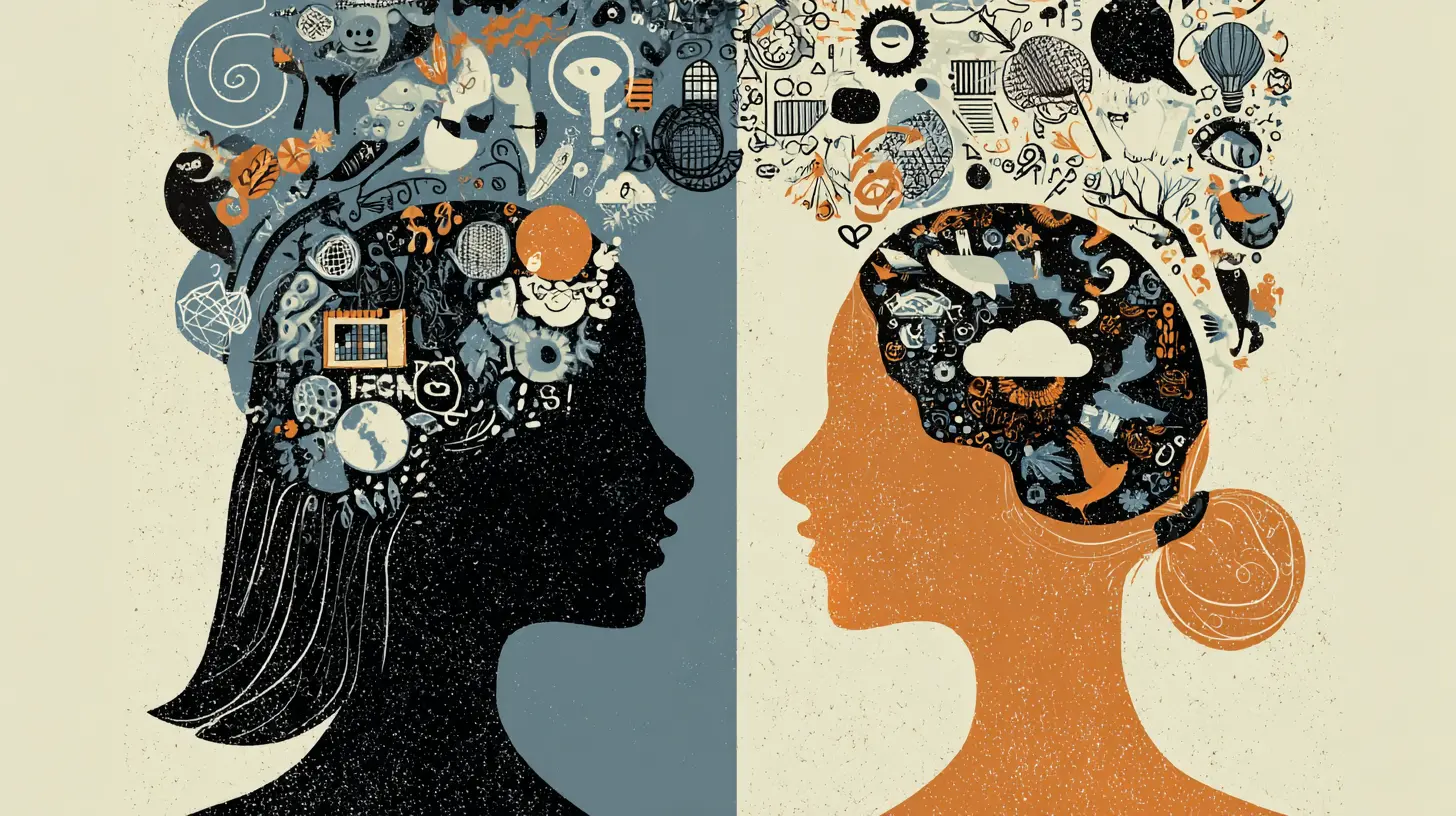
The Cost of Certainty in High-Stakes Decisions
Confirmation bias does not hurt you when the stakes are low. Choosing one brand of cereal over another, or believing that a certain movie director is overrated, carries little risk. The damage happens when you apply this filter to decisions that have long-term consequences.Consider the world of investing. Many people buy a stock because they like the company's product or because a friend recommended it. Once they own it, they begin to seek out positive news about the company and dismiss negative reports. They tell themselves that the market is wrong, that the analysts are shortsighted, that the company's fundamentals are strong. They hold onto a losing position for years because selling would mean admitting they were wrong. The cost is not just financial. It is the opportunity cost of that money sitting in a declining asset while better options pass by.
The same pattern appears in career decisions. A person who believes they are underpaid will notice every instance of a colleague getting a raise and ignore the fact that the colleague works longer hours or has more experience. They will interpret a manager's neutral comment as a slight, and a positive comment as a fluke. They might quit a job that was actually good for them, or stay in one that is slowly destroying their mental health, all because they are filtering reality through a fixed belief.
Relationships are perhaps the most painful arena. When you believe your partner is untrustworthy, you notice every late text and every vague answer. You interpret silence as deception and kindness as manipulation. You create a reality that matches your fear, and then you use that reality to justify your behavior. The bias becomes a self-fulfilling prophecy. You push them away, and then you say, "See, I was right."
The common thread in all these examples is that the cost is delayed. Confirmation bias feels good in the moment because it reduces anxiety. It gives you a sense of control. The price is paid later, often in a sudden and painful lump sum.
Why Smart People Are More Vulnerable
There is a common misconception that confirmation bias is a problem for the uneducated or the stubborn. The opposite is true. People with high intelligence and extensive knowledge in a domain are often more susceptible, not less.The reason is simple. The more you know, the more evidence you can generate to support your position. A person with a deep understanding of economics can construct a sophisticated argument for why a certain policy will fail. A person with a deep understanding of medicine can find dozens of reasons why a treatment will not work. Their expertise gives them the tools to build an impressive fortress around their existing beliefs. The fortress looks rational from the outside, and it feels rational from the inside. But it is still built on a foundation of selective attention.
This is called the "curse of knowledge." The more you know, the harder it is to see what you do not know. Your confidence grows faster than your accuracy. You mistake the fluency of your arguments for the validity of your conclusions.
Another factor is identity. When a belief becomes tied to your sense of who you are, challenging it feels like a personal attack. If you believe you are a good judge of character, then admitting that you misjudged someone is not just a factual correction. It is a threat to your self-image. Your brain will go to great lengths to protect that image, even if it means ignoring clear evidence.
This is why debates between intelligent people rarely change minds. Both sides are armed with knowledge, and both sides are using that knowledge to defend their identity. The conversation is not about truth. It is about survival.
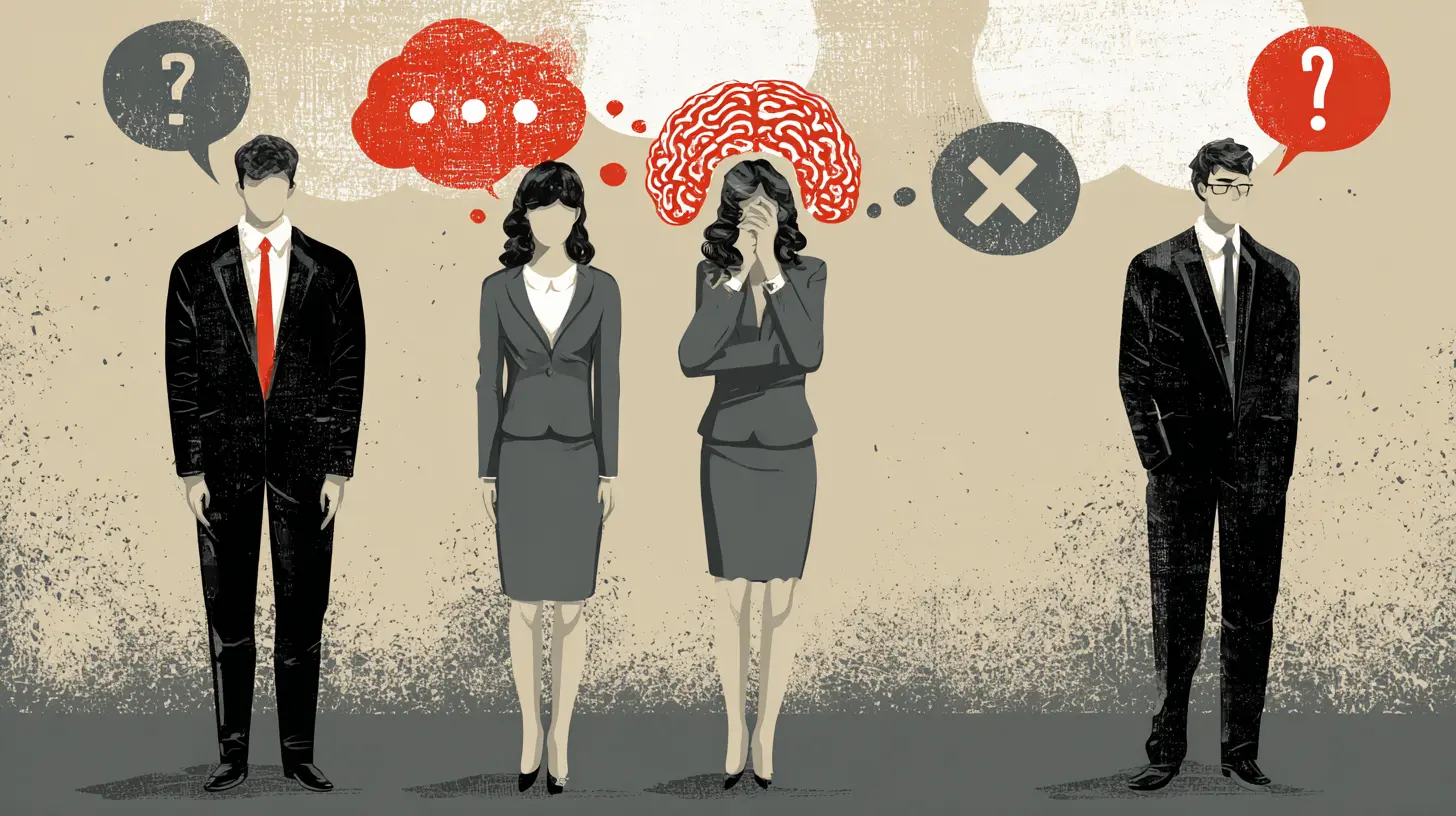
The Illusion of Objectivity
One of the most insidious aspects of confirmation bias is that it makes you feel objective. You believe you are weighing the evidence fairly, when in reality you are only weighing the evidence that passed through your filter.There is a well-known experiment that illustrates this. People were shown a sequence of numbers and asked to identify the rule that generated them. They were told that the sequence 2, 4, 6 followed the rule. Most people guessed "numbers increasing by two" and tested that hypothesis by offering sequences like 8, 10, 12. They were told those were correct. But the actual rule was simply "any three increasing numbers." The participants never tested a sequence that violated their hypothesis, like 1, 2, 10, because they were looking for confirmation, not disconfirmation.
This is how most people approach their beliefs. They ask, "What would prove me right?" instead of "What would prove me wrong?" The first question feels productive. The second feels threatening. But only the second can actually improve your understanding.
In real life, the cost of this illusion is that you make decisions based on a partial picture. You think you have done your due diligence because you read articles, talked to experts, and analyzed data. But the articles you read were chosen by your bias, the experts you talked to shared your worldview, and the data you analyzed was selected because it was easy to find. You have not been objective. You have been thorough in your confirmation.
How to Break the Spell
You cannot turn off confirmation bias, but you can build practices that reduce its influence. The first step is to change your default question. Instead of asking "Why am I right?" ask "What would have to be true for me to be wrong?" This is uncomfortable, but it is the only question that opens the door to new information.The second step is to actively seek out disconfirming evidence. This means reading arguments from people you disagree with, not to refute them, but to understand them. It means talking to people who have made different choices and asking them why. It means looking for cases where your belief failed, not just where it succeeded.
A practical technique is the "pre-mortem." Before you make a major decision, imagine that it has already failed. It is one year in the future, and the outcome was terrible. Now write down the reasons why it failed. This forces your brain to generate negative possibilities that it would otherwise ignore. The technique works because it bypasses your natural optimism and gives your mind permission to consider worst-case scenarios.
Another technique is to assign a "devil's advocate" role in your decision-making process. If you are making a decision with a team, designate one person to argue against the proposed course of action. Make it clear that their job is not to be liked, but to find flaws. Rotate the role so that no one becomes typecast as the negative one. The goal is not to create conflict, but to ensure that every decision is stress-tested before it is made.
You should also be wary of your information sources. If you only read news that aligns with your political views, or only follow experts who agree with your professional opinions, you are building an echo chamber. This does not mean you should abandon your sources. It means you should add sources that challenge you. Read them with the same critical eye you use on your own sources. The goal is not to become a relativist who believes nothing. The goal is to become a person who can hold a belief while remaining open to revision.
The Role of Emotion in Bias
Confirmation bias is not a purely cognitive error. It is driven by emotion. You believe what feels good to believe. A belief that makes you feel safe, superior, or in control is much harder to give up than a belief that makes you feel anxious or uncertain.This is why logic alone rarely changes minds. You can present a perfect argument, with flawless evidence and impeccable reasoning, and the other person will still not change their mind. Their resistance is not intellectual. It is emotional. They are not protecting a belief. They are protecting a feeling.
To overcome this, you need to address the emotion, not just the logic. If you are trying to change your own mind, ask yourself what emotional need the belief is serving. Are you holding onto a belief because it makes you feel competent? Because it makes you feel part of a group? Because it makes you feel safe from a scary world? Once you identify the need, you can find other ways to meet it that do not require distorting reality.
If you are trying to help someone else see their bias, the same principle applies. Do not attack their belief. Attack the fear that holds it in place. Show them that they can be safe, competent, or accepted without clinging to that specific conclusion. This is much harder than winning an argument, but it is also much more effective.
Common Mistakes in Trying to Overcome Bias
Many people attempt to overcome confirmation bias and fail, not because they lack willpower, but because they use the wrong methods.One common mistake is trying to be "neutral." People think that the solution to bias is to have no opinion at all. But this is impossible. You cannot make decisions without beliefs, and beliefs always come with some degree of bias. The goal is not to eliminate bias. The goal is to make your bias visible so you can account for it.
Another mistake is overcorrecting. Some people, upon learning about confirmation bias, swing to the opposite extreme. They start doubting everything they believe, including well-established facts. This leads to paralysis and cynicism. It is not a sign of wisdom. It is a sign of confusion. The goal is not to doubt everything. The goal is to doubt the things that you have never questioned.
A third mistake is using bias as an excuse. When someone points out a flaw in your reasoning, you say, "Well, you have confirmation bias too." This is true, but it is not an argument. It is a deflection. Everyone has bias. The question is whether you are willing to look at the specific evidence that challenges your specific claim. If you are not, you are not engaging in good faith.
A fourth mistake is thinking that awareness is enough. Knowing about confirmation bias does not protect you from it. In fact, studies suggest that people who are told about cognitive biases often become more overconfident, because they think they can now see their own blind spots. They cannot. Awareness is the first step, but it must be followed by action. You have to build systems that force you to confront disconfirming evidence, because your brain will not do it on its own.
When Confirmation Bias Is Useful
It would be a mistake to think that confirmation bias is always harmful. There are situations where it serves a useful purpose.In times of crisis, you do not have the luxury of considering every alternative. If a fire is spreading, you do not want to question your belief that the exit is safe. You want to act. Confirmation bias, in this case, provides the speed and decisiveness that survival requires.
In creative work, confirmation bias can help you push through doubt. If you are writing a book or building a company, you need to believe in your vision even when the evidence is thin. If you constantly questioned yourself, you would never finish anything. A certain amount of irrational confidence is necessary for sustained effort.
The key is to know when you are in a crisis or a creative flow, and when you are making a high-stakes decision that requires careful analysis. The mistake is applying the same mental approach to both. In a crisis, act fast. In a creative project, trust your vision. In a major life decision, slow down and seek out the information that makes you uncomfortable.
The Long Game
Overcoming confirmation bias is not a one-time achievement. It is a lifelong practice. You will never reach a point where you are free from bias. You will only reach a point where you are better at catching it.This is not a reason for despair. It is a reason for humility. The most intelligent people in history were wrong about many things, not because they were stupid, but because they were human. The difference between them and the rest of us is not that they were unbiased. It is that they were willing to revise their beliefs when the evidence demanded it.
That willingness is the core skill. It is not about being right. It is about being less wrong over time. It is about building a relationship with reality that is based on curiosity rather than certainty.
The cost of confirmation bias is not always dramatic. Sometimes it is a slow erosion of trust, a missed opportunity, a relationship that fades because you were too sure of your interpretation. But the cost is always real. It is always paid by someone, somewhere, often by people who never realize they were making a choice.
You can be that person, or you can be the one who learns to look twice. The choice is yours, and it is made every time you decide what to believe, what to ignore, and what to question.
all images in this post were generated using AI tools
Category:
Cognitive BiasesAuthor:
Ember Forbes
Discussion
rate this article
1 comments
Quentin Thornton
Confirmation bias is like wearing glasses that only show you what you already believe. Take them off sometimes! You might find a whole world of ideas hiding behind those frames. Embrace the weirdness of new perspectives... they might just surprise you!
August 11, 2026 at 2:46 AM
Ember Forbes
Great analogy! It's essential to challenge our views and explore new ideas. Fresh perspectives can lead to valuable insights.