Creating a Space for Authentic Emotions in a Positivity-Obsessed World
14 August 2026
We live in a culture that worships the bright side. Scroll through any social feed and you will see sun-drenched affirmations, gratitude lists, and quotes about choosing joy. Open a productivity blog and you will read about "vibrational alignment" and "abundance mindsets." The message is everywhere: if you are not happy, you are doing something wrong.
This pressure to feel good has become a quiet tyranny. It does not shout. It whispers. It tells you that your sadness is a problem to solve, your anger is a character flaw, and your fear is a lack of faith. And when you cannot fix those feelings quickly, you feel broken. The result is not more positivity. It is shame layered on top of pain.
The truth is that emotions are not your enemies. They are data. They are signals from your nervous system telling you something important about your environment, your boundaries, or your unmet needs. When we push those signals away, we do not become healthier. We become disconnected from ourselves. This article is about building a different kind of space, one where you can feel what you actually feel without judgment, while still keeping perspective and moving forward.

The Problem With Toxic Positivity
Toxic positivity is the overgeneralization of a happy, optimistic state across all situations. It insists that you should maintain a positive mindset regardless of how dire or painful a circumstance is. The phrase "just think positive" is its battle cry. But this approach causes real harm because it denies the validity of the human experience.When you lose a job, and someone tells you that everything happens for a reason, you do not feel comforted. You feel dismissed. When you are grieving a parent, and a friend says "they are in a better place," you do not feel supported. You feel like your grief is an inconvenience. This is not empathy. It is a shutdown of empathy, disguised as encouragement.
The psychological cost is significant. Suppressing emotions has been linked to increased stress, higher blood pressure, and poorer memory. More importantly, it damages your relationship with yourself. You start to distrust your own inner voice. You learn to override your instincts. You become an expert at pretending, even to your own mind.
The alternative is not wallowing. It is acknowledgment. You can hold two truths at once: "This is painful" and "I will get through it." The first truth is not a betrayal of the second. It is the foundation for it.

Why We Fear Negative Emotions
We are not born afraid of sadness or anger. Babies cry freely. Toddlers throw tantrums without shame. Somewhere along the way, we learn that certain feelings are unacceptable. Maybe a parent punished you for crying. Maybe a teacher told you to stop being dramatic. Maybe a partner said you were "too much" when you expressed frustration.These lessons stick. They become internal rules: Do not be angry. Do not be needy. Do not be afraid. The problem is that emotions do not disappear just because we label them as bad. They go underground. They leak out sideways. You might not feel angry, but you snap at a cashier. You might not feel sad, but you drink too much. You might not feel anxious, but you obsess over details at work.
Avoiding emotions is like holding a beach ball underwater. It takes constant energy. And the moment you relax, it pops up with force. The goal is not to eliminate difficult feelings. The goal is to reduce the energy you spend fighting them, so you can use that energy for actual living.
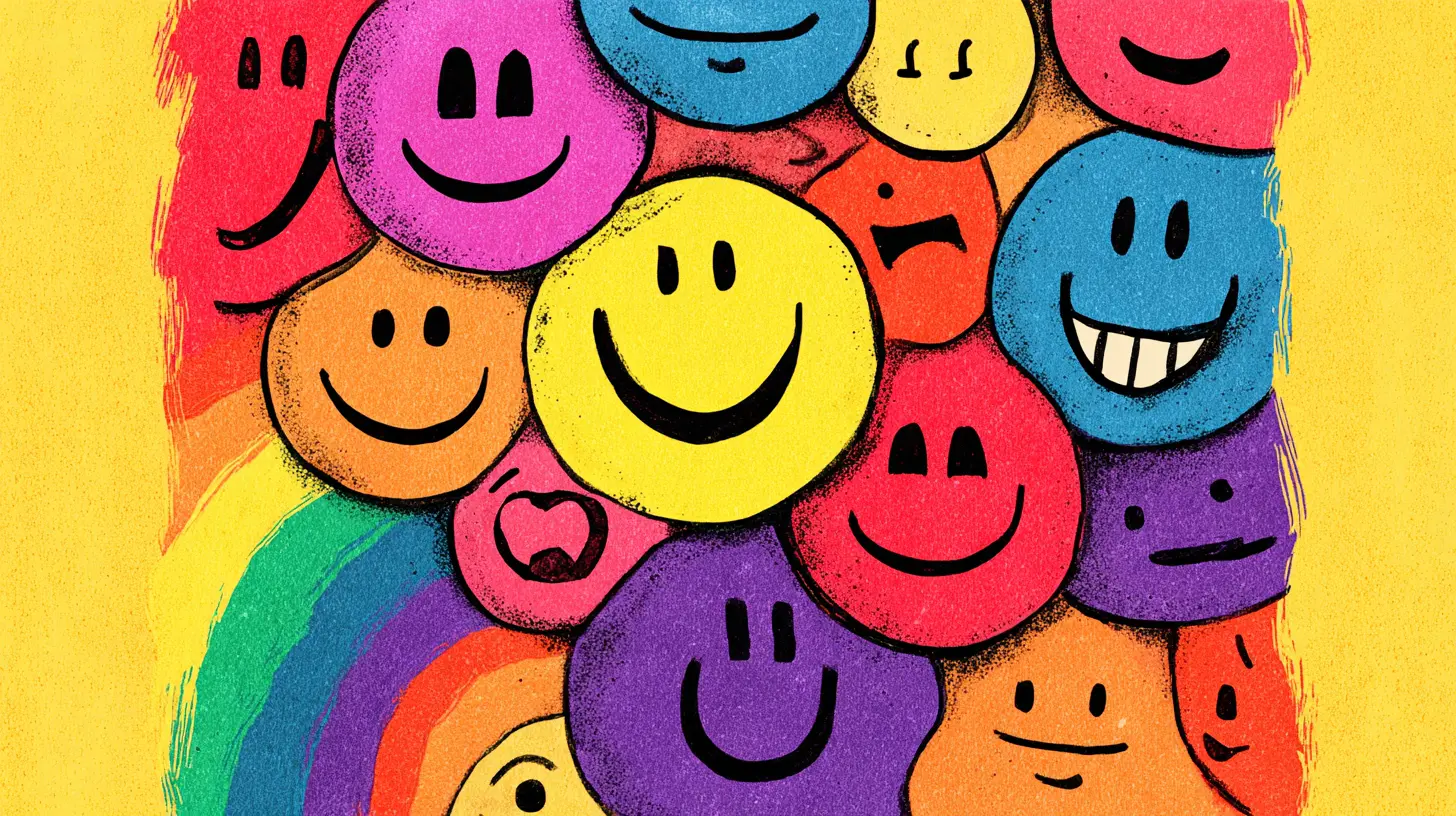
The Difference Between Feeling and Dwelling
A common objection to emotional authenticity is the fear of getting stuck. People worry that if they allow themselves to feel sad, they will never stop crying. If they allow anger, they will become destructive. This is a valid concern, but it confuses feeling with dwelling.Feeling is a wave. It rises, peaks, and falls. If you sit with sadness without judging it, it typically lasts for a few minutes to a few hours. It moves through you. Dwelling is different. Dwelling is looping the same story in your head, replaying the injustice, rehearsing the conversation you wish you had. Dwelling is rumination, and it keeps you stuck.
The skill is to feel without narrating. When you notice an emotion, you can say to yourself, "I am feeling sadness right now." That is different from saying, "My life is terrible and nothing ever works out." The first is a present-moment experience. The second is a story you are telling. You can have the feeling without buying the story.
A useful practice is to set a timer for ten minutes. During that time, you let yourself feel fully. Cry, shake, breathe, whatever comes up. When the timer ends, you make a conscious choice to shift. You get up, wash your face, go for a walk. This teaches your nervous system that you can handle the feeling, and that it will not last forever.

Creating a Personal Emotional Sanctuary
You cannot control what you feel, but you can control where you feel it. Creating a physical and mental space for emotions is a practical strategy. It does not have to be elaborate. It can be a corner of your bedroom with a chair and a blanket. It can be a specific bench in a park. It can be your car parked in the driveway.The key is consistency. When you repeatedly use the same space for emotional processing, your brain starts to associate that place with safety. You sit down, and your shoulders drop. You take a breath, and your jaw unclenches. This is a form of conditioning. It works because your nervous system learns context.
In that space, you allow yourself to speak freely. You can say the things you would never say out loud. You can admit that you are scared, that you resent your partner, that you feel like a fraud. Saying these things in a private space is not the same as acting on them. It is simply giving your inner world a voice.
Some people find it helpful to write. Journaling is not about producing beautiful prose. It is about getting the chaos out of your head and onto paper. You can write in fragments. You can write in anger. You can write the same sentence twenty times. The act of externalizing is what matters. Once it is outside you, you can look at it. You can ask, "What is this trying to tell me?"
The Role of Physical Sensation
Emotions are not just mental events. They are physical experiences. Sadness feels like heaviness in the chest. Anxiety feels like tightness in the stomach. Anger feels like heat in the face. If you only engage with emotions intellectually, you miss half of the picture.A practical exercise is to scan your body when you feel something strong. Ask yourself: Where exactly do I feel this? Is it tight, hot, cold, or heavy? Does it have a shape or a color? This might sound strange, but it works. By locating the sensation, you move out of your thinking brain and into your body. You stop analyzing and start experiencing.
Breathing is another tool. When you are overwhelmed, your breath becomes shallow and fast. You can change your emotional state by changing your breath. A simple pattern is to inhale for four counts, hold for four, exhale for six. The longer exhale activates the parasympathetic nervous system, which is your rest and digest mode. This does not make the emotion disappear. It makes the emotion tolerable.
You can also use movement. Sometimes emotions get stuck in the body. A brisk walk, a run, or even shaking your arms and legs can release that stored energy. This is why people often feel better after exercise. It is not just about endorphins. It is about completing the physical cycle of the emotion.
Navigating Relationships With Authenticity
The hardest part of emotional authenticity is not with yourself. It is with other people. When you start telling the truth about how you feel, you will get pushback. Friends who are used to your cheerful facade may be uncomfortable. Family members may tell you to get over it. Partners may feel attacked when you express anger or disappointment.This is where boundaries become essential. You do not need to share every feeling with everyone. You do need to share important feelings with important people, but you can do it skillfully. Instead of saying "You make me so angry," you can say "I feel angry when this happens." The first is an accusation. The second is an invitation to understand.
Timing matters. Do not bring up a heavy emotion when you are in the middle of a fight or when the other person is exhausted. Schedule a conversation. Say, "I need to talk about something important. Is now a good time?" This gives both of you a chance to be present. It also signals that you are not trying to ambush anyone.
It is also okay to have a support network that is not your partner. Your partner cannot be everything. Your friends cannot be your therapists. You need different people for different needs. One friend might be great for venting. Another might be good for practical advice. A therapist is trained to hold space without judgment. Trying to get all your emotional needs met by one person is a recipe for resentment.
The Danger of Spiritual Bypass
In wellness and spiritual communities, there is a concept called spiritual bypass. It is the use of spiritual beliefs to avoid dealing with painful emotions. You might hear things like "We are all one" or "Everything is an illusion" or "I just need to surrender." These ideas can be true, but they can also be used as a shield.If you are feeling grief and you immediately jump to "This is God's plan," you are not processing grief. You are bypassing it. The same goes for "I attract what I think" when you are feeling fear. That is not empowerment. That is blame disguised as wisdom.
Authentic spirituality does not deny pain. It includes pain. The great contemplative traditions do not teach that suffering is a mistake. They teach that suffering is part of the human condition, and that you can be present with it. The goal is not to transcend your emotions. The goal is to be so grounded that you can watch them without being destroyed.
If you use meditation or prayer to escape your feelings, you are using them as a drug. The test is simple: Can you sit with your emotion without trying to change it? If you cannot, then your practice is avoidance, not acceptance.
Practical Tools for Difficult Moments
You do not need a full therapy session every time you feel upset. You need a toolkit. Here are several strategies that work in different situations.The first is the "name it to tame it" technique. When you feel overwhelmed, say out loud, "I am feeling anxious right now." Naming the emotion reduces the activity in the amygdala, the fear center of the brain. It gives you a sense of control. It is not about suppressing the feeling. It is about labeling it so you can work with it.
The second is the "future self" perspective. When you are in the middle of intense pain, ask yourself: "How will I feel about this in one year?" This is not about dismissing the pain. It is about putting it in context. Most emotional pain is temporary, even when it feels permanent. This perspective helps you avoid making rash decisions based on a temporary state.
The third is the "container" method. Imagine a box in front of you. Visualize putting your emotion into the box and closing the lid. Tell yourself, "I will deal with this at 5 PM." This is not suppression. It is scheduling. You are acknowledging the emotion and giving it a specific time to be addressed. This prevents it from bleeding into every moment of your day.
The fourth is the "compassionate observer" stance. Imagine you are watching a friend who is feeling what you feel. What would you say to them? You would not say "Stop crying." You would say "This is really hard. I am here with you." Say those words to yourself. This activates your caregiving system, which calms your threat system.
When Professional Help Is Needed
There is a limit to self-help. If you have been feeling numb, empty, or hopeless for weeks, if your emotions are interfering with your ability to work or eat, if you are having thoughts of self-harm, you need professional support. This is not a failure. It is a sign of wisdom.Therapy is not about being fixed. It is about being understood. A good therapist helps you make sense of your emotional patterns. They help you see where your reactions come from. They give you tools that are tailored to your specific brain and history. No article, no matter how well-written, can replace that.
There are many types of therapy. Cognitive behavioral therapy works on changing thought patterns. Psychodynamic therapy explores past experiences. Somatic therapy focuses on the body. Acceptance and commitment therapy teaches you to make room for difficult feelings while committing to your values. You might need to try a few before you find the right fit. That is normal.
Medication is another option. For some people, antidepressants or anti-anxiety medications are life-changing. They do not numb you. They lower the volume of the alarm so you can actually do the work. There is no shame in taking medication any more than there is shame in taking insulin for diabetes. The brain is an organ, and sometimes it needs chemical support.
The Power of Naming and Normalizing
One of the most healing things you can do is simply say "I feel terrible" out loud to another human being. The moment you say it, the shame loses its grip. You realize you are not alone. This is why support groups work. This is why honest conversations with friends work. This is why writing about your struggles publicly works.Normalizing does not mean glamorizing. It does not mean wearing your depression like a badge. It means acknowledging that emotional pain is a part of life, not a personal defect. When you normalize your own feelings, you give others permission to normalize theirs. This creates a ripple effect.
In your own relationships, you can be the one who starts the conversation. Ask your friend, "How are you really doing?" and then wait for the real answer. Do not fill the silence with advice. Just listen. This simple act can be more healing than any technique.
The Balance Between Acceptance and Change
Authentic emotions do not mean passive acceptance. You can feel angry about an injustice and still work to change it. You can feel sad about a breakup and still decide to date again. You can feel anxious about a presentation and still give it. The emotion is not the enemy. The avoidance is.The key is to use emotions as information, not as commands. Anger tells you that a boundary has been crossed. Use that information to set a firmer boundary. Sadness tells you that you have lost something valuable. Use that information to appreciate what you still have. Fear tells you that you are facing something uncertain. Use that information to prepare.
This is the difference between being ruled by emotions and being informed by them. When you are ruled, you act impulsively. When you are informed, you act deliberately. You can say, "I feel scared, and I am going to do it anyway." That is courage. Courage is not the absence of fear. It is the presence of fear plus action.
A New Definition of Strength
Our culture equates strength with stoicism. The strong person does not cry. The strong person does not complain. The strong person powers through. But this is a narrow and damaging definition. Real strength is the ability to feel the full range of your humanity and still show up for your life.A truly strong person says, "I am struggling, and I need help." A truly strong person says, "I am hurting, and I do not know what to do." A truly strong person says, "I am scared, and I am here anyway." Vulnerability is not weakness. It is the highest form of courage because it risks rejection.
When you create a space for authentic emotions, you are not just helping yourself. You are modeling something for everyone around you. You are showing your children that it is okay to cry. You are showing your partner that it is okay to be imperfect. You are showing your friends that they do not have to perform happiness for you.
This is the quiet revolution. It does not happen on a stage. It happens in living rooms, in parked cars, in journal pages. It happens every time you choose to tell the truth about how you feel, even when the truth is messy. The world does not need more forced smiles. It needs more honest hearts.
all images in this post were generated using AI tools
Category:
Toxic PositivityAuthor:

Ember Forbes
Discussion
rate this article
1 comments
Zephyrian Vaughn
This article highlights an important balance between positivity and embracing authentic emotions. Thank you!
August 25, 2026 at 4:20 AM
Ember Forbes
Thank you for your thoughtful comment! I'm glad you found the balance resonant.