The Uncanny Valley: A Psychoanalytic Explanation
11 September 2026
You know the feeling. A robot looks almost human, but something is off. The eyes don't blink quite right. The smile arrives a half second too late. Your skin crawls, and you can't explain why. That dip in comfort, plotted on a graph of familiarity against emotional response, is what robotics professor Masahiro Mori described in 1970 as the uncanny valley. Engineers talk about it constantly. They treat it as a design problem to be solved with better textures, smoother motion, more convincing eyes. But the uncanny valley is not primarily an engineering problem. It is a psychological one, and psychoanalysis offers the most revealing account of what is actually happening when we recoil from a near-human face.
This article explains the uncanny valley through a psychoanalytic lens. Not because psychoanalysis is the only valid framework, but because it addresses the exact questions other explanations tend to skip: why the discomfort feels so personal, why it resembles older fears we thought we had outgrown, and why the reaction is often stronger in adults than in young children.

What the Uncanny Valley Actually Describes
Mori's original graph is simple. As an object becomes more humanlike, our affinity for it rises. Then, just before it becomes fully indistinguishable from a person, affinity plunges into a valley. A little further along, it rises again. A wooden puppet is charming. A corpse is disturbing. A moving prosthetic hand can be tolerable, but a moving prosthetic hand attached to a realistic android can be deeply unsettling.Two details in Mori's essay deserve more attention than they usually get. First, he noted that movement deepens the valley. A still mannequin is eerie. A mannequin that turns its head is terrifying. Second, he suggested the valley might have an evolutionary purpose, a warning mechanism that keeps us away from something that looks human but is not.
That second point is where most popular explanations stop. The evolutionary reading says we are wired to avoid sick or dead humans, and near-human artificial faces trip that alarm. It is plausible. It is also incomplete. It explains avoidance. It does not explain the specific quality of the feeling, which is not simple disgust. It is closer to dread, shame, and a strange sense of recognition.

Why Psychoanalysis Is the Right Tool Here
Psychoanalysis has a bad reputation in some circles, often deservedly, but its core insights about ambivalence, the double, and repressed material remain useful for understanding aesthetic and emotional reactions that resist rational explanation. The uncanny valley is exactly that kind of reaction. People cannot articulate why a realistic android bothers them. They say it is "creepy" and change the subject.Sigmund Freud wrote a short 1919 essay titled "The Uncanny" that never mentions robots, obviously, but describes the affective structure we now map onto them. His central claim is that the uncanny is not simply unfamiliar. It is something familiar that has been repressed and then returns. The German word he worked with, unheimlich, literally means "unhomely," but he showed that it collapses into its opposite, heimlich, meaning homely or hidden. The uncanny is the home that has become strange.
That paradox maps onto the valley with unusual precision. An android is not alien. It is us, rendered slightly wrong. The discomfort comes from familiarity, not distance.

The Double and the Mirror Stage
Otto Rank, one of Freud's early colleagues, wrote about the double in 1914. In folklore and literature, the double begins as a guarantee of immortality, a second self that protects against death. Over time it becomes a harbinger of death. Seeing your double means your time is up.Jacques Lacan later reframed this through the mirror stage. Around eighteen months, a child recognizes its reflection and experiences a moment of jubilation. But that recognition is also a misrecognition. The image in the mirror is more coherent, more complete, and more controlled than the child's actual body, which is uncoordinated and messy. The ego, Lacan argued, is built on this founding identification with an image that is not quite the self.
Now consider the android. It is a double in Rank's sense and a mirror image in Lacan's sense. It looks like us, it moves like us, but it is more composed, more symmetrical, and more perfectly assembled than any actual person. It is the idealized mirror image made physical, and that is precisely what makes it intolerable. It exposes the gap between the image and the lived body. The valley may be the moment when the mirror cracks.
This explains something the evolutionary account cannot. Children under a certain age often show less aversion to realistic androids and animatronics than adults do. If the valley were purely a hardwired death-detection reflex, you would expect it to be strongest early. Instead, it seems to consolidate with the ego. The more firmly you have identified with your own image, the more threatening it is to encounter that image externalized and slightly wrong.

The Death Drive and the Living Dead
Freud's concept of the death drive, or Thanatos, is one of his most contested ideas, and for good reason. But it captures something real about the uncanny valley. The android is not dead, but it is not alive either. It occupies a category that should not exist.Julia Kristeva used the term abjection for this. The abject is neither subject nor object. It is what disturbs identity, system, and order. The corpse is her primary example, but the android belongs to the same family. It is a body that refuses to stay in its proper category.
The psychoanalytic reading here is not that we consciously fear death when we see an android. It is that the android activates a category confusion that our psyche normally manages through repression. We do not walk around all day thinking about our own mortality or about the fact that our bodies are meat. We push that aside. The android pulls it back.
This is why the valley often shows up in the details. A too-smooth forehead. A gaze that holds a fraction too long. Skin that does not flush. Each detail is a small reminder that the boundary between person and thing is thinner than we like to believe.
Why Movement Deepens the Valley
Mori noticed that motion intensifies the effect, and psychoanalysis explains why. A still figure can be categorized as an object. Once it moves, it enters the realm of agency. It does something. It might want something.This is where the concept of the automaton becomes relevant. Freud and his contemporaries were fascinated by automata and by the story of Olympia, the mechanical doll in E.T.A. Hoffmann's "The Sandman" that the protagonist falls in love with. Freud used that story as the centerpiece of his uncanny essay, and his reading is telling. He argued that the uncanny in Hoffmann comes from the fear of losing one's eyes, which he connected to castration anxiety. Later critics, including Ernst Jentsch, argued that the real source is intellectual uncertainty about whether Olympia is alive.
Both readings apply to modern androids. A moving android creates uncertainty about whether it is alive, and it also threatens something about our own status. If it can pass, what does that say about what we thought was unique to us?
The Narcissistic Wound
Here is where psychoanalysis offers its sharpest contribution. Freud famously listed three great narcissistic wounds to humanity. Copernicus showed we are not the center of the universe. Darwin showed we are not separate from animals. Psychoanalysis showed we are not masters of our own minds.The realistic android delivers a fourth wound. It suggests that our faces, our voices, and our gestures are replicable. The things we treat as expressions of a unique inner self can be manufactured. That is a blow to the ego, and the ego does not take blows quietly.
The valley, on this reading, is not fear of the machine. It is a defensive reaction against a threat to the fantasy of interiority. We want to believe there is something inside us that cannot be copied. The android copies it anyway.
Common Misconceptions
Several assumptions about the uncanny valley circulate widely and deserve pushback.Misconception one: it is universal and fixed. The valley's shape varies across cultures, individuals, and contexts. People who work with robots daily, such as roboticists and animators, often report a dampened response over time. Exposure matters.
Misconception two: it applies only to robots. It shows up in prosthetics, video game characters, CGI humans, dolls, masks, and even in cosmetic procedures that push a face toward an unsettling smoothness. The mechanism is about near-human appearance, not about silicon versus flesh.
Misconception three: it can be engineered away with enough fidelity. This is the most common and most costly error. Some designers believe that if they just push past the valley, everything will be fine. But the valley is not a smooth curve you can outrun. It is a psychological threshold, and crossing it requires more than better rendering.
Misconception four: it is just disgust. Disgust is one component, but the dominant affects are dread, shame, and a sense of being watched. That mix is distinctly psychoanalytic.
Real-World Examples
The valley shows up in predictable places once you know what to look for.In film, the 2004 animated feature "The Polar Express" became a reference point for the valley. Audiences found the motion-captured faces unsettling, and many could not say exactly why. The eyes lacked the small imperfections of real gaze. The skin had a waxy quality. The characters looked like people who had been preserved.
In robotics, the Japanese roboticist Hiroshi Ishiguro built android copies of himself, known as Geminoids, and the reactions are consistently split. Some viewers find them fascinating. Others find them deeply disturbing. Ishiguro has said the goal is to understand what it means to be human by building a copy. From a psychoanalytic angle, he is staging the mirror encounter deliberately.
In medicine, prosthetic hands with realistic silicone skin sometimes provoke more discomfort than obviously mechanical ones. Patients and bystanders report that a too-realistic hand that does not move naturally is worse than a clearly artificial one. This is the valley in miniature: the closer to human, the more the failure to be human stings.
In gaming, developers learned to stylize rather than chase photorealism for exactly this reason. A stylized character can be expressive and appealing without triggering the comparison to real human faces. The trade-off is real. Photorealism can be immersive, but it raises the stakes. Every flaw becomes visible.
Practical Advice for Designers and Users
If you are building or choosing a humanlike interface, here are considerations that follow from the psychoanalytic account.Decide what you are optimizing for. If you want trust and warmth, a slightly stylized or clearly mechanical appearance often works better than a near-perfect human one. If you want uncanny horror, lean into the valley deliberately. Both are legitimate goals, but they require opposite strategies.
Pay attention to the eyes and the timing. Gaze duration, blink rate, and response latency carry enormous psychological weight. A face that looks right but responds on the wrong schedule reads as wrong. This is not about realism. It is about the rhythm of aliveness.
Consider the audience. Children, adults, and professionals who work with these systems react differently. Test with the actual population, not with a general sample.
Do not assume more realism is always better. The valley is not a slope you climb. It is a psychological boundary with a cost. Sometimes the smarter move is to stay on the near side, where charm lives.
Watch for the category problem. If your design blurs the line between person and thing in a way that feels unresolved, users will feel it even if they cannot name it. Give them a clear frame. A robot that looks like a robot is easier to accept than a robot that almost looks like a person and fails.
When the Psychoanalytic Reading Does Not Fit
No framework explains everything, and it is worth being honest about the limits.The evolutionary account remains useful for quick, automatic reactions, especially in children and in situations where disease avoidance is relevant. Cognitive accounts that focus on prediction error, the brain's attempt to match what it sees against what it expects, also explain a great deal. When a face violates expectations at a low level, the brain flags an error.
The psychoanalytic account is strongest when the reaction is disproportionate, when it involves shame or dread, and when it persists despite knowing the object is harmless. It is weakest when the reaction is a simple perceptual mismatch that fades with exposure. The wise approach is to use all three frameworks together, and to notice which one fits the specific case in front of you.
What This Means for How We Live With Humanlike Machines
The uncanny valley is not going away, and it should not. It is a signal, and like most signals it carries information. It tells us that the boundary between person and thing matters to us, that we invest enormous psychic energy in maintaining it, and that we notice when it is threatened.The psychoanalytic explanation does not tell us to avoid humanlike machines. It tells us to be honest about what we are doing when we build them. We are not just solving an engineering problem. We are staging an encounter with our own image, and that encounter has been charged since the first time a human saw a reflection and wondered who was looking back.
Designers who understand this will make better decisions. Users who understand it will be less confused by their own reactions. And anyone who has ever felt a chill at a too-perfect face will recognize that the feeling is not irrational. It is old, it is structural, and it is telling us something about what we are.
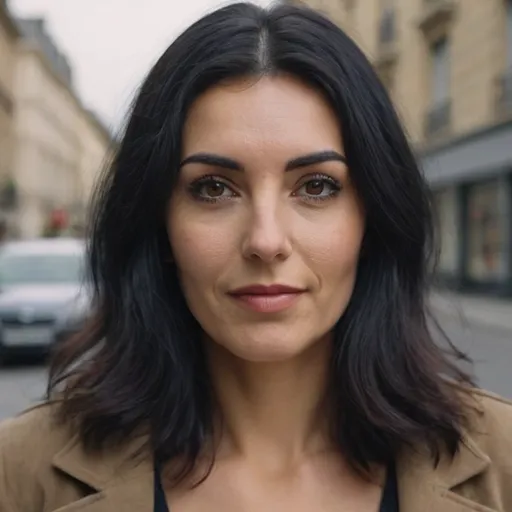
all images in this post were generated using AI tools
Category:
PsychoanalysisAuthor:
Ember Forbes
Discussion
rate this article
2 comments
Bryce Coffey
This article brilliantly explores the uncanny valley, sparking curiosity about our emotional connections with the unfamiliar!
September 26, 2026 at 3:44 AM
Ember Forbes
Thank you for your kind words! I'm glad the article resonated with you and sparked your curiosity.
Wynter Bellamy
What if our fears reveal more than we think about ourselves?
September 13, 2026 at 5:06 AM
Ember Forbes
That's an interesting perspective. Our fears often reflect deeper insecurities and desires, revealing aspects of our psyche we might not confront otherwise. They can guide us toward understanding our true selves and the boundaries we create.