Cognitive Bias in the Workplace: What Managers Should Know
30 September 2026
Every manager makes decisions with incomplete information. That is not a flaw; it is the job. The trouble starts when the brain fills in the gaps automatically, using shortcuts that feel like clear thinking but are actually predictable errors. These errors are called cognitive biases, and they shape hiring choices, performance reviews, project approvals, and how teams treat each other. A manager who understands them does not become immune, but gains something more useful: the ability to notice when a decision might be skewed and to build checks before the damage is done.
This article covers the biases that matter most in day-to-day management, why they exist, how they show up in real situations, and what you can actually do about them. It also covers when bias-correction efforts backfire, because not every fix works the way people assume.

Why Cognitive Biases Exist and Why They Persist
The human brain processes an enormous amount of information every day. Conscious, deliberate reasoning is slow and consumes energy. So the mind relies on mental shortcuts, sometimes called heuristics, to make fast judgments. Most of the time these shortcuts work well enough. You do not need to calculate the trajectory of a falling cup to catch it.In the workplace, though, the stakes are higher and the feedback is slower. A snap judgment about a job candidate might feel right and still be wrong, and you may never find out. That combination, fast intuition plus delayed or absent feedback, is what allows biases to survive. They are not signs of low intelligence. Highly experienced managers are often more vulnerable, because their intuition is built on patterns that may no longer apply or may never have been accurate in the first place.
Understanding this matters for one practical reason: you cannot will a bias away. Knowing about confirmation bias does not stop you from seeking evidence that supports your existing view. What you can do is change the process around the decision, so the bias has less room to operate.
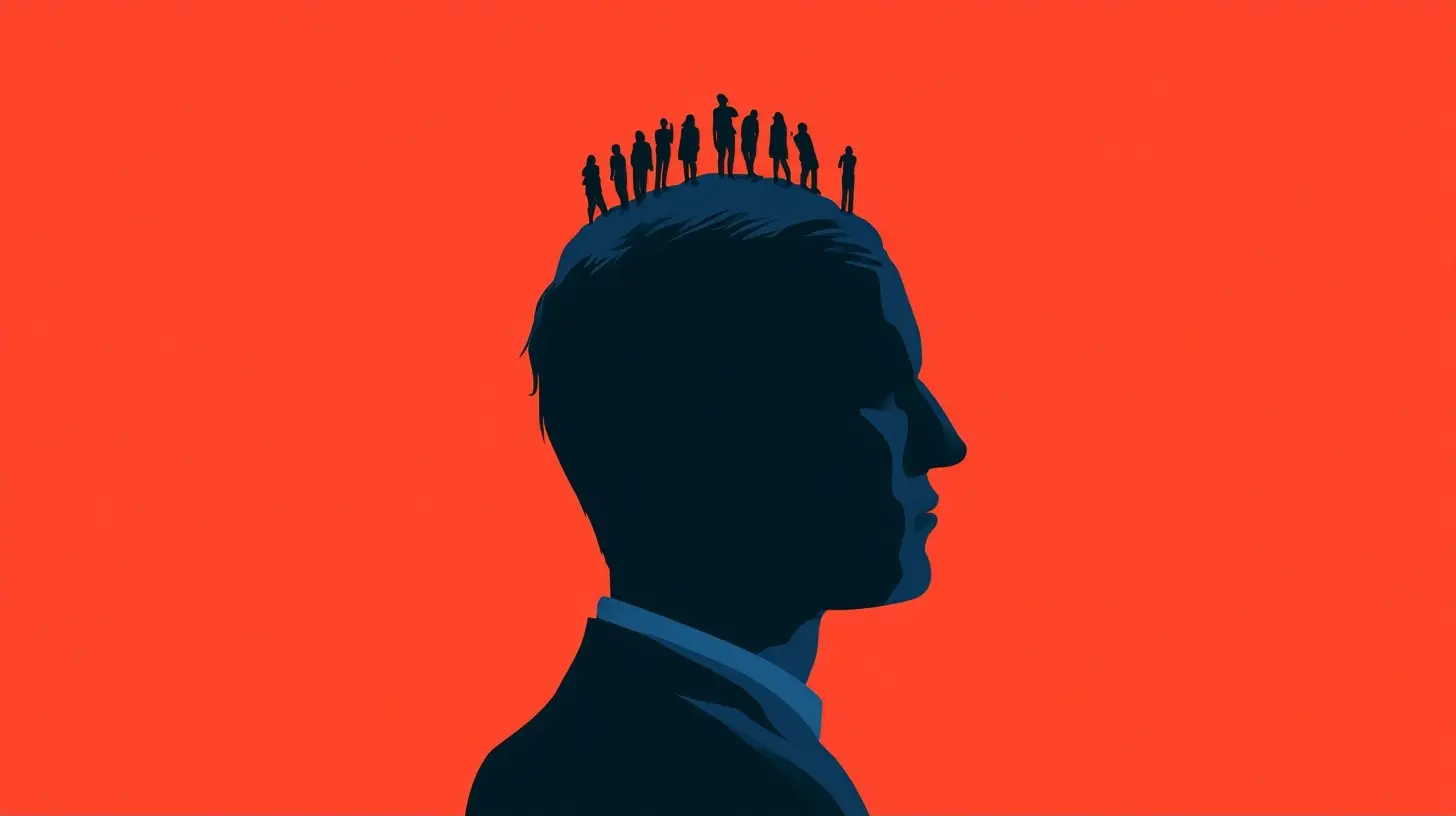
The Biases That Show Up Most Often in Management
Confirmation Bias
Confirmation bias is the tendency to notice, remember, and favor information that supports what you already believe, while ignoring or discounting information that contradicts it.Consider a manager who has decided that an employee is "not strategic." In meetings, the manager notices every tactical comment the employee makes and overlooks the moments when the employee raises a bigger-picture concern. Over time, the manager's impression feels solidly evidence-based, but the evidence was filtered from the start.
This bias is especially dangerous in performance management because it compounds. Once a label is attached, the manager's attention naturally collects proof for it.
The Halo and Horn Effect
The halo effect is when one strong positive trait colors your judgment of everything else about a person. A confident speaker gets rated as more competent, more likable, and more capable than the evidence supports. The horn effect is the reverse: one negative impression drags down every other assessment.In hiring, this shows up constantly. An interviewer who connects well with a candidate may rate their technical answers more generously than they deserve. Structured interviews and scoring rubrics exist largely to interrupt this pattern.
Anchoring
Anchoring is the tendency to rely too heavily on the first piece of information you receive. In salary negotiations, the first number mentioned often shapes the entire conversation, even when both sides know it was arbitrary. In project planning, the first estimate a team produces can anchor every later discussion, so revisions tend to be small adjustments rather than fresh assessments.Anchoring is not limited to numbers. The first person to speak in a meeting often sets the frame everyone else responds to.
Availability Bias
Availability bias means judging the likelihood of something based on how easily examples come to mind. A manager who just handled a serious customer complaint may overestimate how common that problem is and push for a sweeping policy change. A manager who recently read about a data breach may over-invest in security while under-investing in a more probable risk.Vivid, recent, and emotional events are easier to recall, so they distort our sense of what is actually frequent.
The Fundamental Attribution Error
This is the tendency to explain other people's behavior by their character while explaining our own behavior by the situation. When a team member misses a deadline, the automatic explanation is "they are disorganized." When you miss a deadline, the explanation is "the requirements kept changing."This error poisons feedback conversations. It leads managers to address personality rather than conditions, which rarely produces change and often produces defensiveness.
Sunk Cost Fallacy
The sunk cost fallacy is the reluctance to abandon a project because of the time, money, or effort already invested, even when the rational path is to stop. Managers fall into this trap because ending a project can feel like admitting failure. But resources already spent are gone regardless of what you decide next. The only relevant question is whether continuing produces more value than the alternatives available now.In-Group Bias
People naturally favor those who seem similar to themselves or belong to their own group. In practice, this can mean a manager gives more benefit of the doubt to someone who shares their background, communication style, or alma mater. It is often subtle and unintentional, which is exactly why it is hard to catch without deliberate effort.The Planning Fallacy
The planning fallacy is the tendency to underestimate how long tasks will take and how much they will cost, even when you have evidence from similar past projects. Most people plan based on best-case scenarios without accounting for the interruptions, dependencies, and unexpected problems that reliably occur.
How These Biases Interact
Biases rarely operate alone. A single hiring decision might involve anchoring on a candidate's previous salary, a halo effect from a strong first impression, and confirmation bias while reviewing references. Each one nudges the decision, and together they can produce a confident choice that is badly wrong.This interaction is why isolated awareness is not enough. Reading about biases can create an illusion of immunity. The real leverage comes from changing the structure of decisions: who is involved, when information is shared, and how conclusions are recorded.

Practical Strategies That Actually Reduce Bias
Use Structured Processes for High-Stakes Decisions
For hiring, use the same questions in the same order for every candidate, and score answers independently before discussing them as a group. This reduces anchoring and halo effects because each interviewer forms an impression before being influenced by others.For performance reviews, collect specific examples throughout the review period rather than relying on memory at the end. Memory is biased toward recent and vivid events, so a running log corrects for that.
Separate Idea Generation From Evaluation
When a team brainstorms, the first ideas tend to anchor the discussion. A simple fix: generate ideas silently in writing first, then share them. This prevents the loudest or fastest voice from setting the frame.Assign a Devil's Advocate, or Better, Ask for Disconfirming Evidence
Asking someone to argue against a plan can help, but the role is uncomfortable and often performed half-heartedly. A stronger approach is to ask a specific question: "What evidence would tell us this plan is wrong, and do we have any of it?" This makes disagreement part of the process rather than a personal attack.Use Pre-Mortems
Before committing to a project, gather the team and imagine it has failed six months from now. Ask each person to write down the most likely reasons. This technique, popularized by psychologist Gary Klein, surfaces risks that optimism and groupthink tend to suppress. It works because it reframes doubt as a legitimate part of planning rather than disloyalty.Delay Final Decisions When Possible
If a decision is not urgent, sleeping on it can genuinely help. Research on decision-making suggests that unconscious processing can sometimes improve complex choices, and more importantly, time reduces the intensity of emotional anchoring. The key phrase is "when possible." Some decisions need to be made quickly, and delaying them creates its own costs.Track Decisions and Outcomes
Keep a simple decision log: what you decided, what you expected to happen, and why. Review it periodically. This creates the feedback loop that bias normally prevents. Without it, you cannot tell whether your judgment is improving.Common Mistakes Managers Make When Trying to Fix Bias
Assuming Awareness Is Enough
Many organizations run a single training session on unconscious bias and consider the problem addressed. The evidence on whether such training changes behavior is mixed at best. Some studies suggest it can even backfire by making people feel they have already solved the problem. Training can be a useful starting point, but it is not a substitute for process change.Overcorrecting Into Paralysis
Some managers, once aware of bias, become hesitant to make any judgment at all. This is its own failure mode. Judgment is necessary. The goal is not to eliminate intuition but to test it against evidence and structure when the stakes justify the effort.Applying Bias Correction Uniformly
Not every decision deserves a full structured process. Using a scoring rubric to choose where to have lunch is a waste. The skill is matching the rigor of the process to the stakes and reversibility of the decision. High-stakes, hard-to-reverse decisions deserve more structure. Low-stakes, easily reversed ones do not.Ignoring Cultural and Contextual Factors
Bias correction techniques developed in one cultural context may not transfer cleanly to another. In some cultures, directly challenging a manager's idea in a meeting is deeply uncomfortable, so a devil's advocate approach may produce silence rather than genuine dissent. Anonymous written input or one-on-one conversations may work better. The principle stays the same; the method has to fit the people.Confusing Bias With Bad Intent
Most bias is unintentional. Treating it as a character flaw makes people defensive and less likely to engage with the process. Framing it as a shared human tendency, and focusing on systems rather than individuals, tends to produce better results.
When Bias Correction Can Go Too Far
There is a real trade-off between speed and accuracy. Structured hiring processes take longer and cost more. Pre-mortems add time to planning. Decision logs require discipline. In fast-moving environments, these costs can outweigh the benefits for certain decisions.There is also a risk of false confidence. A structured process can make a decision feel more objective than it is. A rubric filled out by biased humans is still influenced by bias, just differently. The process reduces some errors while potentially introducing others, such as over-weighting criteria that are easy to measure over qualities that matter more but are harder to quantify.
The honest position is this: bias mitigation is a practice of reducing harm, not achieving perfection. Managers who accept that framing tend to use these tools more wisely than those looking for a definitive fix.
Building a Team Culture That Catches Bias Early
Individual effort has limits. A team culture where people can raise concerns without retaliation catches more errors than any single manager can. That culture does not appear by accident. It is built through small, consistent behaviors:- Thanking people publicly when they raise a dissenting view
- Asking quieter team members for their input directly
- Separating the person from the idea when critiquing
- Being explicit about which decisions are open for debate and which are not
Managers who model these behaviors make it safer for others to do the same, and over time the team develops a collective resistance to the biases that individuals cannot see in themselves.
A Closing Note on Humility
The most useful thing a manager can take from this topic is not a checklist but a stance: hold your judgments with appropriate confidence, and build habits that let reality correct you. You will still get things wrong. The difference is that you will find out sooner, and you will have a process for adjusting.Cognitive bias is not a problem you solve once. It is a condition you manage, the same way you manage any other persistent risk in your work.
all images in this post were generated using AI tools
Category:
Cognitive BiasesAuthor:

Ember Forbes