The Role of Cognitive Biases in Modern Relationships
15 August 2026
We carry a strange paradox into our most intimate bonds. We want to be seen clearly, yet we filter everything through a lens warped by experience. We crave honesty, but our brains actively distort the evidence. This is not a flaw of character. It is a feature of human cognition, a set of shortcuts that helped our ancestors survive on the savanna but now quietly sabotage our text threads, our dinner-table arguments, and our ability to feel loved.
To understand modern relationships is to understand the machinery of perception. Every glance, every silence, every passive-aggressive comment about the dishes passes through a neural sieve that edits, exaggerates, and deletes. The person you love is not the person you perceive. And the person you are to them is not who you think you are. This gap is where most heartbreak begins.
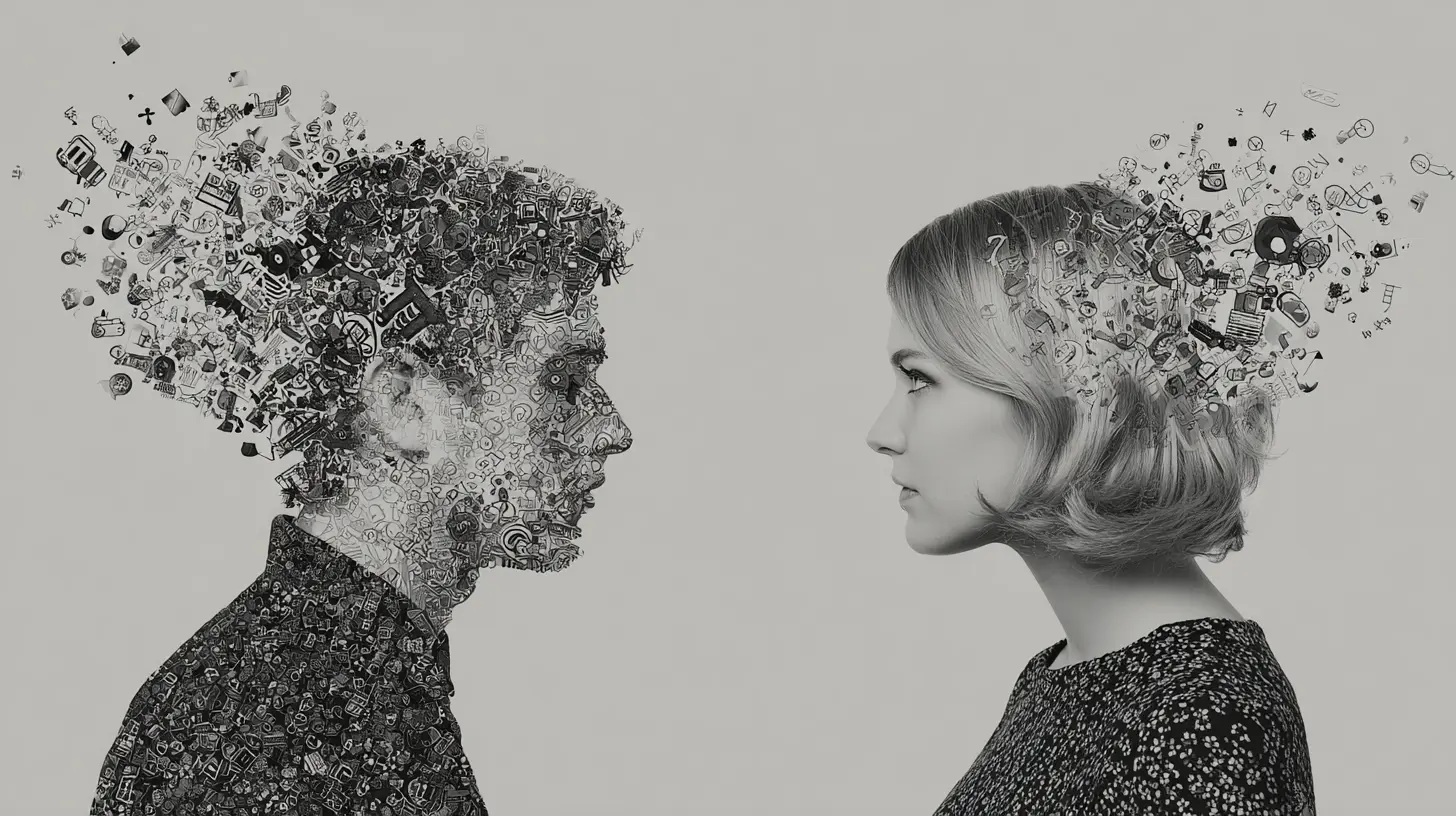
The Architecture of Misreading
Cognitive biases are not random errors. They are systematic patterns of deviation from rational judgment. They form the operating system of the social brain. In a world of scarce information, they were efficient. In a world of constant digital communication, they become landmines.Consider the modern couple. They text throughout the day. Each message is stripped of tone, body language, and timing. The brain hates a vacuum, so it fills it with narrative. A delayed reply becomes a statement of disinterest. A short answer becomes proof of anger. This is not sensitivity. This is the brain doing its job, albeit poorly.
The deeper problem is that these biases operate below conscious awareness. You do not choose to feel jealous when your partner likes a coworker's photo. The feeling arrives fully formed, with a story attached. By the time you are aware of the emotion, the bias has already done its damage. This is why insight alone rarely fixes relationship conflict. You cannot out-think a process you cannot see.

The Spotlight of Confirmation Bias
Few biases shape relationships more than confirmation bias, the tendency to seek, interpret, and remember information that supports what you already believe. Once you decide your partner is careless, you will notice every forgotten chore and overlook every thoughtful gesture. Once you decide they are selfish, their generosity becomes manipulation.This creates a self-fulfilling prophecy. You watch for signs of betrayal, so you find them. You find them, so you pull away. Your partner feels the distance, interprets it as rejection, and withdraws further. The very behavior you feared becomes the behavior you caused. This is not a communication problem. It is a perception problem.
The practical fix is not to stop having judgments. That is impossible. The fix is to deliberately seek disconfirming evidence. When you catch yourself thinking, "They never listen to me," force yourself to recall three times they did listen. This feels unnatural because it is. You are fighting a neural default. But the effort rewires the narrative, and the narrative is what you actually live in.
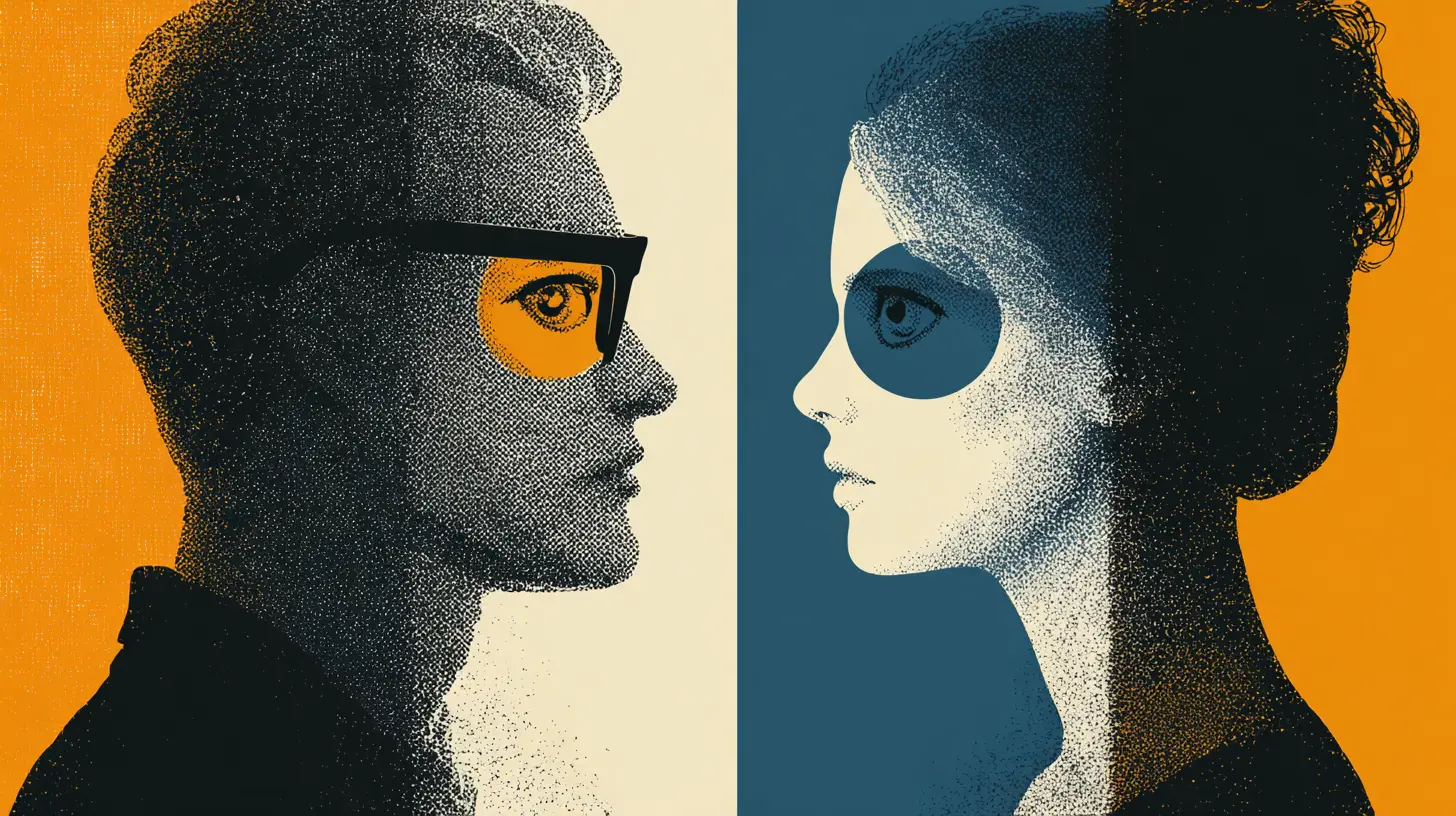
Negativity Bias and the Weight of One Bad Day
The human brain is Velcro for negative experiences and Teflon for positive ones. This negativity bias evolved because missing a threat was more dangerous than missing an opportunity. In a relationship, this means one harsh word can erase ten kind ones. A single moment of impatience can overshadow a week of affection.This asymmetry is brutal in practice. You can have a wonderful morning, a lovely dinner, and then one sarcastic remark at ten pm. That remark becomes the story of the day. It becomes the story of the relationship if repeated often enough. The positive memories do not disappear. They just do not carry the same emotional weight.
The antidote is intentional savoring. When something good happens, you must pause and let it land. Do not rush to the next thing. Name it. Say out loud, "That felt good." This is not self-help fluff. It is a deliberate counterweight to a brain that wants to discard the good and hoard the bad. Couples who do this well are not more fortunate. They are more attentive.

The Fundamental Attribution Error in the Heat of an Argument
When your partner is late, you think they are inconsiderate. When you are late, you think traffic was terrible. This is the fundamental attribution error, the tendency to explain other people's behavior with personality and our own behavior with circumstance. It is the quiet engine of most resentment.The error is not just about blame. It is about the story you tell about who your partner is. If you attribute their irritability to a bad night's sleep, you feel compassion. If you attribute it to a mean streak, you feel attacked. The same behavior, two completely different realities. The difference is not in the facts. It is in the attribution.
To counter this, you must ask a different question. Instead of "Why are they acting this way?" ask "What circumstances might explain this?" This is not about excusing bad behavior. It is about accuracy. You cannot address a problem you have misdiagnosed. And most relationship problems are misdiagnosed because the diagnosis is made in the heat of the moment, when the brain is least reliable.
The Anchoring Effect and the Myth of the Perfect Partner
We enter relationships with anchors, reference points from past lovers, parents, movies, and social media. These anchors set the baseline for what we consider acceptable. If your previous partner was emotionally distant, your current partner's moderate warmth may feel overwhelming. If your parents argued loudly, silence may feel like danger.The anchoring effect distorts your expectations in both directions. You may undervalue a good partner because they do not match an idealized image. Or you may overvalue a bad one because they remind you of a familiar dynamic. The anchor is not rational. It is a memory, and memories are not data.
The mistake is to assume that your gut feeling about your partner is a reliable measure of their worth. It is not. It is a measure of how closely they match your internal template, a template built on incomplete and biased information. This is why people say they love someone who is clearly wrong for them. They are not loving the person. They are loving the anchor.
The Availability Heuristic and the Drama of Recency
The availability heuristic is the tendency to judge the likelihood of something by how easily examples come to mind. In relationships, this means the last argument dominates your assessment of the whole union. You have had four hundred good days and one terrible one. But the terrible one is vivid, emotional, and recent. It feels more true.This is why couples can have a beautiful weekend and then ruin it with a twenty-minute fight on Sunday night. The fight is not more significant. It is just more available. The brain mistakes ease of recall for frequency. It mistakes intensity for importance. This is also why social media is so toxic for relationships. You see curated highlights of other couples and assume your own relationship is lacking. You are comparing your behind-the-scenes to their highlight reel, and the availability of their perfection makes your reality feel inadequate.
The counter is to build a memory bank on purpose. Take a note on your phone after good moments. Write down a funny thing they said, a kind thing they did. This is not obsessive. It is a tool. When the availability heuristic tries to convince you that everything is broken, you have hard evidence to the contrary. You are not lying to yourself. You are correcting a bias.
The Sunk Cost Fallacy and the Fear of Letting Go
One of the most painful biases in relationships is the sunk cost fallacy, the belief that because you have invested so much, you must continue. This keeps people in dead-end relationships for years. The reasoning feels logical. "We have been together for seven years. I cannot walk away now." But the seven years are gone. They are not a reason to lose seven more.The fallacy is powerful because it is tied to identity. Admitting the relationship is wrong feels like admitting your past was a mistake. But the past is not a mistake. It is a learning experience, or it should be. The cost is already paid. The question is not what you have invested. The question is what you will gain by staying or leaving.
This is not an argument for giving up easily. It is an argument for clarity. Ask yourself: if I met this person today, with no history, would I choose them again? If the answer is no, the history is not a reason to stay. It is a reason you have been staying. That distinction is everything.
The Projection Bias and the Illusion of Sameness
We assume our partner thinks like we do. This projection bias is the quiet assumption that what is obvious to us is obvious to them. You think, "They know I need space when I am stressed." But they do not know. They may think you need comfort. You feel ignored. They feel rejected. Neither is wrong. Both are projecting.This is especially dangerous in the early stages of love, when the similarity between partners feels uncanny. You like the same movies, the same food, the same jokes. The brain generalizes this into "we are the same person." Then the first real conflict hits, and it feels like betrayal. The shock is not about the conflict. It is about the collapse of the illusion.
The fix is radical curiosity. Ask your partner what they mean instead of assuming you know. Ask them what they need instead of assuming it matches your needs. This sounds simple, but it requires humility. You must accept that the person next to you is a separate mind, not a mirror. That acceptance is the foundation of genuine intimacy.
The Optimism Bias and the Danger of "We Will Be Different"
Every couple believes they will beat the odds. This optimism bias is beautiful and necessary. It gives you the courage to commit. But it also blinds you to red flags. "He will change after we get married." "She will calm down once we have kids." "We fight a lot, but our love is stronger than that." These are not statements of faith. They are statements of bias.The optimism bias is not entirely wrong. People do change, and love does overcome obstacles. But it is a terrible substitute for evidence. A relationship is a system of habits, and habits are hard to break. If the system is broken before the wedding, it will likely be broken after. The bias makes you think the ring is a magic wand. It is not. It is a piece of metal.
The practical approach is to assume that the problems you see now are the problems you will have later, only more so. Does that sound pessimistic? It is actually realistic. If you can accept that, you can make an informed choice. If you cannot accept it, you are betting your future on a bias that has a terrible track record.
The In-Group Bias and the Us vs. Them Trap
Once you commit to a partner, you form a team. This in-group bias can be healthy. It creates loyalty and shared identity. But it can also become toxic when the group is defined against others. "Us against the world" becomes "us against my family" or "us against your friends." The bias makes your partner's critics your enemies, even when those critics are pointing out real issues.This is a trade-off. The loyalty that protects your bond can also isolate you from feedback. Your partner's friend may see something you do not. Your mother may notice a pattern you have normalized. The in-group bias tells you to dismiss them. But the dismissiveness is not loyalty. It is fear.
The best couples have a porous boundary. They defend each other, but they also listen to outside perspectives. They know that a third party can see the dynamics that are invisible from the inside. This is not disloyalty. It is intelligence. The bias wants you to close ranks. Wisdom asks you to keep a door open.
The Halo Effect and the Charisma Trap
The halo effect is the tendency to let one positive trait color your perception of everything else. Someone who is attractive is assumed to be kind. Someone who is funny is assumed to be honest. Someone who is successful is assumed to be emotionally stable. This is why people are shocked when a charming partner turns out to be abusive. The charm created a halo that obscured everything else.The halo effect is particularly strong in the early stages of dating, when you are flooded with dopamine and the brain is eager to idealize. You see what you want to see. The flaws are there, but they are invisible because the halo is so bright. This is not a reason to be cynical. It is a reason to slow down. Time is the only reliable antidote to the halo. The glow fades, and the real person emerges.
If you are in a new relationship, do not make major decisions in the first six months. Do not move in together, do not combine finances, do not get engaged. The halo will be gone by then, and you will finally see the person you chose. If you still love them then, it is real. If you do not, you have saved yourself a great deal of pain.
The Contrast Effect and the Comparison Game
The contrast effect is the tendency to judge something not on its own merits but in comparison to an alternative. In modern dating, this is lethal. You meet someone great, but you are still swiping. You compare them to the next person, and the next person, and the person after that. Nobody can win this game because the comparison set is infinite.This effect also operates within a relationship. You compare your partner to your friends' partners, to your ex, to a fictional character. The comparison is always unfair because you are comparing your partner's worst moments to someone else's best moments, or to a fantasy that does not exist. The result is chronic dissatisfaction, not because your partner is inadequate, but because the comparison is rigged.
The solution is to stop comparing. This is easier said than done, especially in a culture that encourages constant evaluation. But you can set boundaries. Limit social media. Stop discussing your relationship in detail with friends who are single or unhappy in their own relationships. Focus on the actual person in front of you. The contrast effect thrives on abstraction. It dies in the presence of the real.
The Bias Blind Spot and the Illusion of Objectivity
The most dangerous bias is the bias blind spot, the belief that you are less biased than everyone else. You can see your partner's confirmation bias, your friend's negativity bias, your mother's sunk cost fallacy. But you cannot see your own. This is not arrogance. It is a structural feature of the mind. You are inside your own head, so you cannot see the lens. You can only see what the lens shows.This is why relationship advice is so hard to follow. When a therapist points out a pattern, you feel accused. When a friend suggests you are projecting, you feel insulted. The bias blind spot makes you defensive because it tells you that you are the rational one, and everyone else is biased. The truth is that everyone is biased, including you. Especially you.
The practical response is humility. Assume you are wrong about something, even if you do not know what it is. Assume your perception is incomplete. This does not mean you should doubt everything. It means you should hold your conclusions loosely. The moment you say "I know exactly what is happening here" is the moment you are most likely to be trapped by a bias you cannot see.
A Practical Framework for Living with Bias
You cannot eliminate cognitive biases. They are part of being human. But you can build a practice that reduces their damage. This is not about becoming a robot. It is about becoming a more accurate observer of your own mind.First, name the bias when you feel a strong emotional reaction. Say to yourself, "I am experiencing confirmation bias right now" or "This is the negativity bias talking." The naming creates a small distance between you and the feeling. That distance is enough to prevent an impulsive reaction.
Second, delay your response in conflict. Do not send that text. Do not make that accusation. Wait twenty-four hours if you can. The bias is strongest in the moment. It fades with time. The problem you are furious about tonight may look different tomorrow morning. Not because it was not real, but because your perception of it was distorted.
Third, create a shared vocabulary with your partner. Talk about biases openly. Say, "I think I am doing the fundamental attribution error right now" and your partner will understand what you mean. This is not clinical. It is practical. It turns a fight into a conversation about perception, which is a conversation you can actually win.
Fourth, build rituals that counteract the biases. Express gratitude daily, not because you are cheesy, but because it fights the negativity bias. Seek outside perspectives, not because you are weak, but because it fights the in-group bias. Revisit your reasons for staying together, not because you are insecure, but because it fights the sunk cost fallacy.
The Beauty of the Imperfect Mind
There is a strange comfort in understanding these biases. They explain why love is so hard. They explain why two intelligent, well-meaning people can hurt each other so deeply. They explain why the same arguments repeat for decades. It is not because you are broken. It is because you are human, and being human means seeing the world through a distorted lens.But the same biases that cause the pain can also create the beauty. The confirmation bias that makes you see flaws can also make you see virtues, if you point it in that direction. The optimism bias that blinds you to red flags can also give you the strength to try again after heartbreak. The halo effect that makes you idealize a new lover is the engine of romance. The brain is not your enemy. It is a tool, and it is up to you how you use it.
The goal is not a bias-free relationship. That does not exist. The goal is a relationship where you know your biases, you name them, and you make room for them. You accept that you will never see your partner perfectly, and they will never see you perfectly. And you love each other anyway, in the space between what is real and what you perceive. That space is where the best relationships live. It is messy, it is imperfect, and it is the most honest place you will ever stand.
all images in this post were generated using AI tools
Category:
Cognitive BiasesAuthor:
Ember Forbes
Discussion
rate this article
1 comments
Sonya Harris
This article offers valuable insight into how cognitive biases shape our perceptions and interactions in relationships. Understanding these biases can lead to improved communication and healthier connections, ultimately fostering deeper emotional bonds between partners.
August 16, 2026 at 4:10 AM