Rewiring Your Brain for Emotional Growth
16 August 2026
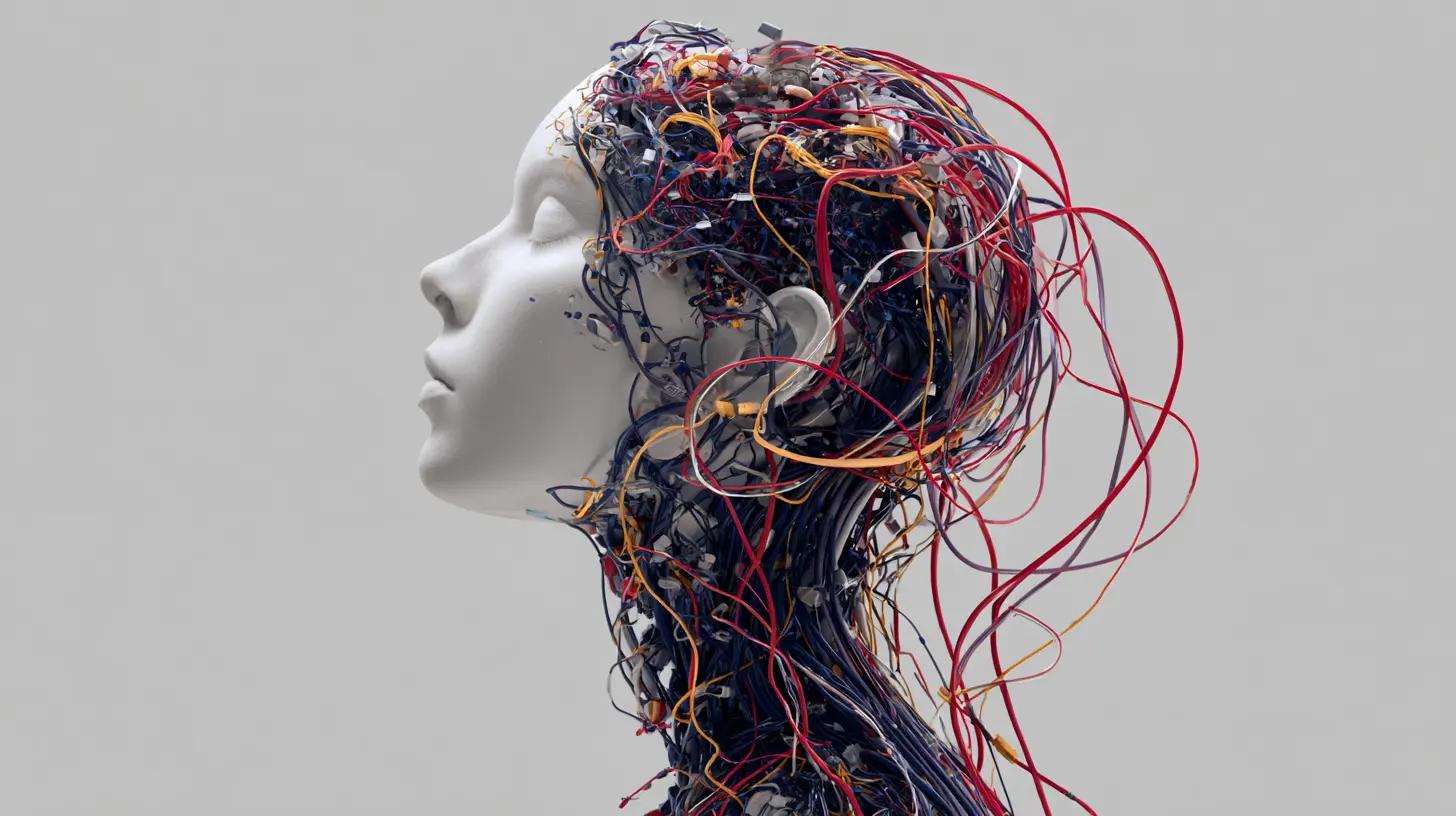
Most people treat their emotional patterns like a fixed personality trait. They say things like "I have always been anxious" or "I just get angry easily" as if these tendencies were carved into stone at birth. But the truth is far more interesting and far more hopeful. Your brain is not a static organ. It is a living, changing network that physically rewires itself based on how you use it. This process is called neuroplasticity, and it is the foundation for real emotional growth.
The problem is that most advice about emotional growth focuses on positive thinking or willpower. You are told to just calm down, just be happier, just let things go. That approach fails because it targets the surface of your emotions rather than the underlying neural architecture that generates them. If you want to change how you feel, you have to change how your brain processes information. And that requires a specific, repeatable set of practices that work with your biology, not against it.
Here is what you need to understand about rewiring your brain for emotional growth, including why it works, what gets in the way, and how to do it without turning your life into a self-help project.
The Science of Emotional Habits
Your brain is built for efficiency. Every time you experience a strong emotion, your brain fires a specific set of neural pathways. The first time you feel jealous, for example, those neurons fire together in a certain sequence. The tenth time, the same sequence fires faster because the connections have strengthened. The hundredth time, the pathway is so well-worn that the emotion triggers almost automatically, before you even have a conscious thought about it.Neuroscientists sometimes summarize this with the phrase "neurons that fire together wire together." That is the fundamental mechanism behind emotional habits. Your brain does not distinguish between helpful patterns and harmful patterns. It simply strengthens whatever you repeat. So if you repeatedly respond to stress with panic, your brain becomes better at panicking. If you repeatedly respond to criticism with defensiveness, your brain becomes better at defending. You are not stuck with these patterns, but you are stuck with the physical changes that repetition has already created.
This is why insight alone rarely changes behavior. Understanding why you are anxious does not rewire the anxiety pathway. You can have a perfect intellectual model of your childhood trauma, your attachment style, or your cognitive distortions, and still feel the same panic in your chest. Insight is useful for direction, but it is not the mechanism of change. The mechanism is repeated experience.
Emotional growth, then, is not about figuring yourself out. It is about systematically exposing your brain to new emotional experiences often enough that the new patterns become the default. That is a very different project than most people imagine.

Why Willpower Is Not Enough
A common mistake is trying to suppress or override unwanted emotions with sheer force. You tell yourself to stop being angry. You grit your teeth and try to push the sadness down. This approach fails for a biological reason. When you try to suppress an emotion, your brain registers the emotion as a threat that requires effortful control. That control burns glucose and depletes your cognitive resources. Over time, the suppressed emotion becomes stronger because your brain is essentially rehearsing it every time you fight it.Think of suppression as trying to hold a beach ball underwater. It takes constant energy to keep it down, and the moment you relax, it pops back up with even more force. Suppression also teaches your brain that the emotion is dangerous, which increases your overall sensitivity to that emotion. You end up more reactive, not less.
The alternative is not to let every emotion run wild. The alternative is to change your relationship to the emotion so that your brain does not perceive it as a threat in the first place. This is where practices like mindfulness and cognitive reappraisal come in. They are not about feeling better immediately. They are about retraining your brain to process emotional signals differently.

The Core Process: Attention and Reappraisal
There are two main levers you can pull to rewire emotional patterns. The first is attention. The second is interpretation.Attention is powerful because your brain allocates resources based on what you focus on. If you constantly scan for threats, your brain strengthens the threat-detection network. If you practice focusing on neutral or positive details, you strengthen the networks associated with calm and safety. This is not toxic positivity. It is a deliberate redirection of attention to balance an overactive alarm system.
For example, consider someone with social anxiety. Their attention automatically locks onto signs of rejection: a frown, a glance away, a pause in conversation. They miss all the neutral and positive cues. The rewiring process involves training attention to notice the whole field, not just the threatening parts. You can do this with simple exercises like counting the number of people who smile at you in a day, or noticing the texture of objects around you when you feel anxious. This sounds trivial, but it changes the data your brain receives, and the brain adapts to the data.
The second lever is interpretation, also called cognitive reappraisal. This means changing the meaning you assign to an event. The same event can produce very different emotions depending on how you interpret it. A job rejection can mean "I am worthless" or it can mean "This particular role was not a fit." The event is the same. The emotion is different. Your brain does not respond to reality. It responds to your model of reality.
Reappraisal works because it forces your brain to generate alternative explanations. Each time you do this, you weaken the old automatic interpretation and strengthen a new one. This is not about lying to yourself. It is about considering evidence that your automatic interpretation ignores. The key is to do this in a specific way. You cannot just say "I should not feel this way." You have to actively generate a different story that is believable and grounded in facts.

Practical Techniques That Actually Change the Brain
If you want to rewire your brain, you need practices that are specific, repeated, and emotionally engaging. Here are several methods that have strong support in clinical practice and neuroscience research, along with guidance on how to use them properly.Labeling Emotions with Precision
One of the simplest and most effective techniques is emotional labeling. When you feel distressed, pause and name the emotion with as much precision as possible. Do not just say "bad." Say "I feel humiliated" or "I feel abandoned" or "I feel resentful." This act of labeling activates the prefrontal cortex, which is the thinking part of your brain, and down-regulates the amygdala, which is the alarm center.The reason this works is that precise labeling forces your brain to process the emotion as a category rather than as a raw bodily state. Raw states are overwhelming. Categories are manageable. You can do this out loud or in writing. Writing tends to be more effective because it slows down the process and engages more neural resources.
A common mistake is labeling too vaguely or labeling with judgment. Saying "I feel stupid" is not an emotion. That is a self-evaluation. The emotion underneath might be embarrassment or shame. Label the emotion, not the story about yourself.
The 90-Second Rule
There is a well-known concept in psychology that the chemical half-life of an emotion in the body is about 90 seconds. This does not mean emotions only last 90 seconds. It means that the initial physiological surge, the adrenaline and cortisol spike, subsides within that window if you do not keep re-triggering it with your thoughts. Most emotional suffering is not the emotion itself. It is the mental loop that keeps replaying the trigger, which causes your body to re-release stress hormones over and over.The practice here is simple. When you feel a strong emotion, set an internal timer for 90 seconds. Do not fight the feeling. Do not analyze it. Just observe the physical sensations in your body. Notice the heat in your chest, the tightness in your throat, the shaking in your hands. After 90 seconds, the peak will pass. You will still have thoughts about the situation, but the physical intensity will drop. This teaches your brain that emotions are temporary events, not permanent states.
The trade-off is that this feels counterintuitive. You want to solve the problem or escape the feeling. But the 90-second rule is not about solving anything. It is about building distress tolerance, which is a prerequisite for any deeper emotional work.
Cognitive Reappraisal in Action
Reappraisal requires practice because your brain will resist alternative interpretations, especially when the old interpretation is tied to your identity. Here is a structured way to do it.Write down the situation that triggered the emotion. Then write down your automatic interpretation. Then write down three alternative interpretations that are also possible, even if they feel less compelling. Finally, rate how believable each one is, and then rate your emotional intensity before and after.
For example, your partner does not reply to your text for several hours. Automatic interpretation: "They do not care about me." Alternative interpretations: "They are busy with work." "They saw the message and forgot to reply." "Their phone died." None of these alternatives may feel as emotionally satisfying as the worst-case scenario, but they are all plausible. The point is not to convince yourself that the best interpretation is true. The point is to break the automatic link between the event and the catastrophic interpretation.
Over time, this practice creates a new neural pathway that includes a pause between stimulus and response. That pause is where emotional freedom lives.
The Role of Physical State
Your brain does not exist in a vacuum. It is housed in a body that is constantly sending signals about safety or danger. If you are sleep-deprived, hungry, or physically tense, your brain interprets these signals as threats. This makes emotional regulation much harder. You cannot rewire your brain for growth if your body is in a chronic state of alarm.This is why sleep, exercise, and nutrition are not optional extras. They are foundational tools for emotional plasticity. Sleep is particularly important because during deep sleep your brain consolidates learning and clears out metabolic waste. Without enough sleep, the prefrontal cortex becomes less active, and the amygdala becomes more reactive. You literally lose access to your thinking brain.
Exercise works through a different mechanism. It increases levels of brain-derived neurotrophic factor, a protein that supports the growth of new neurons and synapses. This is the biological material of neuroplasticity. Regular aerobic exercise, even just brisk walking, creates a more fertile environment for emotional rewiring.
The practical implication is that you should do your emotional work when your body is in a good state. Trying to process deep emotions while exhausted is like trying to build a house in a hurricane. It is possible, but it is inefficient and often counterproductive.
Common Mistakes That Sabotage Emotional Growth
Even with the right techniques, people often fail because they make predictable errors. Here are the most common ones.Mistake One: Expecting Linear Progress
Emotional rewiring is not linear. You will have good weeks and bad weeks. You will feel like you have made a breakthrough, and then a small trigger will send you back to old patterns. This is not a sign of failure. It is the normal pattern of neural change. The brain does not rewire in a smooth upward curve. It rewires in fits and starts, with plateaus and regressions.The mistake is treating a bad day as evidence that the whole project is useless. This belief triggers the old emotional pattern, which then becomes stronger. Instead, expect setbacks and treat them as data. What triggered the regression? What was different about your state? What can you adjust? This is a learning mindset, not a performance mindset.
Mistake Two: Doing It Alone
Emotional growth is deeply personal, but it is not meant to be done in isolation. Your brain is wired for connection. The presence of a safe, attuned other person actually calms your nervous system. This is called co-regulation. When you process difficult emotions with someone who listens without judgment, your brain learns that emotions are safe to share. That is a powerful rewiring experience.Many people try to do this work in their own heads, reasoning that they should be self-sufficient. That is a mistake. A therapist, a trusted friend, or a support group provides external feedback that breaks your cognitive loops. They also provide a mirror that helps you see patterns you cannot see yourself.
The downside of relying on others is that you might become dependent on them for regulation. The balance is to use relationships as a training ground, not a permanent crutch. You learn to internalize the soothing that you receive from others.
Mistake Three: Focusing Only on Negative Emotions
Emotional growth is not just about managing anxiety, anger, or sadness. It is also about increasing your capacity for positive emotions like joy, gratitude, and awe. Positive emotions broaden your thought-action repertoire. They make you more creative, more flexible, and more resilient. They also physically build new neural connections.The practice of savoring is a direct way to do this. When something good happens, pause and stay with the feeling for at least 20 seconds. Notice the physical sensations. Let the pleasure sink in. Most people rush past positive moments, which means their brains never encode them. Savoring changes that.
The misconception is that positive emotions are less important than negative ones. The opposite is true. Positive emotions are the antidote to the narrowing effect of stress. They are not a luxury. They are a survival tool.
The Trade-Offs You Need to Accept
Rewiring your brain for emotional growth requires sacrifices. The first is the loss of the familiar. Your old emotional patterns, even the painful ones, are comfortable because they are predictable. Change means entering a period of uncertainty where you do not know how you will react. That uncertainty is uncomfortable.The second sacrifice is time. Real neural change takes weeks and months of consistent practice. You cannot fast-track it. There are no shortcuts, no supplements, no apps that will rewire you overnight. Anyone who promises that is selling something.
The third sacrifice is the illusion of control. When you start paying attention to your emotions, you will realize how much of your behavior is automatic. This can be humbling. You might discover that your anger is a cover for fear, or that your perfectionism is a strategy to avoid shame. Accepting this is painful, but it is also liberating because it shows you where the real work is.
Best Practices for Long-Term Success
Based on what we know about neuroplasticity and emotional regulation, here is a set of best practices that maximize your chances of success.First, pick one emotional pattern to work on at a time. Do not try to fix your anxiety, your anger, and your self-esteem all at once. The brain cannot handle that much change simultaneously. Choose the pattern that causes the most suffering, and focus on that for at least three months.
Second, integrate your practice into daily life. Do not wait for a crisis to practice labeling or reappraisal. Use small triggers as training opportunities. A traffic jam, a rude comment, a minor disappointment. These are your reps. If you only practice when you are overwhelmed, you will not build the neural strength you need.
Third, keep a journal that tracks patterns over time. Write down the trigger, the emotion, your interpretation, and the alternative interpretation. Review this journal monthly. You will see patterns that are invisible in the moment. This is not about documenting your misery. It is about creating a feedback loop that informs your practice.
Fourth, pair emotional work with physical work. Do not sit still when you are processing a strong emotion. Go for a walk. Stretch. Breathe deeply. The body and the brain are one system. Moving your body changes the chemistry of your brain and makes the emotional processing more effective.
Fifth, be willing to seek professional help. If you have a history of trauma, severe anxiety, or depression, self-directed rewiring may not be enough. A skilled therapist can guide you through techniques like EMDR, somatic experiencing, or prolonged exposure that directly target deep neural patterns. There is no shame in needing help. The shame is in refusing it out of pride.
A Real-World Example
Consider the case of a manager who constantly reacts with defensiveness when receiving feedback. Every time a colleague suggests an improvement, the manager feels attacked. His automatic interpretation is that the feedback means he is incompetent. His automatic response is to explain why the feedback is wrong.To rewire this pattern, he would start by labeling the emotion in the moment. Instead of saying "I am right and they are wrong," he would say "I feel threatened." Then he would apply the 90-second rule, letting the physical surge pass before speaking. Then he would practice reappraisal, generating alternatives like "This feedback is about the project, not about my worth" or "This person is trying to help me succeed."
He would do this every time, even when the feedback is delivered poorly. Over months, the defensive pathway weakens, and a new pathway emerges. He becomes someone who can hear criticism without collapsing. This changes his relationships, his career, and his self-image. None of that happened through insight. It happened through repeated practice.
The Bottom Line
Your brain is not your destiny. The emotional patterns that cause you pain are learned responses that were once useful, or at least adaptive, in a different context. They are stored in the physical structure of your brain. And because the brain is plastic, those patterns can be unlearned and replaced.This is not easy work. It requires patience, consistency, and a willingness to sit with discomfort. But it is the most reliable path to genuine emotional growth. You are not trying to become a different person. You are trying to become the person you already are underneath the layers of old survival strategies.
Every time you label an emotion, every time you pause before reacting, every time you offer yourself a different interpretation, you are laying down new tracks in your brain. Those tracks will not be well-worn overnight. But they will become stronger with every use. And one day, you will realize that the old path is overgrown and the new path is your default. That is not positive thinking. That is neurobiology.
all images in this post were generated using AI tools
Category:
Emotional MaturityAuthor:

Ember Forbes
Discussion
rate this article
1 comments
Molly Smith
Emotional growth is not just about understanding our feelings but also about reshaping our responses to them. By consciously practicing new perspectives and habits, we can train our brains to foster resilience and empathy, ultimately enriching our lives and relationships in meaningful ways.
August 19, 2026 at 2:25 PM
Ember Forbes
Absolutely! It's all about transforming our reactions and embracing new habits. This shift can truly enhance our emotional well-being and deepen our connections with others.