How to Stay Calm When Everything Feels Out of Control
31 August 2026
There is a specific kind of exhaustion that comes from trying to manage things you cannot touch. The news cycle shifts hourly. A project at work changes direction without warning. A family member's health takes an unexpected turn. Your own plans, made with care, fall apart for reasons that have nothing to do with your effort. In those moments, the body responds before the mind can catch up: shallow breathing, tight shoulders, a racing pulse, and a voice in your head that keeps repeating the same phrase: "This is too much."
Staying calm in these situations is not about pretending everything is fine. It is not about toxic positivity or forcing a smile. It is about building a reliable internal mechanism that can absorb pressure without breaking. The goal is not to feel nothing. The goal is to feel the fear, the frustration, or the grief, and still be able to function, make decisions, and take care of yourself and others.
This article is not a list of generic breathing exercises. It is a practical guide to understanding why you lose your sense of control, what actually works to regain it, and what common strategies backfire. You will find real-world examples, trade-offs, and honest analysis of what to do when your nervous system is screaming at you.

Why Losing Control Feels So Physically Overwhelming
Before you can manage a feeling, you need to understand its mechanics. When you perceive a threat, your amygdala, the brain's alarm system, sends a signal to your hypothalamus. This triggers the sympathetic nervous system, which releases adrenaline and cortisol. Your heart rate increases, blood flows to your muscles, and your pupils dilate. This is the fight-or-flight response, and it is designed for short bursts of action, like running from a predator or fighting off an attacker.The problem is that modern life presents threats that are not physical and do not end quickly. A difficult conversation with your boss does not resolve in three minutes. A chronic illness does not disappear after a sprint. A financial crisis lasts for months. Your body is stuck in a state of high alert, and that wears down your cognitive function, your immune system, and your emotional resilience.
Here is the key insight that most advice misses: your brain cannot tell the difference between a physical threat and a psychological one. It treats a looming deadline the same way it treats a lion. So when you feel out of control, you are not being weak. You are experiencing a normal biological response to an abnormal amount of sustained stress.
The first step to staying calm is to stop fighting this response. When you notice your heart racing, do not tell yourself to calm down. That sends a second wave of stress because you are now worried about being worried. Instead, name what is happening. Say to yourself, "My body is preparing to deal with a threat. That is a normal reaction." This simple act of labeling creates a small gap between the stimulus and your reaction, and that gap is where your power lies.
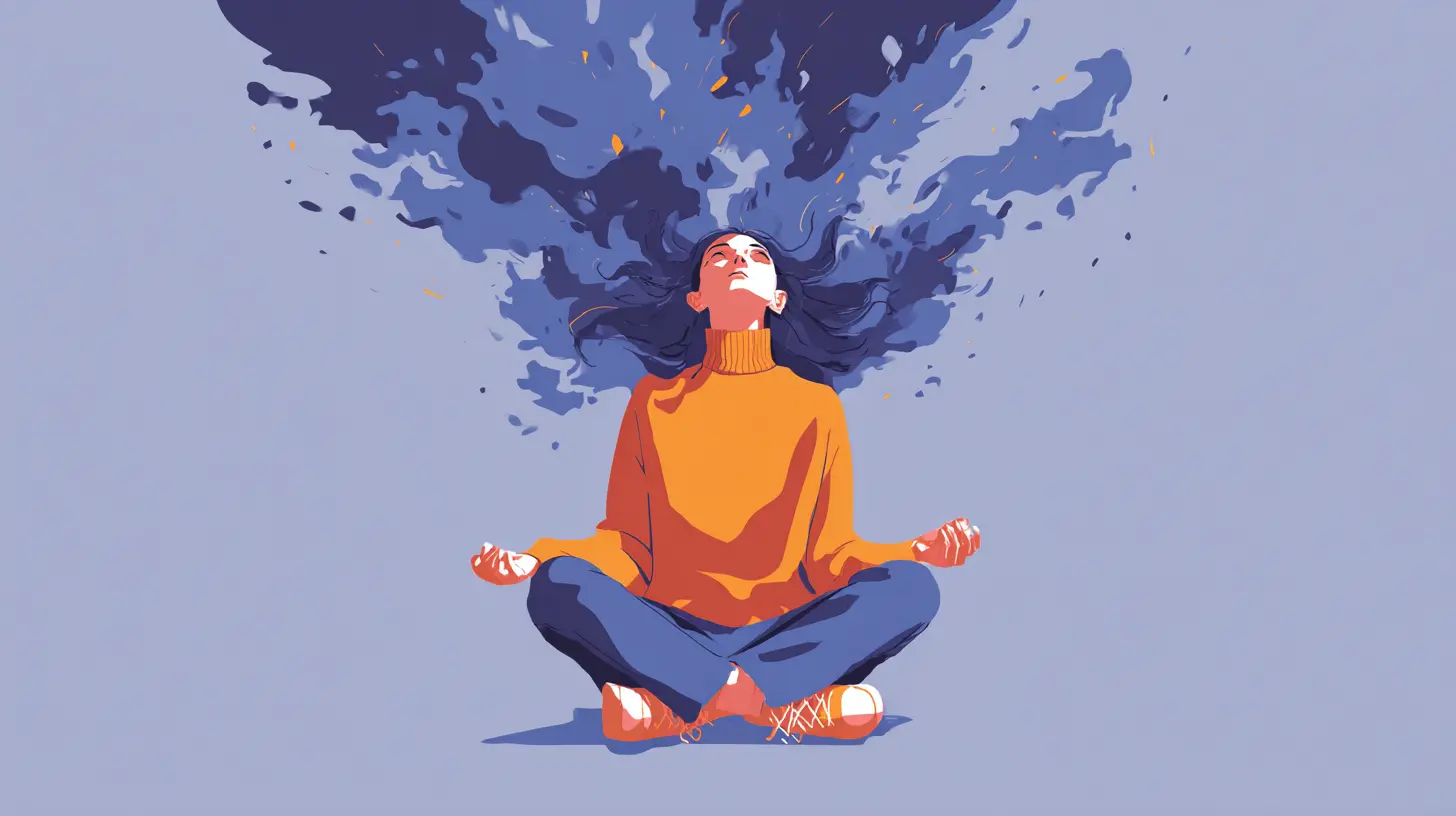
The Illusion of Control and the Real Locus of Control
A major source of panic is the belief that you should be able to control everything. This belief is often unexamined. You might not say it out loud, but you act as if you can guarantee outcomes. You plan every detail of a vacation, you rehearse every line of a presentation, and you expect your partner to read your mind. When reality does not match your script, you feel betrayed, not by the world, but by your own expectations.Psychologists refer to this as the locus of control. People with an internal locus of control believe they are responsible for their own outcomes. People with an external locus of control believe that outside forces, luck, or other people determine their lives. Research has consistently shown that an internal locus of control is associated with lower stress and better mental health. But there is a nuance that gets lost in popular discussions.
Having an internal locus of control does not mean you control everything. It means you control your responses. You cannot control whether it rains on your wedding day, but you can control whether you let it ruin your mood. You cannot control whether your company lays you off, but you can control how you search for a new job and how you talk to yourself about the situation.
The mistake people make is trying to control the uncontrollable. They obsess over what others think, they try to predict the future, and they micromanage every detail of their environment. This is exhausting and fruitless. The more you try to control external events, the more anxious you become, because you are constantly failing at an impossible task.
The best practice is to draw a clear line between what is within your control and what is not. Write it down if you have to. On one side, list your actions, your words, your effort, your boundaries, and your attitude. On the other side, list other people's behavior, the economy, the weather, the past, and the future. When you feel panic rising, ask yourself: "Am I focusing on the left side or the right side?" If you are on the right side, shift your attention back to the left. This is not denial. It is strategic energy management.
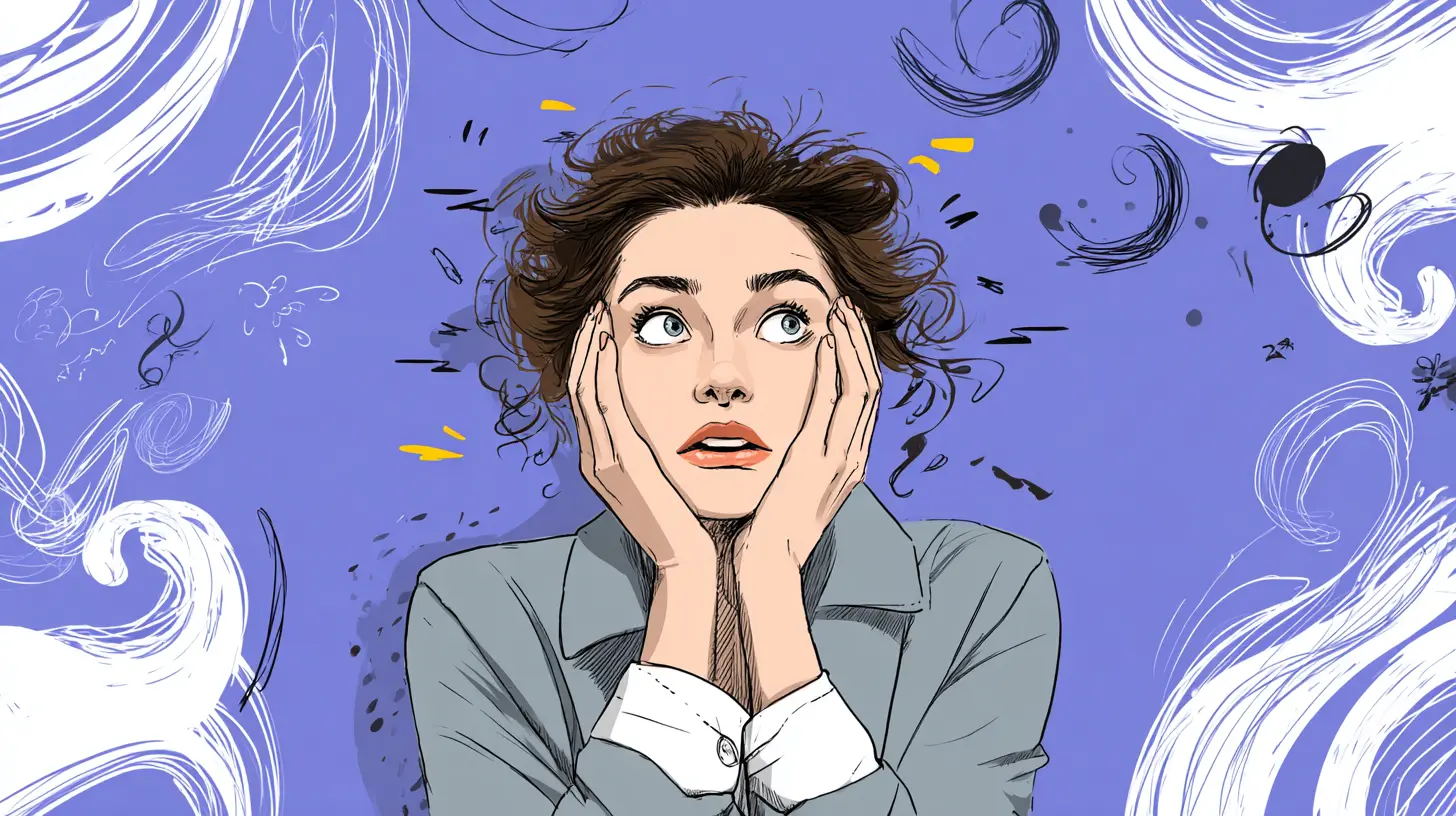
The Trap of Catastrophic Thinking
When things go wrong, the mind has a tendency to jump to the worst-case scenario. You miss a deadline, and you immediately imagine getting fired, losing your house, and ending up alone. This is called catastrophic thinking, and it is a cognitive distortion. Your brain is trying to protect you by preparing for the worst, but it is overestimating the probability of disaster and underestimating your ability to cope.Catastrophic thinking feels like clarity, but it is actually a form of mental fog. It narrows your focus to the most frightening possibilities and blocks out evidence of your own resourcefulness. You forget that you have survived every bad day you have ever had. You forget that you have solved problems before, often with less information and fewer resources than you have now.
A useful technique is called decatastrophizing. It involves asking yourself a series of questions. First, what is the worst that could realistically happen? Be specific. Do not just say "everything falls apart." Describe it in concrete terms. Second, what is the likelihood of that happening? Be honest. Third, what could you do if it did happen? List your options, even the imperfect ones. Fourth, what is the best that could happen? Fifth, what is the most likely outcome?
This exercise does not eliminate anxiety, but it reduces it to a manageable size. It forces your brain to engage in problem-solving rather than threat-detection. The goal is not to convince yourself that everything will be fine. The goal is to recognize that you can handle uncertainty, whatever form it takes.

The Physiological Reset: Why Breathwork Is Not Just a Cliché
You have heard it a thousand times: take a deep breath. It sounds like a platitude, but it is based on solid physiology. The autonomic nervous system has two branches: the sympathetic (fight-or-flight) and the parasympathetic (rest-and-digest). You cannot consciously control your heart rate or your digestion, but you can control your breath. And your breath is the lever that moves the entire system.When you inhale, your heart rate slightly increases. When you exhale, your heart rate slightly decreases. This is called respiratory sinus arrhythmia. By extending your exhale, you are actively stimulating the vagus nerve, which is the main pathway of the parasympathetic nervous system. A longer exhale tells your brain that the threat is over, and it starts to downshift your stress response.
The most effective technique is not the deep inhale that everyone talks about. It is the extended exhale. Try this: inhale for four counts, hold for two counts, and exhale for six counts. Do this for two minutes. You will notice a physical shift. Your shoulders drop, your jaw unclenches, and your thoughts slow down. This works because you are overriding the default stress pattern with a deliberate physiological signal.
However, breathing exercises have a limitation. They are good for acute moments of panic, but they are not a long-term solution. If you rely only on breathing to manage chronic stress, you are treating the symptom, not the cause. Think of it as a fire extinguisher. It is essential when there is a fire, but you also need to fix the faulty wiring that started the fire in the first place.
The Power of Naming Your Emotions
Most people do not know what they are feeling. They say "I am stressed" or "I am overwhelmed," but those are umbrella terms that cover a range of distinct emotions. Stress is often a mix of fear, anger, sadness, frustration, and guilt. When you lump them all together, you cannot address any of them effectively.Research in affective neuroscience suggests that labeling an emotion reduces its intensity. This is called affect labeling. When you say "I am feeling angry" or "I am feeling disappointed," you activate the prefrontal cortex, which is the rational part of the brain. This activation helps to down-regulate the amygdala. In simple terms, putting words to your feelings helps your brain process them instead of just reacting to them.
The key is to be precise. Do not say "I feel bad." Say "I feel anxious because I am not sure if I made the right decision." Or "I feel resentful because I am doing more than my share of the work." This precision forces you to identify the source of your discomfort. It also helps you communicate your needs to others, which is often the first step toward solving the problem.
A common mistake is to skip this step and go straight to problem-solving. You think, "I need to fix this," but you have not acknowledged the emotional impact of the situation. This is like trying to drive a car with the parking brake on. The emotion is still there, holding you back, even if you are not paying attention to it. Take a minute to name the feeling, accept that it is there, and then decide what to do next.
The 10-10-10 Rule for Perspective
When you are in the middle of a crisis, your perspective narrows. The problem feels permanent, pervasive, and personal. You forget that this moment is just one point on a longer timeline. The 10-10-10 rule is a simple tool for regaining perspective. Ask yourself: How will I feel about this in 10 minutes? How will I feel about this in 10 months? How will I feel about this in 10 years?This is not about dismissing your current pain. It is about reminding yourself that your current emotional state is not your permanent state. A missed flight feels like a disaster in the moment, but in 10 months, you will probably not remember it. A failed project feels like a blow to your identity, but in 10 years, it might be a story you tell to illustrate your resilience.
The trade-off here is that this technique can feel invalidating if you use it too aggressively. If you tell yourself "this does not matter" when it clearly does, you are suppressing your emotions, not processing them. The best approach is to use the 10-10-10 rule as a gentle question, not a command. Ask yourself the questions, and let the answers inform your perspective. You do not have to force a positive outlook. You just have to widen the lens.
The Role of Action in Calming the Mind
There is a common misconception that staying calm means doing nothing. People imagine a zen master sitting motionless, unaffected by the chaos around them. But in most real-world situations, the opposite is true. Action is one of the most effective ways to reduce anxiety, because anxiety is often a response to a sense of helplessness. When you take action, even a small one, you remind yourself that you are not passive.The key is to take action that is aligned with your values and within your control. If you are worried about a medical diagnosis, you cannot control the results, but you can schedule the appointment, prepare questions for the doctor, and arrange for a friend to come with you. If you are anxious about a presentation, you cannot control the audience's reaction, but you can practice your delivery, prepare backup slides, and get a good night's sleep.
The mistake people make is taking action that is actually avoidance. They clean the house instead of writing the difficult email. They scroll through social media instead of making the phone call. This looks like productivity, but it is really procrastination. The action does not address the source of the anxiety, so the anxiety persists.
A better approach is to break the problem into the smallest possible step. Ask yourself: What is one thing I can do in the next 15 minutes that will move this forward? It does not have to be the perfect step. It just has to be a step. Action creates momentum, and momentum creates a sense of agency. When you feel like you are moving, even slowly, you feel less trapped.
The Danger of Suppressing Emotions
Many people believe that staying calm means not showing emotion. They think that if they cry or express anger, they are losing control. This is a dangerous misconception. Suppressing emotions does not make them disappear. It pushes them into the body, where they manifest as tension, fatigue, headaches, or digestive issues. Over time, chronic suppression is linked to higher rates of anxiety, depression, and even cardiovascular problems.The alternative is not to let every emotion run wild. That is called emotional dumping, and it alienates people and creates more problems. The alternative is emotional regulation, which means feeling the emotion, understanding it, and choosing how to express it. You can feel angry and still speak calmly. You can feel sad and still ask for help. You can feel scared and still take a step forward.
A practical way to do this is to give yourself a time and place to feel the emotion fully. This sounds counterintuitive, but it works. Set a timer for 10 minutes. Tell yourself: "For the next 10 minutes, I am going to feel this fully. I am going to cry, or pace, or write down every angry thought I have." When the timer goes off, you say: "I have acknowledged this feeling. Now I am going to move forward." This prevents the emotion from leaking out at inappropriate times, because you have given it a dedicated space.
The Importance of Routine in Chaos
When everything feels out of control, the most calming thing you can do is create structure in the areas where you do have control. This is why routines are so powerful. A routine is a set of decisions that you have already made, so you do not have to use your limited mental energy to make them again. When you wake up at the same time, eat regular meals, and go for a walk at the same hour, you are sending a message to your brain that the world is still predictable in some ways.This is not about being rigid. It is about creating a baseline of stability. Think of it as building a safe room in a house that is shaking. The rest of the house may be in chaos, but this room is solid. You can retreat to it when you need a break.
The trade-off is that routines can become a form of avoidance. If you use your routine to avoid dealing with a major problem, you are not helping yourself. The routine should be a support, not a substitute for addressing the real issue. The best approach is to keep your routine simple and flexible. Have a morning routine that includes time for reflection and movement. Have an evening routine that includes time for relaxation and planning the next day. But allow for adjustments when life throws you a curveball.
The Social Connection Factor
One of the most overlooked aspects of staying calm is the presence of other people. The human nervous system is wired for connection. When you are with someone you trust, your body releases oxytocin, which counteracts the effects of cortisol. This is why a hug from a friend can literally lower your blood pressure.When you are stressed, your instinct might be to isolate yourself. You think you need to figure things out alone, or you do not want to burden others. This is usually a mistake. Talking to someone does not have to solve the problem. It just has to make you feel less alone. The act of speaking your worry out loud reduces its power. The listener does not need to offer advice. They just need to be present.
The common mistake is to vent without any intention of moving forward. Venting feels good in the moment, but it can keep you stuck in a loop of negativity. The best practice is to ask for what you need. If you need to vent, say so. If you need advice, say so. If you just need someone to sit with you in silence, say so. This clarity prevents misunderstandings and makes the interaction more effective.
When to Seek Professional Help
There is a limit to self-help. If you have been feeling out of control for weeks or months, if your sleep is consistently disrupted, if you have lost interest in things you used to enjoy, or if you are having thoughts of self-harm, it is time to talk to a professional. A therapist or counselor can help you identify patterns that you cannot see on your own. They can provide tools that are tailored to your specific situation.This is not a sign of weakness. It is a sign of self-awareness. You would not try to set a broken bone by yourself. You would go to a doctor. Mental health is no different. The best time to seek help is before you are in a full crisis. If you are reading this article and thinking "this sounds like me," that is a good enough reason to reach out.
A Balanced Approach to Staying Calm
Staying calm when everything feels out of control is not about achieving a permanent state of peace. That is not realistic, and it is not even desirable. A life without stress is a life without challenge, and challenge is what helps you grow. The goal is to build a toolkit that you can use when the storm hits.You need to understand the physiology of stress so you do not panic about panicking. You need to distinguish between what you can and cannot control, and focus your energy accordingly. You need to challenge catastrophic thoughts without dismissing your real concerns. You need to use your breath to reset your nervous system, but you also need to take action to solve the underlying problem. You need to name your emotions, give them space, and then move forward. You need to lean on routines and on other people. And you need to know when to ask for professional help.
None of this is easy. It takes practice, and you will fail at it sometimes. That is okay. The goal is not to be perfectly calm. The goal is to be able to return to calm after you have lost it. That is the real skill. That is what resilience looks like.
The next time you feel the familiar tightness in your chest, do not fight it. Take a long exhale. Name what you are feeling. Ask yourself what you can control. Take one small step. And remember that this moment, no matter how overwhelming, is temporary. You have been through hard things before. You will get through this one too.
all images in this post were generated using AI tools
Category:
Emotional MaturityAuthor:

Ember Forbes
Discussion
rate this article
1 comments
Tilly Schultz
When chaos surrounds us, finding stillness is essential. It is in those quiet moments of reflection, where we reconnect with our inner selves, that we can regain clarity and strength, even when the world feels overwhelmingly turbulent.
September 7, 2026 at 3:36 AM