How to Rewire Your Brain for Happiness in 2027
7 September 2026
If you have spent any time reading about self-improvement, you have likely encountered the idea that your brain is plastic. Neuroplasticity, the brain's ability to reorganize itself by forming new neural connections throughout life, is not just a buzzword. It is the biological basis for why change is possible, even when you feel stuck in a loop of negativity. But here is the catch: the brain does not rewire itself toward happiness by accident. It rewires according to what you repeatedly practice, pay attention to, and emotionally engage with.
By 2027, our attention is more fragmented than ever. We are navigating a world of constant notifications, algorithmic content, and economic uncertainty. The old advice of "just think positive" is not just useless; it can be harmful because it bypasses the actual mechanics of how the brain changes. To rewire for happiness, you need a strategy that respects your biology, your environment, and your current baseline. This guide is about that strategy, not about chasing a permanent state of bliss, but about building a brain that is more resilient, more present, and more capable of experiencing joy without being derailed by the inevitable difficulties of life.

The Misconception of the Happiness Set Point
Many people believe that their level of happiness is genetically fixed, like eye color. This belief stems from older research suggesting that about 50 percent of our happiness variance is determined by genetics, 10 percent by circumstances, and 40 percent by intentional activity. While the percentages are debatable, the core insight remains useful: a significant portion of your happiness is not predetermined. It is the result of what you do.The problem is that people often misinterpret this to mean that you can simply "try harder" to be happy. That is not how it works. The brain is a prediction machine. It uses past experiences to predict what will happen next. If your past has been filled with stress, criticism, or neglect, your brain has learned that the world is unsafe. It will constantly scan for threats, not because you are weak, but because that is what kept you alive in the past. Rewiring, therefore, is not about forcing a smile. It is about teaching your brain that it is safe enough to let its guard down, and that there are sources of reward that do not come with a hidden cost.
The Default Mode Network: Your Brain's Idle Chatter
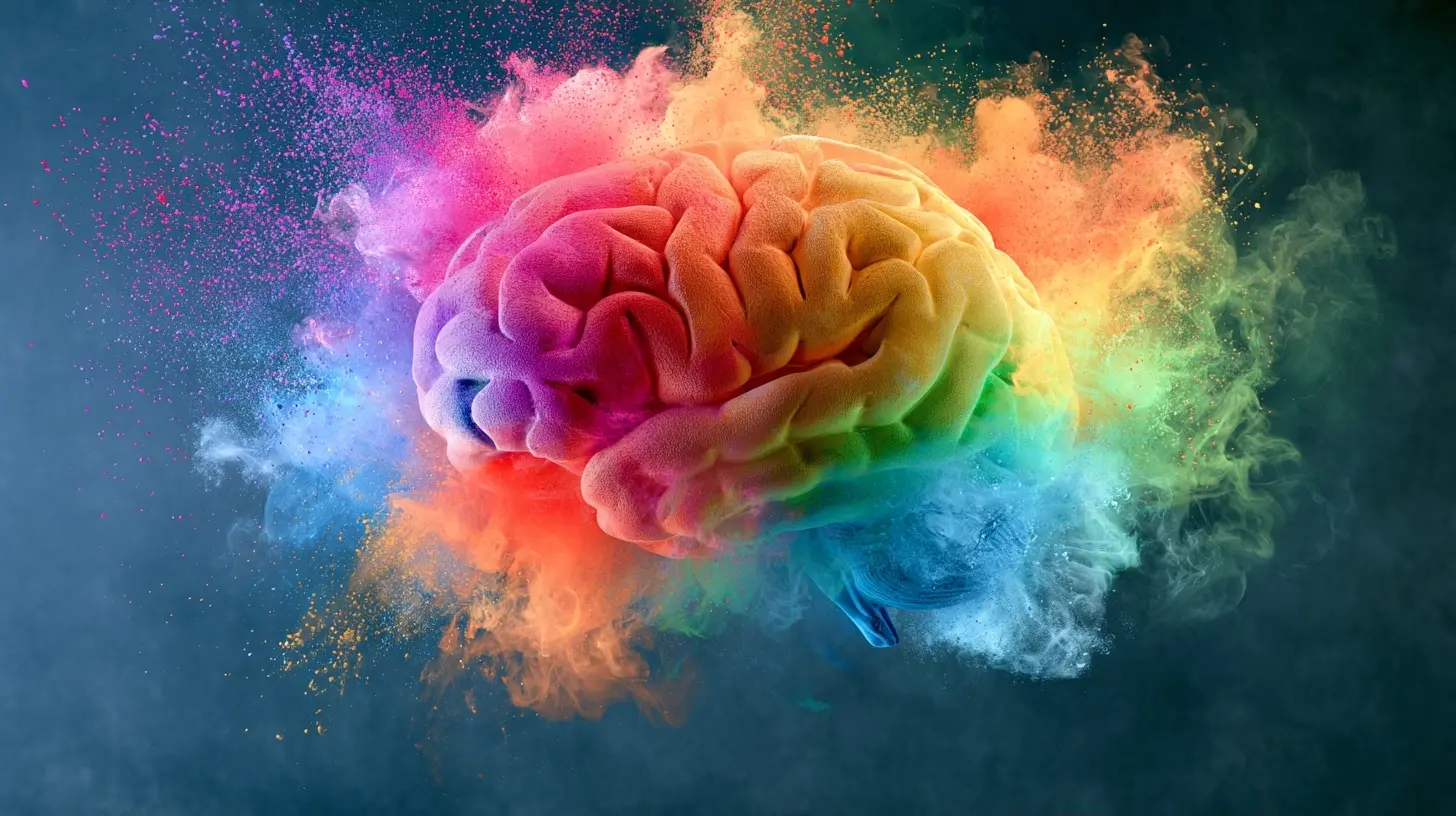
One of the most critical discoveries in modern neuroscience is the Default Mode Network (DMN). This is a network of brain regions that becomes active when you are not focused on the outside world. It is active when you are daydreaming, worrying about the future, or ruminating on the past. For many people, the DMN is a source of misery. It is the voice that replays an embarrassing conversation from three years ago or projects a catastrophic outcome for a meeting next week.The 2027 approach to happiness is not about silencing the DMN completely, because that is impossible. It is about reducing the amount of time you spend in unproductive rumination. One of the most effective ways to do this is through focused attention practices, often called mindfulness. But mindfulness is not just about sitting on a cushion for twenty minutes. It is about training your brain to notice when it has wandered into the past or future, and to gently bring it back to the present moment.
Here is the key insight: every time you successfully redirect your attention, you are strengthening the neural pathways for cognitive control and weakening the pathways for habitual worry. This is a form of mental weightlifting. You would not expect to build biceps by lifting a dumbbell once. Similarly, you will not rewire your brain by being mindful for three minutes a day. However, you also do not need to do it for hours. The quality and consistency of the redirect matters more than the total time.
Why Dopamine Hacking Is a Trap
A common piece of advice in the self-help world is to "hack your dopamine" by quitting social media, cold showers, and eating bitter foods. While reducing high-dopamine activities can be beneficial, the framing of "hacking" often leads to a restrictive, punishing lifestyle that is not sustainable. The goal is not to have a flat dopamine line. The goal is to have a healthy dopamine system that responds appropriately to real rewards.Dopamine is not the pleasure molecule. It is the motivation molecule. It is released when you anticipate a reward, not necessarily when you receive it. This is why scrolling through social media feels so compelling: the anticipation of the next post keeps you hooked. The problem is that this constant, low-level stimulation raises your baseline for what feels interesting. A walk in the park, a conversation with a friend, or reading a book can feel boring because your brain has been conditioned to expect rapid-fire novelty.
Rewiring for happiness in 2027 requires a deliberate re-sensitization of your reward system. This does not mean you must delete all apps. It means you need to create periods of "boredom" where your brain is not being constantly stimulated. This is not about punishment. It is about giving your brain the space to generate its own motivation. When you are bored, you start to look for things to do. You might pick up a hobby, call a friend, or simply sit with your thoughts. Those actions, when done voluntarily, release more sustainable dopamine than passive consumption.
The Trade-Off: Short-Term Discomfort for Long-Term Gain
The trade-off here is significant. When you cut down on high-stimulation activities, you will feel anhedonia, which is the inability to feel pleasure in things that used to be pleasurable. This is a withdrawal symptom. Most people mistake this for depression and go back to their old habits. But if you can push through that period, which usually lasts a few weeks, your brain's baseline begins to reset. The pleasure you get from simple things becomes sharper. This is not a theory; it is the natural consequence of receptor upregulation, where your brain creates more dopamine receptors to compensate for lower levels of stimulation.
The Power of Anticipated Regret
One of the most effective, yet underused, tools for rewiring your brain is not about adding positive habits, but about reducing negative ones. The brain is heavily influenced by loss aversion. We feel the pain of a loss roughly twice as strongly as the pleasure of an equivalent gain. You can use this to your advantage.Instead of asking, "What will I gain if I do this?" ask, "What will my life look like in five years if I do not do this?" This is called anticipated regret. For example, if you are trying to be more present with your children, think about the regret you will feel when they are grown and you realize you missed their childhood because you were checking your phone. That feeling of regret is a powerful motivator because it is negative. It taps into your brain's natural avoidance system.
This is not about living in fear. It is about using your brain's existing architecture to move you toward behaviors that align with your long-term values. You are not trying to trick yourself. You are trying to make the abstract consequences of your current actions feel real and immediate to your brain, which is notoriously bad at dealing with delayed consequences.
How to Use This Without Becoming Anxious
The mistake people make is dwelling on the regret to the point of anxiety. The goal is not to feel bad. The goal is to feel a twinge of discomfort that motivates a course correction. A good practice is to write down a "future self" letter describing the life you want in 2027. Then, write down a second letter describing the life you will have if you stay on your current trajectory. Read both letters regularly. The contrast between the two is what creates the motivational tension. You are not trying to scare yourself; you are trying to clarify the stakes.Emotional Granularity: Naming What You Feel
A significant barrier to happiness is emotional confusion. Many people walk around feeling "bad" or "stressed" without being able to identify what they are actually feeling. Are you sad, or are you disappointed? Are you anxious, or are you excited? Are you angry, or are you hurt?Research in affective neuroscience suggests that the ability to label emotions with precision, a skill called emotional granularity, is associated with better mental health outcomes. When you can name an emotion accurately, you activate the prefrontal cortex, which helps to down-regulate the amygdala, the brain's alarm center. This is why the old advice to "name it to tame it" has some truth to it.
However, the way you label matters. Saying "I am a depressed person" is a global, fixed label that does not help. Saying "I am feeling a sense of loneliness right now, and it is making me want to isolate" is specific and actionable. The first label makes you identify with the state. The second label makes you an observer of the state. This distinction is crucial for rewiring. The brain changes more effectively when you are in a curious, observational mode rather than a defensive, identified mode.
A Practical Exercise for Granularity
Try this the next time you feel overwhelmed. Stop for ten seconds and ask yourself: "What are the three specific emotions I am feeling right now?" Do not allow yourself to use vague words like "bad" or "stressed." You have to dig deeper. Are you feeling insecure about your performance? Are you feeling resentful that a colleague took credit for your work? Are you feeling fatigued because you have not rested? Each of these requires a different response. Insecurity requires self-compassion. Resentment requires boundary-setting. Fatigue requires rest. When you know what you are dealing with, you can take appropriate action instead of just reacting to a general sense of unease.
The Architecture of Meaningful Goals
Happiness is not the same as pleasure. Pleasure is a hit. Happiness is a state of coherence. A key part of rewiring your brain is giving it a clear direction. Without meaningful goals, your brain will default to seeking short-term rewards, which often lead to long-term dissatisfaction.But there is a huge difference between a "performance goal" and a "mastery goal." A performance goal is about achieving a specific outcome, like getting a promotion or losing ten pounds. A mastery goal is about developing a skill or improving a process, like becoming a better communicator or learning to cook healthy meals. Performance goals are risky because they are dependent on external factors. If you do not get the promotion, you feel like a failure. Mastery goals are more sustainable because you are in control of the process. You can improve your communication skills regardless of whether you get the promotion.
The Neurochemical Reality of Progress
Your brain does not care about the outcome as much as it cares about the perceived progress. When you are moving toward a goal, your brain releases dopamine. This is why breaking a large goal into smaller, achievable steps is not just good project management; it is a biological necessity. Each small win gives your brain a hit of reward that reinforces the behavior. If you only focus on the distant, large goal, your brain will see no progress and will lose motivation.A common mistake is to set a goal and then only check in on it weekly or monthly. This leaves too much time for doubt to creep in. Instead, define what "a good day" looks like in terms of your goal. If your goal is to write a book, a good day might be writing 300 words. If your goal is to be healthier, a good day might be a 20-minute walk. The scale of the action matters less than the consistency. You are not trying to achieve the goal in one day. You are trying to signal to your brain that you are the kind of person who shows up for this goal.
Social Connection: The Overlooked Neural Nutrient
In the rush to optimize ourselves, we often forget that the human brain is fundamentally a social organ. Our brains are wired to connect with others for survival. Loneliness is not just a sad feeling; it is a biological stressor that activates the same neural pathways as physical pain. If you want to rewire your brain for happiness, you cannot ignore your social environment.The 2027 challenge is that our social connections are often shallow and numerous, rather than deep and few. We might have hundreds of friends on social media but no one we can call at 2 a.m. The quality of your connections matters more than the quantity. Deep, meaningful conversations are associated with higher levels of well-being than small talk.
How to Build a Better Social Brain
This does not mean you have to become an extrovert. It means you need to practice vulnerability. Vulnerability is the willingness to be seen as you are, including your flaws and fears. When you share something personal with another person, and they respond with empathy, it triggers the release of oxytocin, a bonding hormone that reduces stress and promotes feelings of safety.Many people avoid vulnerability because they fear rejection. This is a valid fear, but it is often overestimated. Most people respond positively to authenticity. The risk is not as high as your brain predicts. Start small. Share a minor struggle with a trusted colleague or friend. Notice how they respond. Most likely, they will not judge you. They will feel closer to you because you trusted them. This positive experience is what rewires your brain to see social interaction as a source of safety, not a source of threat.
The Role of Sleep and Physical State
You cannot rewire your brain for happiness if your brain is running on empty. Cognitive neuroscientists have repeatedly found that sleep deprivation impairs the prefrontal cortex and heightens the amygdala's response to negative stimuli. This means that when you are tired, you are biologically more reactive to stress and less capable of regulating your emotions.Similarly, physical activity is not just about fitness. Exercise increases blood flow to the brain and promotes the release of Brain-Derived Neurotrophic Factor (BDNF), which is like fertilizer for neurons. It helps to create new neural connections and supports the health of existing ones. A regular exercise routine is one of the most reliable ways to create the biological conditions for neuroplasticity.
The Practical Approach to Body-Brain Health
You do not need to run a marathon. The research consistently shows that moderate, consistent exercise, like a brisk 30-minute walk five times a week, is sufficient to produce significant mental health benefits. The key is consistency. Your brain does not care about the intensity of the workout; it cares about the regularity.Sleep is more complicated. Most adults need between seven and nine hours. If you are getting less than that, your brain is not reaping the full benefits of neuroplasticity. One of the most effective things you can do is to treat sleep as a non-negotiable appointment. That means setting a consistent wake-up time, even on weekends, and creating a wind-down routine that does not involve screens. The blue light from screens suppresses melatonin, which makes it harder to fall asleep.
The Comparison Trap and the Social Media Dilemma
We live in a world where we can see the highlight reels of everyone else's life. This constant exposure to upward social comparison is a direct threat to happiness. When you compare your behind-the-scenes struggles to someone else's curated highlights, you will always feel inadequate.The science is clear: social comparison often leads to lower self-esteem and increased depression. The problem is not social media itself, but the way we use it. Passive consumption, where you scroll through other people's posts without interacting, is the most harmful. Active engagement, where you comment, share, and connect with others, is less harmful and can even be beneficial.
Setting Boundaries Based on Values
A 2027 approach is not to quit social media entirely, unless you feel it is truly addictive and uncontrollable. Instead, you should set boundaries based on your values. Ask yourself: "Why am I on this platform? Is it to stay in touch with friends, to network professionally, or to be entertained?" If your answer is to stay in touch with friends, then your feed should be limited to people you actually care about. Unfollow accounts that make you feel bad about yourself. This is not about curating a fake reality. This is about protecting your mental space. Your attention is a resource. Every time you spend it on something that makes you feel worse, you are actively working against your happiness goal.
A Note on When Rewiring Is Not Enough
It would be irresponsible to write an article about rewiring your brain without acknowledging that some people are dealing with clinical depression, severe anxiety, or trauma. In those cases, self-help strategies alone are not sufficient. The brain is an organ, and like any organ, it can malfunction. If you have persistent symptoms of depression, such as anhedonia, sleep disturbances, and feelings of worthlessness for more than two weeks, you should consult a mental health professional.The strategies in this article are tools for building resilience. They are not a substitute for medical treatment. Think of it this way: if you have a broken leg, you cannot just think your way into walking. You need a cast. Similarly, if you have a chemical imbalance or unprocessed trauma, you may need medication or therapy to stabilize your brain enough to benefit from these practices. There is no shame in that. It is a sign of intelligence to know when you need professional help.
The 2027 Mindset: Sustainable Happiness Over Peak Experiences
As we move further into the decade, the cultural narrative is shifting away from the pursuit of peak experiences and toward the cultivation of sustainable well-being. This is a relief. The idea that you need to be ecstatically happy all the time is exhausting. It is also unrealistic. A healthy brain experiences the full range of human emotions. The goal is not to eliminate sadness or anger. The goal is to be able to experience those emotions without being destroyed by them.Happiness, in this context, is less about feeling good all the time and more about feeling capable. It is the confidence that you can handle what life throws at you. It is the ability to savor the good moments when they come because you are not too anxious to notice them. It is the security of knowing that even when things go wrong, you have the internal resources to adapt.
Rewiring your brain is a long game. You will not see results in a week. You might not see them in a month. But if you consistently practice emotional granularity, engage in meaningful goals, protect your sleep, and cultivate deep social connections, you are not just trying to be happy. You are building a nervous system that is capable of happiness. And that is a much more durable and worthwhile goal.
all images in this post were generated using AI tools
Category:
Healing TechniquesAuthor:

Ember Forbes
Discussion
rate this article
1 comments
Petra Blair
The article effectively highlights practical strategies for neuroplasticity in achieving happiness. It connects present actions to future outcomes, emphasizing the importance of consistent practice in transforming mindset.
September 12, 2026 at 3:00 PM
Ember Forbes
Thank you for your thoughtful comment! I'm glad you found the strategies practical and relevant for personal growth. Consistency is indeed key in this journey.