How to Cultivate Patience in a Fast-Paced World
21 August 2026
There is a particular kind of silence that happens when you are forced to wait. Not the comfortable pause between songs, but the heavy kind. The kind that happens when the loading bar sits at ninety-nine percent, when the email notification does not come, when the train is delayed for the third time in a week. In those moments, most of us do not just feel annoyed. We feel a physical response, a tightness in the chest, a quickening of the pulse. We feel as if something is actively being stolen from us.
This is the paradox of modern life. We have more control over our environment than any generation in history, yet we have less tolerance for the uncontrolled. We can order food, summon a car, and stream a movie in seconds. But the moment reality refuses to bend to our schedule, we fracture. The problem is not that we are impatient people. The problem is that we have built a world that trains us to be impatient, and then we blame ourselves for the resulting anxiety.
Cultivating patience is not about becoming slow or passive. It is about reclaiming the ability to choose your response to delay. It is a skill of emotional regulation, not a personality trait you are born with. And like any skill, it can be trained, but only if you understand what you are actually working against.

The False Economy of Speed
We tend to think of speed as efficiency. If you can do something faster, you can do more of it, and doing more is inherently good. This logic drives everything from fast food to agile software development. But the equation is missing a variable. Speed without attention creates waste. When you rush a conversation, you miss the subtext. When you rush a decision, you miss the consequences. When you rush a meal, you miss the satiety signals that tell you when to stop.The real cost of impatience is not the time you lose while waiting. It is the quality of the work you do while your mind is already somewhere else. Consider a common scenario: you are in a meeting that is running long. You have checked your email three times, mentally drafted a response to a text, and planned what you will eat for lunch. You are not actually in the meeting. You are performing a gesture of presence while your attention is elsewhere. When the meeting finally ends, you realize you did not hear the action items clearly. You have to ask for clarification, which takes more time, which makes you more impatient.
This is the false economy. The rush to get past the present moment actually degrades the future moment. Patience, in this sense, is not a virtue of the passive. It is a tool of the efficient. When you are fully present in the current task, you do it correctly the first time. You hear the instructions. You notice the detail that saves you from a costly error. You ask the question that prevents a misunderstanding.
The trade-off is real. Patience costs you the illusion of control. You have to accept that some variables are outside your reach. But what you gain is actual control over the one thing you can influence, which is your own attention.

Why Your Brain Is Wired Against Patience
It is not just your habits that work against you. Your brain has a negativity bias that makes waiting feel like a threat. In evolutionary terms, uncertainty was dangerous. If you were waiting for a signal that a predator was near, the cost of waiting too long was death. The brain developed a system that flags uncertainty as a problem to be solved immediately. When you cannot solve it, you get a stress response.This is why waiting in traffic feels physically different from waiting in a line at a coffee shop, even if the duration is the same. Traffic involves movement that is out of your control, which triggers a sense of helplessness. The line at the coffee shop is predictable, so your brain can settle into a low-level tolerance. But if the line stops moving, your brain immediately shifts into alert mode. It is not the time that bothers you. It is the unpredictability.
Understanding this mechanism changes how you approach patience training. You are not trying to suppress the feeling of impatience. That would be like trying to suppress a sneeze, possible but uncomfortable and ultimately counterproductive. Instead, you are trying to reframe the signal. When you feel the surge of urgency, you can recognize it as a neural response to uncertainty, not as a genuine emergency.
One practical way to do this is to label the feeling. Say to yourself, "This is my brain's uncertainty alarm, not a real threat." This is a form of cognitive reappraisal, a technique used in cognitive behavioral therapy. It does not make the feeling disappear, but it reduces its intensity. Over time, the neural pathway that connects waiting to danger gets weaker, and the pathway that connects waiting to calm gets stronger.
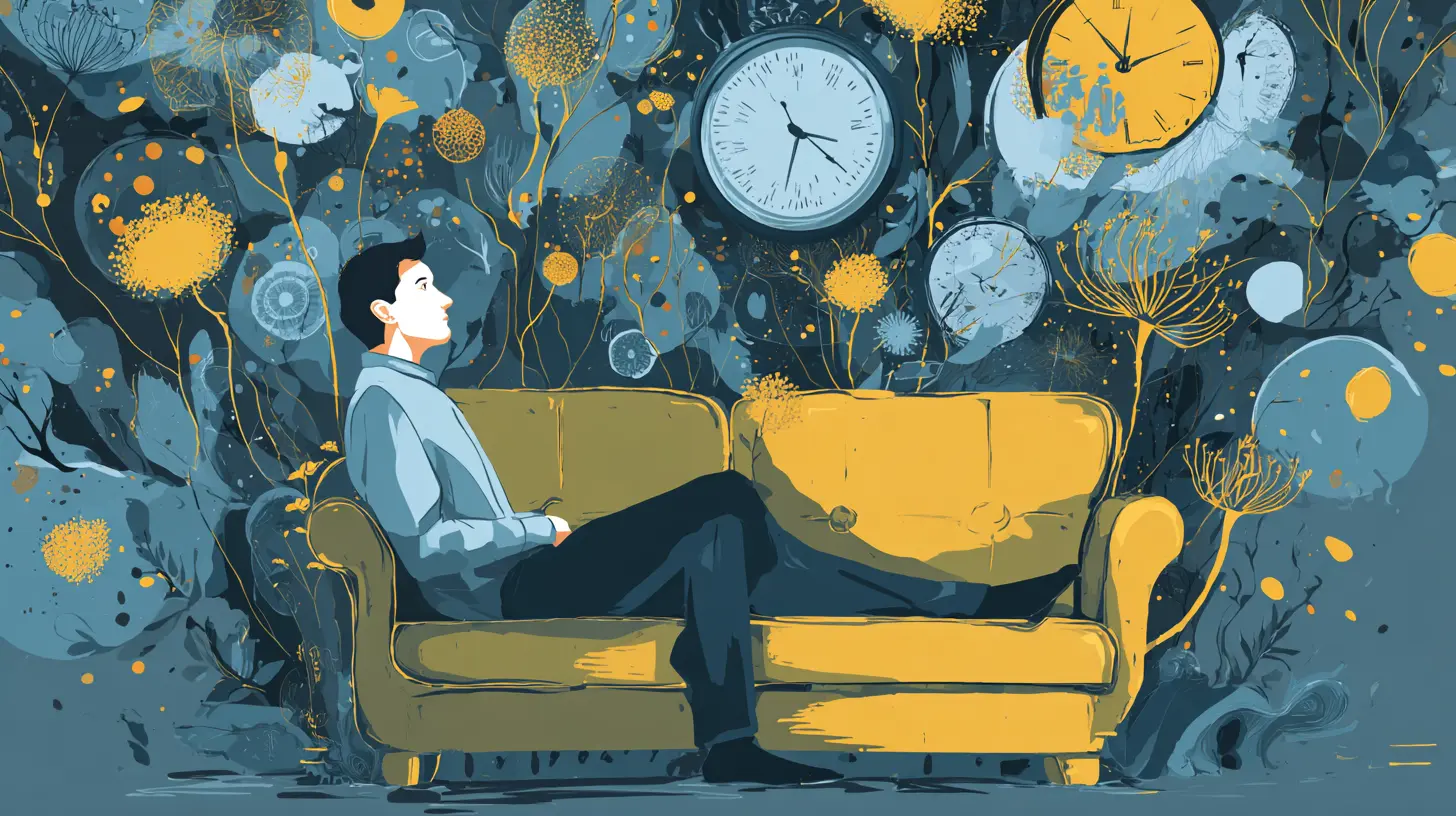
The Productivity Trap: Doing More vs. Being Effective
A common misconception is that patience means you accept mediocrity or that you lower your standards. This is false. Patience is not about settling for less. It is about recognizing that some processes take time and that trying to compress them does not yield better results.Consider the example of learning a new language. There is no way to speed up the formation of neural connections. You can use better methods, you can practice more consistently, but you cannot force your brain to build pathways faster than it is biologically capable of. If you try, you will simply burn out and quit. The person who learns a language in one year is not more talented than the person who learns it in three. They might have more time, or a better method, or a different tolerance for frustration.
The productivity trap is the belief that every minute must be filled with visible output. This belief creates a constant state of low-grade impatience because there is always something more to do. The solution is not to do more. It is to redefine what counts as productive. Reading a book is productive. Taking a walk is productive. Sitting quietly and thinking about a problem is productive. These activities do not produce immediate output, but they produce the conditions for good output later.
A useful comparison is the difference between a sprinter and a marathon runner. The sprinter can sustain maximum effort for a short time. The marathon runner has to pace themselves, conserve energy, and make strategic decisions about when to push and when to hold back. Modern life is a marathon, but we are trying to run it like a sprint. We treat every task as if it has the urgency of a final exam, and then we wonder why we are exhausted.
Patience is the pacing mechanism. It tells you when to push and when to hold. It is not a lack of ambition. It is the strategic allocation of effort over time.
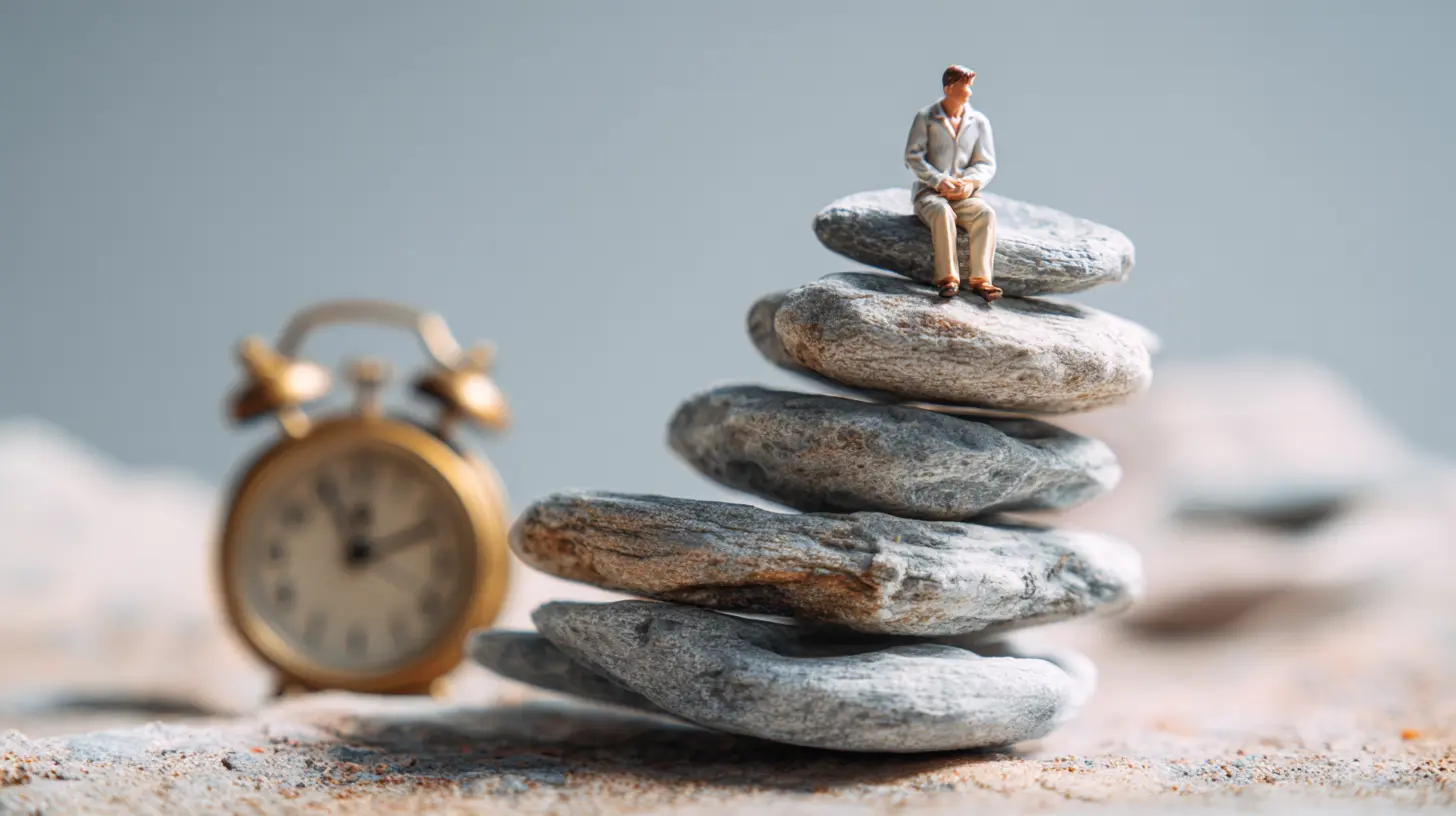
Practical Techniques for the Moment of Friction
You can have all the philosophical understanding in the world, but you still need tools for the moment when the waiter is slow or the software is lagging. Here are several techniques that work in different contexts. Each has its strengths and its limitations.The Two-Minute Rule for Small Delays
For minor delays, those under two minutes, the best strategy is to simply do nothing. Do not reach for your phone. Do not start a new task. Do not sigh loudly. Just stand or sit and let the delay happen. This sounds trivial, but it is a form of exposure therapy. You are teaching your brain that a two-minute delay is survivable without stimulation.The advantage of this technique is that it is simple and requires no preparation. The disadvantage is that it only works for short delays. If you use it for a long delay, you will just sit there getting more frustrated. Use it for the elevator, the microwave, the loading screen. Not for the delayed flight.
The Five-Breath Reset for Medium Delays
For delays that are longer, say five to fifteen minutes, you need a more active intervention. The five-breath reset is a quick mindfulness exercise. You take five deliberate breaths, focusing on the sensation of the air moving in and out. This is not about calming down in a spiritual sense. It is about interrupting the stress loop. The stress response is a cycle of thought, feeling, and physical sensation. By focusing on the breath, you break the cycle at the physical level.The strength of this technique is that it works anywhere and no one has to know you are doing it. The weakness is that it requires a baseline level of mindfulness practice. If you have never done any breath work, the first few times will feel awkward. Practice it in low-stress situations first, like waiting for your coffee to brew, so it becomes automatic.
The Reframe for Long Delays
For delays that stretch beyond fifteen minutes, you need a cognitive strategy. The reframe involves changing the meaning of the situation. Instead of thinking, "This is a waste of my time," you think, "This is an opportunity to observe." You can observe the people around you, the architecture of the building, or your own mental state. This is not about denial. It is about shifting the frame from victimhood to agency.The advantage of the reframe is that it works for very long delays, like a canceled flight or a long medical appointment. The disadvantage is that it requires mental energy. If you are already exhausted, it will be hard to do. In that case, the best strategy is to accept that you are going to be frustrated and just let it happen, without judging yourself for it.
The Role of Technology and the Art of Deliberate Delay
Technology is not the enemy of patience, but it is the amplifier of impatience. Every notification is a small interruption that trains your brain to expect immediate novelty. When the novelty does not come, you feel bored, which you interpret as a problem.One of the most effective ways to cultivate patience is to deliberately introduce delay into your life. This is the opposite of the usual advice to optimize everything. Instead of trying to make everything faster, you make some things slower on purpose.
For example, take a walk without your phone. The first few times, you will feel a strong urge to check for messages. That urge is the impatience muscle. By resisting it, you are strengthening the patience muscle. The walk itself does not need to be long. Ten minutes is enough.
Another example is cooking a meal from scratch. Not a complicated meal, just something that requires chopping and simmering. The process forces you to wait. You cannot speed up the simmer. You have to let the flavors develop. This is a low-stakes way to practice patience because the only cost is a slightly longer dinner.
A more advanced practice is the deliberate delay of responses. When you receive a message that does not require an immediate answer, wait an hour before responding. This is not about being rude or playing games. It is about breaking the reflex of instant response. You are training yourself to tolerate the discomfort of an unanswered message.
The trade-off here is social. Some people expect immediate responses, and they may be confused or even annoyed by your delay. You need to weigh the benefit to your own mental state against the potential social cost. In high-stakes professional environments, instant response may be required. In your personal life, you have more flexibility.
Common Mistakes and Misconceptions About Patience
There are several common mistakes people make when they try to become more patient. The first is the belief that patience means never feeling angry or frustrated. This is incorrect. Patience is not the absence of negative emotion. It is the absence of reactive behavior. You can feel frustrated and still act patiently. The feeling is a signal. The behavior is a choice.The second mistake is treating patience as a binary state. You are either patient or you are not. This leads to a cycle of failure and self-criticism. You lose your temper once and decide you are a hopelessly impatient person. The reality is that patience is a spectrum, and it varies by context. You might be patient with your children but impatient with your coworkers. You might be patient with a long project but impatient with a slow website. This is normal.
The third mistake is using patience as an excuse for inaction. There is a difference between being patient and being passive. Patience involves active waiting, meaning you are still engaged with the situation, just not forcing it. Passivity is giving up. If you are waiting for a job offer and you do not send a follow-up email, that is passivity. If you send the email and then wait without refreshing your inbox every five minutes, that is patience.
The fourth mistake is ignoring the physical component. Patience is not just mental. It is physiological. When you are tired, hungry, or stressed, your tolerance for delay drops sharply. This is why you are more impatient at the end of a long day than at the beginning. The best way to cultivate patience is often to take care of your basic needs first. Sleep, food, and exercise are the foundation of emotional regulation. No technique will work if you are running on empty.
Patience as a Strategic Advantage in Work and Relationships
In a professional context, patience is often undervalued because it is confused with slowness. But patience is a strategic advantage in negotiation, leadership, and decision-making. The person who can sit with uncertainty without panicking has a distinct edge over the person who needs immediate answers.In a negotiation, the impatient party often makes concessions just to end the discomfort. The patient party can wait for the other side to reveal their true position. This is not manipulation. It is simply not rushing. The same applies to hiring decisions, investment choices, and project planning. A decision made in haste is often a decision made on incomplete information.
In relationships, patience is the difference between listening and waiting for your turn to speak. When you are patient with a partner or a friend, you allow them to finish their thoughts without interrupting. You allow them to have a bad day without trying to fix it immediately. You allow silence to exist without filling it with noise. This creates a sense of safety that cannot be manufactured by any amount of efficiency.
The trade-off is that patience in relationships can feel like inaction. When someone you care about is suffering, it feels wrong to just sit with them. You want to do something. But often, the most patient act is to simply be present without trying to solve the problem. This is a skill that takes years to develop, and it is worth every moment of awkward silence along the way.
The Long Game: Building a Patience Practice
Cultivating patience is not a one-time fix. It is a practice, like exercise or meditation. You build it gradually through repeated exposure to manageable doses of delay. The key is to start small and be consistent.One approach is to identify one recurring source of impatience in your daily life and work on that specifically. Maybe it is the morning commute. Maybe it is the checkout line at the grocery store. Maybe it is the time it takes your computer to boot up. Choose one, and for two weeks, apply the techniques described earlier to that specific situation. Do not try to change everything at once. Change one thing.
After two weeks, you will likely notice a difference in how you respond to that specific trigger. The feeling of impatience may still arise, but it will be less intense, and it will pass more quickly. That is the sign that the practice is working.
The next step is to expand to other areas. The goal is not to become a monk who never feels rushed. The goal is to have a broader range of situations in which you can choose your response rather than being controlled by it.
There is a deeper benefit to this practice that is rarely discussed. When you become more patient, time itself seems to slow down. This is not a trick of perception. It is a shift in attention. When you are not constantly rushing to the next moment, you actually experience the current moment more fully. A meal tastes better. A conversation feels richer. A walk in the park is more interesting. You are not adding more time to your day. You are adding more life to your time.
This is the ultimate argument for patience. It is not about enduring the unpleasant parts of life. It is about not missing the pleasant parts because you are already somewhere else.
all images in this post were generated using AI tools
Category:
Emotional MaturityAuthor:

Ember Forbes
Discussion
rate this article
1 comments
Victoria McQuade
Patience isn't just a virtue; it's a necessity. In a world that demands speed, taking time to slow down can be the ultimate act of rebellion.
August 23, 2026 at 5:01 AM
Ember Forbes
I completely agree. In our rush, we often overlook the value of slowing down. Embracing patience really can set us apart.