Who Makes the Better Teacher: Humans or AI?
August 6, 2026 - 18:30

A recent study on student teachers has added a fresh twist to the education technology debate. Instead of crowning a single winner, the research shows that AI and human mentors excel at different parts of the job. The findings suggest that the best path forward might be a blend of both, not a choice between them.
The study looked at how student teachers performed when preparing lesson plans. Those who used AI tools reported a lower cognitive load. In plain terms, they felt less mentally drained while brainstorming and organizing their ideas. The AI helped them structure content quickly, which also seemed to boost their critical thinking. Freed from the grunt work of formatting and basic research, they could spend more energy questioning the material and considering alternative approaches.
But here is the catch. When it came to the final product, the actual lesson plans, the student teachers who worked with human mentors came out ahead. Their plans were more classroom-ready, more practical, and better attuned to the realities of a live room full of kids. A human mentor can catch the small but vital details, like whether an activity will actually take the time you think it will, or whether a question is too vague for a tired Friday afternoon class.
So what does this mean for the future of teacher training? The study does not argue for replacing professors with chatbots. Instead, it points to a division of labor. AI can be the tireless assistant that helps with the heavy lifting of idea generation and organization. Human mentors remain essential for the nuanced, experience-based guidance that turns a decent plan into a great lesson. The takeaway for schools and universities is simple: use AI to lighten the load, but keep the human in the loop for the wisdom that only comes from being in the room.
MORE NEWS

September 20, 2026 - 23:30
Moral Leadership in the Military and the Psychological Health of Service MembersIt has recently been reported that President Trump and Secretary of War Hegseth disparaged the mental health concerns, including suicide attempts, expressed by the sailors serving aboard the USS...

September 20, 2026 - 06:52
Exposure to conspiratorial narratives about governments and corporations reduced perceived distributive justice — merit, equality, and need — in experiments in the U.S. and China, with institutional distrust as the mediating pathwayNew research reveals that believing in conspiracy theories directly reduces people`s faith in societal fairness, eroding the perception that resources are distributed based on merit, equality, or...

September 19, 2026 - 23:06
New Platform Lets Researchers Build Studies Without Writing CodeA psychology study that once took five or six weeks to build can now be created in less than an hour. Jacob Oliveira, a Ph.D. student in the School of Psychology, developed the new tool by aiming...
September 19, 2026 - 14:51
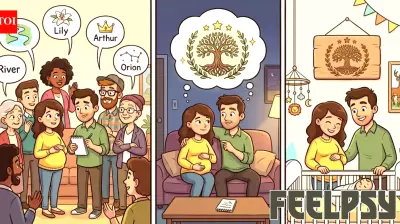
Why Parents Ask for Baby Name Ideas and Then Ignore ThemThe baby-name group chat can become a surprisingly serious place. Friends send lists, relatives push family names, and coworkers offer suggestions nobody asked for. Yet when the birth certificate...