Why We See Patterns That Don’t Exist
19 October 2026
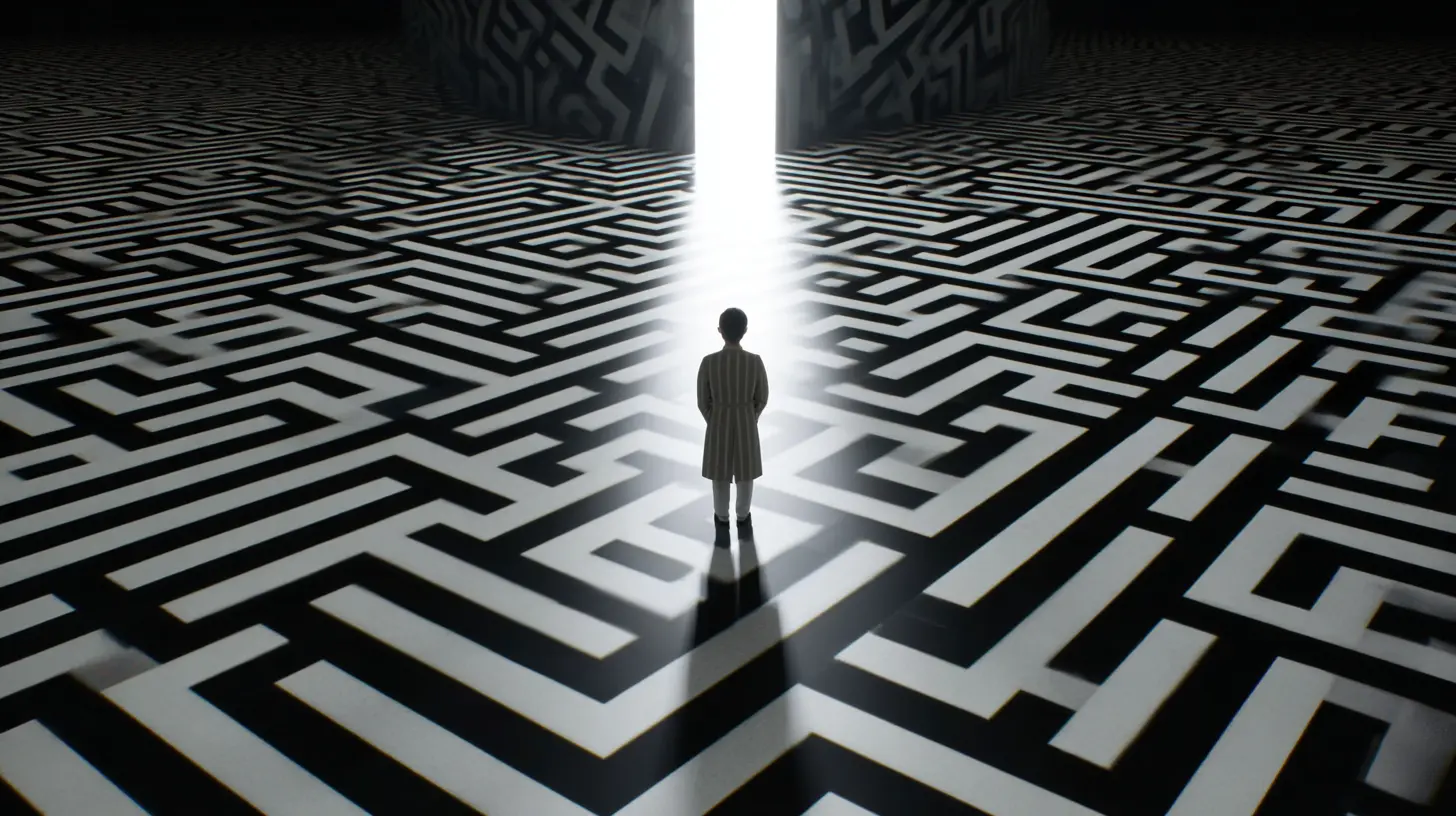
A man loses money on three consecutive lottery tickets and concludes the machine is rigged against him. A manager notices two employees from the same university underperforming and starts avoiding graduates from that school. A patient feels a mild ache in his left arm, reads about heart attacks online, and becomes convinced he is about to die. In each case, the person has connected dots that were never connected. The pattern feels real, urgent, and obvious. It is not there.
This is not a story about stupidity. It is a story about how every human brain works, including yours and mine. Pattern detection is one of the most powerful things our minds do, and it is also one of the most unreliable. Understanding why the system misfires is the first step toward catching it in the act.
The Machinery Behind the Illusion
Your brain is a prediction engine. It constantly takes in noisy, incomplete sensory data and tries to build a coherent model of what is happening. This is efficient. It is also necessary. If you had to consciously analyze every shadow, sound, and social cue from scratch, you would be paralyzed. So the brain takes shortcuts.One shortcut is called apophenia, the tendency to perceive meaningful connections between unrelated things. Another is pareidolia, the specific tendency to see faces or familiar shapes in random stimuli, like a face in a cloud or a man in the moon. Both are byproducts of a system tuned to detect signal even when the cost of a false alarm is high.
There is an evolutionary logic here. For most of human history, a rustle in the grass could be wind or it could be a predator. Missing a predator was fatal. Mistaking wind for a predator was merely embarrassing. So the brain developed a bias toward false positives. That bias is still with us, and it now operates in domains where the stakes are very different: stock markets, medical symptoms, workplace decisions, and relationships.
Why Randomness Feels Wrong
Humans are terrible at accepting randomness as an explanation. When something notable happens, we want a cause. When two notable things happen close together, we want a connection. This is sometimes called the narrative fallacy, our tendency to weave events into stories with causes, motives, and meaning.Consider a basketball player who makes five shots in a row. Commentators call it a hot hand. Fans believe in momentum. Decades of research on the hot hand effect have produced a genuinely interesting picture: there is some evidence for small streak effects in controlled settings, but the effect people perceive is far larger than what the data supports. The perception outruns the reality.
The same thing happens with coin flips. If I ask you to write down a sequence of twenty coin flips, you will almost certainly produce something that looks too balanced and too alternating. Real random sequences contain long runs of heads or tails that feel wrong to us. We see those runs as meaningful when they are exactly what randomness produces.
This matters because randomness is not the absence of pattern. Randomness produces clusters, streaks, and coincidences all the time. A cluster of three cancer cases in a small town may be heartbreaking and may also be statistically unremarkable. The pattern is real in the sense that the cases exist. The pattern is false in the sense that it implies a shared cause.
The Role of Emotion and Threat
Pattern detection is not a neutral process. It is heavily influenced by what we fear, what we want, and what we already believe.When you are anxious, your threat-detection system is running hot. A neutral email from your boss reads as hostile. A casual comment from a partner feels like criticism. A normal bodily sensation becomes evidence of illness. The pattern is not in the data. It is in the state of the observer.
This is one reason health anxiety is so persistent. The sufferer is not fabricating symptoms. They are experiencing real sensations and then assigning them a pattern that feels terrifying. Each new sensation confirms the story. Sensations that do not fit are ignored or explained away. The pattern grows stronger even as the evidence stays the same.
The same mechanism operates in relationships. A person who has been betrayed in the past may see signs of betrayal in a new partner's ordinary behavior. A late reply becomes secrecy. A changed routine becomes deception. The pattern is drawn from history, not from the present.
Confirmation Bias and the Invisible Evidence
The single most important reason false patterns survive is that we only count the hits.Suppose you believe that full moons cause chaos. You notice a busy night at the emergency room during a full moon. You remember it. You do not notice the busy nights during other phases, and you do not track the quiet full moons. Your memory becomes a highlight reel of confirmations.
This is confirmation bias in its most practical form. It is not just that we prefer evidence that supports our beliefs. It is that we often fail to collect the evidence that would test them. The disconfirming data never enters the room.
A useful mental habit is to ask what the pattern would look like if it were not real. If full moons caused chaos, we would expect busy nights to cluster around full moons and quiet nights to cluster elsewhere. If the pattern is an illusion, busy nights would be scattered randomly, and some would happen to fall on full moons. The only way to tell the difference is to count everything, not just the memorable cases.
Base Rates and the Forgotten Denominator
A related error is ignoring base rates, the underlying frequency of an event in the population.Imagine a test for a rare disease. The disease affects one in ten thousand people. The test is 99 percent accurate. You test positive. What is the chance you actually have the disease? Most people say 99 percent. The real answer is far lower, because the number of false positives among the huge healthy population swamps the number of true positives among the tiny sick population.
This is not a math trick. It is the same error that drives false pattern detection in everyday life. We see a dramatic event and forget to ask how often that event occurs anyway. A company hires a new CEO and profits rise. Did the CEO cause it, or would profits have risen anyway? Without the base rate, the question cannot be answered.
When Pattern Detection Is a Feature
It would be a mistake to treat all pattern detection as a flaw. The same machinery that produces superstition also produces science, art, and empathy.A skilled clinician notices a subtle cluster of symptoms that does not fit the textbook and orders a test that saves a life. A gifted teacher senses that a quiet student is struggling before any grades show it. A trader with years of experience reads market conditions in a way that is hard to articulate but often correct.
The difference between useful and harmful pattern detection is not the presence of intuition. It is the presence of feedback. The clinician gets test results. The teacher gets outcomes. The trader gets profit and loss. When reality pushes back, the pattern either survives or dies.
The danger comes when feedback is absent, delayed, or ambiguous. Superstitions persist because the ritual and the outcome are rarely tested cleanly. Conspiracy theories persist because any disconfirming evidence can be folded into the theory as further proof of the cover-up. False medical beliefs persist because anxiety produces symptoms that seem to confirm the belief regardless of what is actually happening.
Practical Ways to Test a Pattern
You do not need to become a statistician to protect yourself from false patterns. You need a few habits that force reality to speak.Write it down before it happens
A prediction made after the fact is nearly worthless. If you believe a pattern exists, state it in advance. "I think this employee will underperform because of their background." "I think this stock will fall after this news." "I think my partner is hiding something." Then record what actually happens. The written record is the antidote to memory's highlight reel.Count the misses
For every hit you notice, deliberately look for the misses. If you think a full moon brings chaos, check the quiet full moons. If you think a particular food triggers your headaches, track the days you eat it and feel fine. If you think a hiring pattern exists, look at the hires that broke it. The misses are where the truth lives.Ask what else could explain it
Before accepting a pattern, generate at least two alternative explanations. A run of bad luck could be chance. A colleague's coldness could be stress at home. A cluster of symptoms could be benign. This is not about doubting everything. It is about giving the boring explanation a fair hearing before the dramatic one takes over.Separate correlation from causation
Two things happening together does not mean one caused the other. Ice cream sales and drowning deaths rise together, but ice cream does not cause drowning. Warm weather drives both. Whenever you see a pattern, ask whether a third factor could be driving both variables. Often it is.Seek disconfirming evidence on purpose
This is the hardest habit and the most valuable. Instead of looking for proof that you are right, look for proof that you are wrong. Read the strongest argument against your belief. Ask someone who disagrees with you to explain why. If the pattern is real, it will survive the challenge. If it is not, you will have saved yourself from a costly mistake.
Common Mistakes and Misconceptions
Several myths about pattern detection are worth addressing directly.The first is that smart people are immune. They are not. In fact, intelligent people can be better at constructing elaborate justifications for false patterns. The skill that helps you build a case can also help you build a wrong one. Intelligence is not a shield against bias. It is sometimes a weapon in the hands of bias.
The second is that intuition is always either trustworthy or untrustworthy. Neither is true. Intuition is a compressed summary of experience. It is valuable in domains where you have had lots of practice and fast feedback. It is dangerous in domains where feedback is slow, noisy, or absent. A firefighter's intuition about a burning building is worth trusting. A novice investor's intuition about a stock is not.
The third is that seeing patterns is a sign of mental illness. It is not. Everyone does it. Clinical conditions like schizophrenia can involve patterns that are far more vivid and disruptive, but the everyday version is a normal feature of human cognition. The goal is not to eliminate pattern detection. It is to calibrate it.
The fourth is that you can train yourself to be completely objective. You cannot. Bias is not a bug you can patch out. It is a feature of how the brain works. What you can do is build systems that catch errors before they cause damage. Checklists, written predictions, second opinions, and deliberate disconfirmation are all examples of such systems.
Trade-offs and When to Be Careful
Every strategy for reducing false patterns has a cost.Being too skeptical can make you miss real signals. A doctor who dismisses every unusual symptom as anxiety will eventually miss a real illness. A manager who refuses to act on a pattern until it is statistically proven may wait too long. A partner who demands evidence for every emotional intuition may come across as cold and dismissive.
The right balance depends on the stakes and the feedback. In high-stakes, low-feedback domains like medicine and investing, err toward caution and verification. In low-stakes, high-feedback domains like cooking or sports, trust your instincts and adjust quickly. The key is to know which domain you are in.
Another trade-off is speed versus accuracy. Testing a pattern takes time. Sometimes you need to act before you have proof. In those cases, act, but act with awareness. Label your belief as a hypothesis, not a fact. Set a date to review it. Keep a record. The discipline of review is what separates a working hypothesis from a superstition.
A Final Word on Humility
The most useful posture toward your own pattern detection is humility. You are going to see patterns that are not there. So am I. The goal is not to become the person who never makes this error. The goal is to become the person who notices when they might be making it and checks.That check can be as simple as a question: what would I see if I were wrong? If you can answer that question honestly, you have already done more than most people ever do. The patterns will still appear. Some of them will be real. The ones that are not will have a harder time surviving.
all images in this post were generated using AI tools
Category:
Cognitive BiasesAuthor:
Ember Forbes