Unlocking the Power of Mindfulness in Healing by 2026
24 April 2026
Have you ever felt like your brain is a browser with 47 tabs open, and three of them are playing obnoxious ads you can’t close? Yeah, me too. That’s the modern mind—overloaded, under-rested, and screaming for a pause button. But here’s the kicker: by 2026, we aren’t just going to find that pause button; we’re going to rewire the entire operating system. Welcome to the era where mindfulness isn’t just a buzzword you toss around at brunch—it’s the scalpel for deep, cellular-level healing.
We’re standing at a crossroads. On one side, we have a world that’s faster, louder, and more fractured than ever. On the other, a quiet revolution is brewing—one that doesn’t require a prescription, a subscription, or a guru with a fancy accent. It requires you, a few minutes of intentional stillness, and the guts to sit with what hurts. By 2026, this isn’t going to be optional. It’s going to be survival.
The Science Behind the Stillness: What 2026 Will Prove
Let’s get one thing straight: mindfulness isn’t about turning your brain into a blank slate. That’s a myth. It’s about turning down the volume on the noise so you can hear the signal. And by 2026, neuroscience will have the receipts to back up what ancient traditions have whispered for millennia.Studies already show that consistent mindfulness practice shrinks the amygdala—the brain’s fear center. Think of it like deflating a balloon that’s been blown up too tight. When your amygdala is smaller, you react less to stressors. You don’t fly off the handle when someone cuts you off in traffic. You don’t spiral when your boss sends a vague email. But by 2026, we’ll see longitudinal data that proves this isn’t just a temporary fix. It’s a structural change. Your brain literally remodels itself.
And here’s where it gets juicy: neuroplasticity. Your brain is not a rock. It’s more like clay—wet, moldable, and constantly shifting. Mindfulness accelerates the formation of new neural pathways. That means if you’ve been stuck in a loop of anxiety or depression, you’re not doomed to stay there. You can carve a new groove. By 2026, we’ll have protocols—like mental physiotherapy—that use mindfulness to heal trauma, chronic pain, and even addiction with a success rate that rivals pharmaceuticals. No side effects, except maybe a little boredom at first.
Why 2026 Is the Tipping Point for Mindfulness in Medicine
We’ve been treating symptoms like they’re the disease. Pop a pill for the headache. Take a shot for the sadness. Scroll a feed for the loneliness. But by 2026, the medical establishment is going to have a collective “aha” moment. Mindfulness will move from the alternative health aisle to the front of the pharmacy.Why? Because the data is becoming undeniable. Hospitals are already integrating mindfulness-based stress reduction (MBSR) into cardiac rehab. Schools are teaching kids to breathe before they punch. The military uses it for PTSD. But 2026 will mark the year when insurance companies start covering it like they cover physical therapy. Imagine getting a prescription for “10 minutes of seated awareness, twice daily” instead of a bottle of Xanax. That’s the shift.
And it’s not just about mental health. Your immune system listens to your thoughts. When you’re stressed, cortisol floods your body, suppressing your ability to fight off infections. Mindfulness lowers cortisol. It’s like sending a memo to your immune cells saying, “Hey, we’re safe. You can do your job now.” By 2026, we’ll have wearable tech that tracks your mindfulness “dose” and correlates it with inflammation markers. You’ll see a graph that proves your calm saved you from a cold. That’s powerful.
The “Healing” Part: What We’ve Been Getting Wrong
Let’s talk about healing. For years, we’ve treated it like a destination. “I’ll be healed when I stop feeling sad.” “I’ll be healed when the pain goes away.” But that’s like saying you’ll be dry when you stop swimming in the ocean. Healing isn’t about eliminating experience; it’s about changing your relationship to it.Mindfulness teaches you to hold pain like you’d hold a crying child. You don’t yell at the kid to shut up. You don’t ignore them and hope they disappear. You sit. You breathe. You say, “I’m here. I see you. This will pass.” By 2026, we’ll have a cultural understanding that healing is a verb, not a noun. It’s an ongoing process of showing up, even when it’s messy.
Think of your mind as a river. Trauma and stress are logs that get stuck, creating blockages. You can’t just pretend the logs aren’t there. You have to wade in, grab each log, and let it float downstream. Mindfulness gives you the waders. It doesn’t remove the river—it helps you navigate the current without drowning.
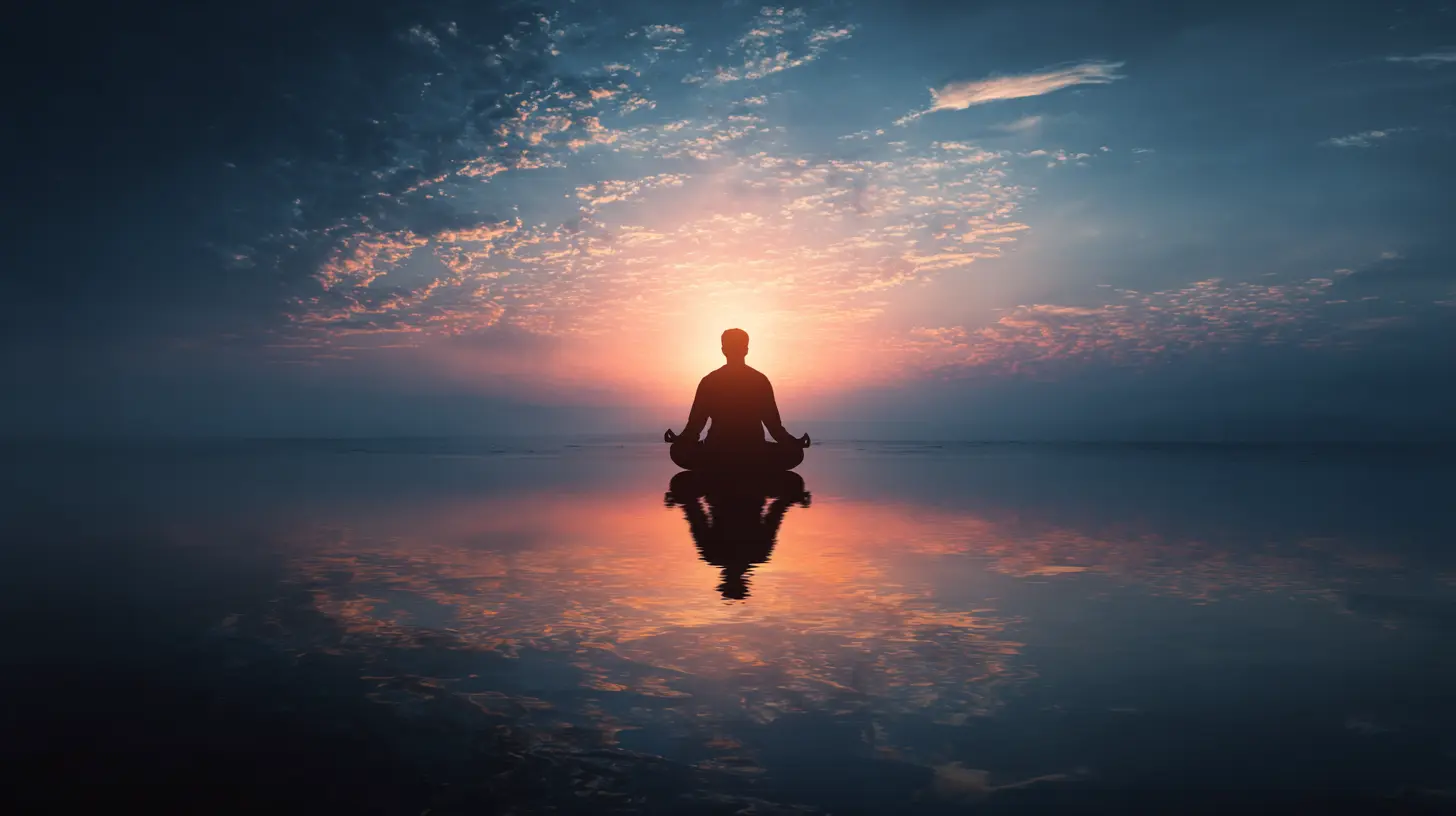
Practical Tools for the 2026 Mindful Healer
Okay, enough theory. Let’s get our hands dirty. By 2026, the toolbox for mindfulness will look radically different. Here’s what you’ll actually be using:1. Micro-Mindfulness: The 90-Second Reset
You don’t need an hour on a cushion. In fact, most people won’t do that. But 90 seconds? Anyone can find 90 seconds. The science says that a single deep breath can shift your nervous system from sympathetic (fight-or-flight) to parasympathetic (rest-and-digest) in under two minutes. By 2026, we’ll have apps that ping you with a “reset now” alert—like a gentle nudge to take three breaths before you reply to that angry text. It’s not woo-woo. It’s biology.2. Sensory Anchoring
This is a game-changer. When your mind is spinning, you can’t think your way out. You have to feel your way out. Sensory anchoring means picking one thing—the feeling of your feet on the floor, the sound of a fan, the texture of a stone—and focusing on it for 30 seconds. By 2026, we’ll have devices that vibrate gently to remind you to anchor. It’s like a seatbelt for your attention.3. The “Third Space” Practice
Most of us live in two spaces: work and home. But healing requires a third space—a mental or physical zone where you’re neither producing nor consuming. You’re just being. By 2026, expect to see “mindfulness pods” in airports, offices, and even gyms. These are soundproof, dimly lit booths with guided sessions. Think of them as phone booths for your soul. You step in, breathe, step out, and the rest of your day feels less like a fire drill.4. Compassion-Based Healing
Here’s a radical idea: what if healing isn’t about fixing yourself, but about accepting yourself? Self-compassion practices—like putting a hand on your heart and saying, “This is hard. I’m not alone.”—reduce shame faster than any pep talk. By 2026, therapists will prescribe self-compassion breaks the way they prescribe journaling. It’s not soft. It’s surgical. Shame keeps us stuck. Compassion releases the grip.The Emotional Rollercoaster: Why It’s Okay to Hate Mindfulness
Let’s be real for a second. I’ve sat on a cushion and wanted to scream. My mind was a monkey on meth. My back hurt. I was bored out of my skull. And I thought, “This is supposed to help?” Yes. That’s the paradox.Mindfulness doesn’t feel good at first. It feels like taking a messy room and turning on the lights. You see the dust bunnies. You see the dirty laundry. You see the things you’ve been avoiding. But here’s the secret: you can’t clean a room in the dark. By 2026, we’ll normalize the discomfort. We’ll stop pretending that healing is a hot bath and start acknowledging that it’s more like physical therapy—painful, awkward, and necessary.
If you’ve tried mindfulness and hated it, you’re not broken. You’re just honest. The trick is to lower the bar. Don’t aim for zen. Aim for “less reactive than yesterday.” Don’t try to empty your mind. Try to notice one breath. That’s it. One breath, every hour. By the end of the day, you’ve practiced mindfulness 16 times without even trying. That’s progress.
The Social Shift: Healing Alone vs. Healing Together
We’ve been sold a lie that healing is a solo sport. “Pull yourself up by your bootstraps.” “Just think positive.” But by 2026, we’ll recognize that mindfulness flourishes in community. Ever noticed how a group meditation feels different? It’s like the difference between singing in the shower and singing in a choir. The collective energy is tangible.Group mindfulness programs will become as common as book clubs. You’ll meet once a week, breathe together, share struggles, and leave feeling less alone. This isn’t just nice—it’s therapeutic. Loneliness is an epidemic. Mindfulness in groups counteracts it. You’re not just calming your own nervous system; you’re co-regulating with others. Your calm helps them calm. Their calm helps you. It’s a feedback loop of healing.
The 2026 Mindful Mindset: What Changes
So what will actually be different in two years? I’ll tell you what I see coming:First, the stigma will evaporate. Admitting you practice mindfulness will be as normal as saying you go to the gym. In fact, by 2026, “mental hygiene” will be a standard part of pediatric checkups. Kids will learn breathing exercises before they learn algebra. Imagine a generation that knows how to handle their emotions without a screen. That’s the promise.
Second, technology will serve, not distract. We’re already seeing VR-based mindfulness that places you in a virtual forest while you breathe. By 2026, these experiences will be hyper-personalized. Your wearable will detect your stress levels and suggest a 3-minute immersive session tailored to your current state. It’s not escapism. It’s strategic recovery.
Third, the workplace will adapt. Companies will stop measuring productivity by hours logged and start measuring it by energy management. Mindfulness breaks will be built into schedules—not as a perk, but as a requirement. Burnout costs billions. Mindfulness costs nothing. The math is simple.
A Personal Note: Why I’m Betting on Mindfulness
I’ll be honest with you. I didn’t start mindfulness because I was enlightened. I started because I was drowning. Anxiety had me by the throat. I couldn’t sleep. I couldn’t focus. I was a mess. And someone said, “Just try sitting still for five minutes.” I laughed. But I tried.The first week, nothing changed. The second week, I noticed I didn’t snap at my partner as fast. The third week, I slept through the night for the first time in months. It wasn’t magic. It was practice. Like building a muscle. By 2026, I’ll have been doing this for years, and I can tell you: the changes are cumulative. The person I am now is calmer, kinder, and more present than the person I was. Not perfect. Just… less reactive. And that’s everything.
You don’t have to believe me. Try it. Tomorrow morning, before you check your phone, take three breaths. Just three. See what happens. That’s the seed. By 2026, that seed could be a forest.
The Bottom Line: Healing Is Available Right Now
We don’t have to wait for 2026 to start. The power of mindfulness is already here, sitting in the quiet spaces between your thoughts. The future will bring better tools, more research, and wider acceptance. But the core truth remains the same: healing happens in the present moment. Not in the past you’re replaying. Not in the future you’re fearing. Right now. In this breath.So take it. Take the next breath. Let it be deeper than the last. Let it be a small act of rebellion against the chaos. That’s mindfulness. That’s healing. And by 2026, we’ll all be doing it together.
Are you ready? The door is open. All you have to do is walk through.
all images in this post were generated using AI tools
Category:
Healing TechniquesAuthor:
Ember Forbes
Discussion
rate this article
1 comments
Sienna Weber
This article on mindfulness is so uplifting! It's amazing how simple practices can really transform our mental health. Excited to see how we can keep evolving in our healing journeys by 2026.
May 4, 2026 at 3:52 AM
Ember Forbes
I'm glad you found it uplifting! Mindfulness truly has the potential to transform our journeys. Here's to ongoing growth and healing together!