Understanding Projective vs. Objective Psychological Tests
12 July 2026
Psychological tests are like the toolkits of the mind. They help psychologists dig deep into how we think, feel, and behave. But not all tests are built the same. If you've ever wondered why some tests feel more like storytelling while others are more like filling out a form, you're not alone. This is where the differences between projective and objective psychological tests come into play.
In this article, we're breaking down what projective and objective tests really are, how they're used, and why they matter—whether you’re a psychology student, a mental health professional, or someone just genuinely curious about how the human mind works.
What Are Psychological Tests Anyway?
Before we dive into the meat of projective vs. objective tests, let’s clear up what psychological tests are in general. Simply put, they’re tools psychologists use to measure aspects of a person’s mind. These could be anything from intelligence and personality to emotional wellbeing or cognitive abilities.Think of them as mental X-rays. While we can't physically "see" thoughts or feelings, we can observe patterns, behaviors, and responses that give us strong clues about what’s going on internally.
Breaking It Down: Projective vs. Objective Tests
Here’s where it gets interesting. Psychological tests fall into two broad categories: projective and objective. These two types couldn’t be more different in how they’re structured, interpreted, and used. Let’s break it down.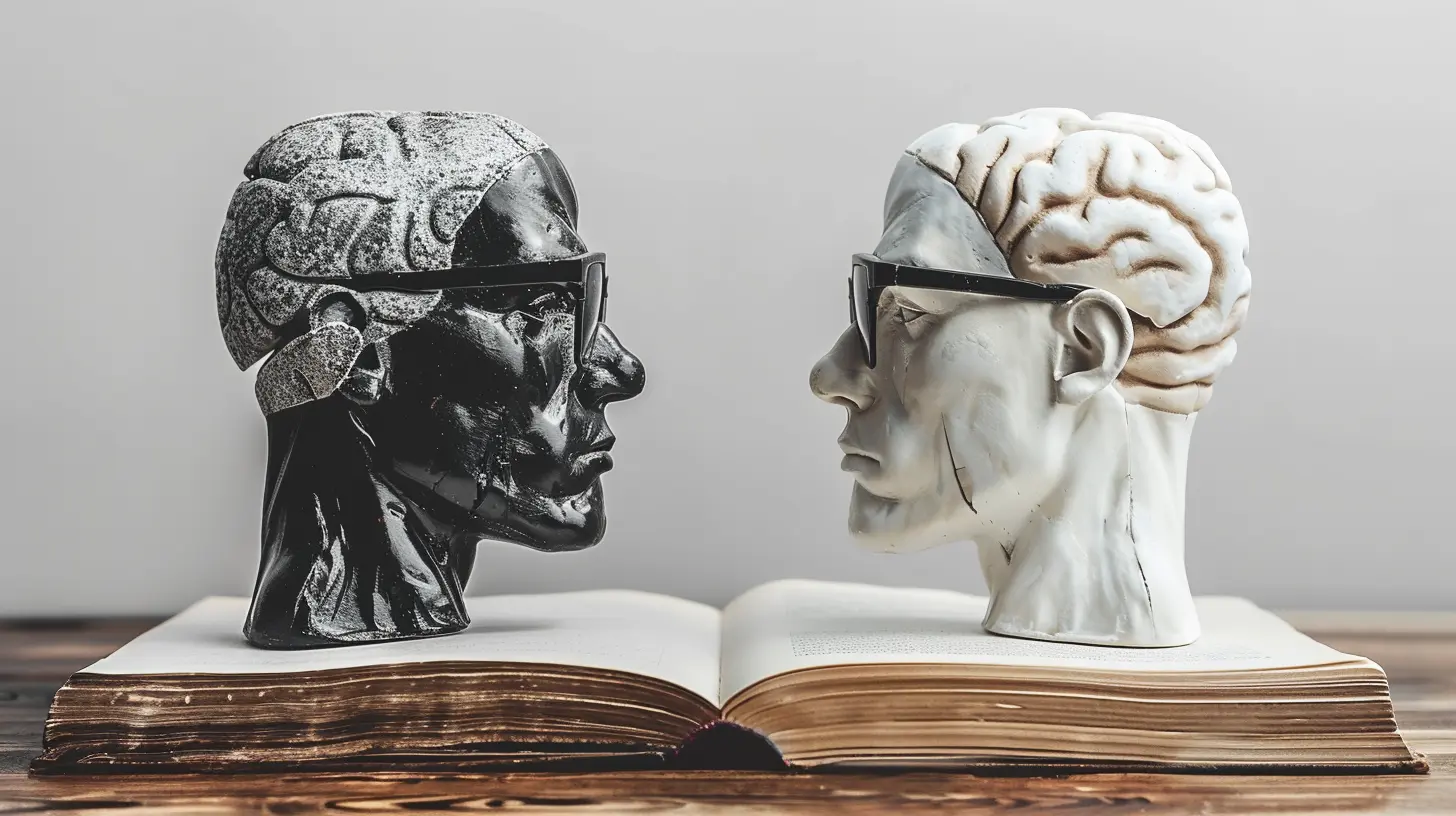
What Are Projective Psychological Tests?
Ever had someone say, “Tell me what you see in this inkblot”? That’s a projective test. These types of tests are all about open-ended responses. There's no “right” or “wrong” answer. Instead, the idea is that people project their unconscious feelings and thoughts onto ambiguous stimuli—like pictures, drawings, or random patterns.Examples of Projective Tests
- Rorschach Inkblot Test: Probably the most famous one. You look at inkblots and describe what you see. Your answers supposedly reveal what's going on in your subconscious.- Thematic Apperception Test (TAT): You’re shown a series of ambiguous images and asked to tell a story about each one. What’s happening in the picture? What led up to it? What’s going to happen next?
- Draw-A-Person Test: You’re asked to draw a person, and the drawing is analyzed for psychological insights.
How They Work
Projective tests rely on the idea that when people are presented with vague stimuli, their inner feelings, desires, and conflicts subtly come out. It’s like peeking through a keyhole into someone’s mind.But they're not easy to grade. Unlike filling in bubbles on a multiple-choice quiz, interpreting a projective test is more of an art than a science. It requires extensive training and experience because the results can be subjective.
Strengths of Projective Tests
- Great for uncovering hidden emotions and internal conflicts- Useful in therapy settings to build rapport and spark discussion
- Can bypass social desirability bias (i.e., saying what sounds "normal")
Weaknesses of Projective Tests
- Low reliability and validity (basically, results can vary and aren’t always consistent)- Highly subjective interpretations
- Time-consuming

What Are Objective Psychological Tests?
Now let’s flip the script. Objective tests are structured, straightforward, and scored using standardized methods. Think multiple-choice questionnaires, rating scales, or true/false statements.If projective tests are like abstract paintings open to interpretation, objective tests are more like a structured puzzle with clear parameters.
Examples of Objective Tests
- Minnesota Multiphasic Personality Inventory (MMPI-2): One of the most widely used tools for assessing personality and mental disorders.- Beck Depression Inventory (BDI): Measures the severity of depression symptoms.
- Big Five Personality Test (also known as the Five-Factor Model): Rates personality across five traits—openness, conscientiousness, extraversion, agreeableness, and neuroticism.
How They Work
Objective tests use fixed questions and scoring systems that are the same no matter who takes the test. Answers are typically analyzed using statistics, making the results more consistent and, well, objective.These tests are like a thermometer for your psyche—they provide measurable, comparable results across individuals or groups.
Strengths of Objective Tests
- High reliability and validity- Easy to administer and score
- Results are less influenced by the examiner’s bias
Weaknesses of Objective Tests
- Can't always tap into deeper subconscious issues- People can fake or misrepresent answers (social desirability bias)
- May oversimplify complex human emotions
Comparing Apples to Watermelons: The Key Differences
Let’s put these two heavyweights side by side to see how they differ:| Feature | Projective Tests | Objective Tests |
|------------------------|------------------------------------------------|-------------------------------------------------|
| Format | Open-ended | Structured, choice-based |
| Scoring | Subjective, interpretive | Objective, standardized |
| Time Taken | Longer | Shorter |
| Purpose | Explore unconscious, deep-rooted issues | Measure traits, disorders, or symptoms |
| Reliability & Validity | Lower | Higher |
| Examples | Rorschach, TAT, Draw-A-Person | MMPI-2, BDI, Big Five Personality Test |
When Are They Used?
You might be wondering: when would someone use a projective test over an objective one?In Clinical Settings
- Projective Tests: Often used in therapeutic settings to build a picture of someone’s emotional world, especially when verbal communication is tough.- Objective Tests: Frequently used for diagnostic purposes, like identifying depression, anxiety, or personality disorders.
In Research
Objective tests dominate here. Because they’re easier to standardize and replicate, researchers prefer them to study large populations.Which One Is Better?
Honestly, it’s not about which type of test is "better." It’s all about the goal. If a therapist wants to understand unconscious motivations or past trauma, a projective test might shine. But if a clinician needs a reliable diagnosis that can be compared across hundreds of patients, objective tests are the go-to.It’s like comparing a telescope to a microscope. Each tool is designed to see something different.
Can They Be Used Together?
Absolutely! In fact, many psychologists use both types to get a fuller picture. A projective test might open the door to deeper conversations, while an objective test solidifies the diagnosis with concrete data.Combining them is like using both your gut and your brain to make a decision.
Why Should You Care?
Even if you’re not a psychologist, understanding the difference between projective and objective psychological tests can be super helpful—especially if you’re ever taking one!Knowing what to expect can reduce anxiety, help you answer more honestly, and maybe even lead to better insights into your mental health.
Plus, it's pretty fascinating to think that what you see in an inkblot or how you rate your mood on a scale can reveal so much about you.
Wrapping It All Up
So, there you have it. Projective and objective psychological tests are two major paths to understanding the human mind. One dives into the subconscious through open-ended storytelling, while the other relies on structured questions and data-driven results. They’re different tools, but they both aim to uncover what makes us tick.Whether you’re studying psychology, working in the mental health field, or just curious about how we measure thoughts and behaviors, knowing the difference between these two types of tests is key.
Because at the end of the day, understanding ourselves a little better? That’s a test worth taking.
all images in this post were generated using AI tools
Category:
Psychological TestingAuthor:

Ember Forbes
Discussion
rate this article
1 comments
Aubrey Ramos
Projective tests reveal subconscious thoughts, while objective tests provide quantifiable data. Both offer valuable insights into human behavior.
July 14, 2026 at 4:01 PM
Ember Forbes
You make a great point. Both types of tests play unique roles in understanding the complexities of human behavior. Balancing insights from each can lead to a fuller picture.