The Future of Emotional Maturity: What to Expect by 2026
17 April 2026
Let’s be honest for a second. When you hear the term “emotional maturity,” what comes to mind? Maybe it’s a picture of a stoic grandparent, offering calm wisdom. Or perhaps it’s the idea of just “keeping it together” when life gets messy. But what if I told you that our entire understanding of what it means to be emotionally mature is on the cusp of a radical transformation? By 2026—just a couple of years from now—the landscape of our inner lives is set to evolve in ways that will reshape our relationships, our work, and our very sense of self.
This isn't about some distant, sci-fi future. This is about the tangible shifts happening right now in psychology, technology, and culture, converging to redefine maturity for a complex world. So, pull up a chair. Let’s talk about what’s coming, and more importantly, how we can prepare to meet it.

Redefining the Goalposts: From Control to Adaptive Fluency
For generations, emotional maturity was often framed as a destination. It was about achieving a state of calm control, where emotions were managed, subdued, or expressed in socially acceptable ways. Think of it as building a sturdy, impregnable dam to hold back the river of your feelings. The goal was to prevent flooding at all costs.By 2026, that model is becoming obsolete. The future belongs not to dam builders, but to navigators.
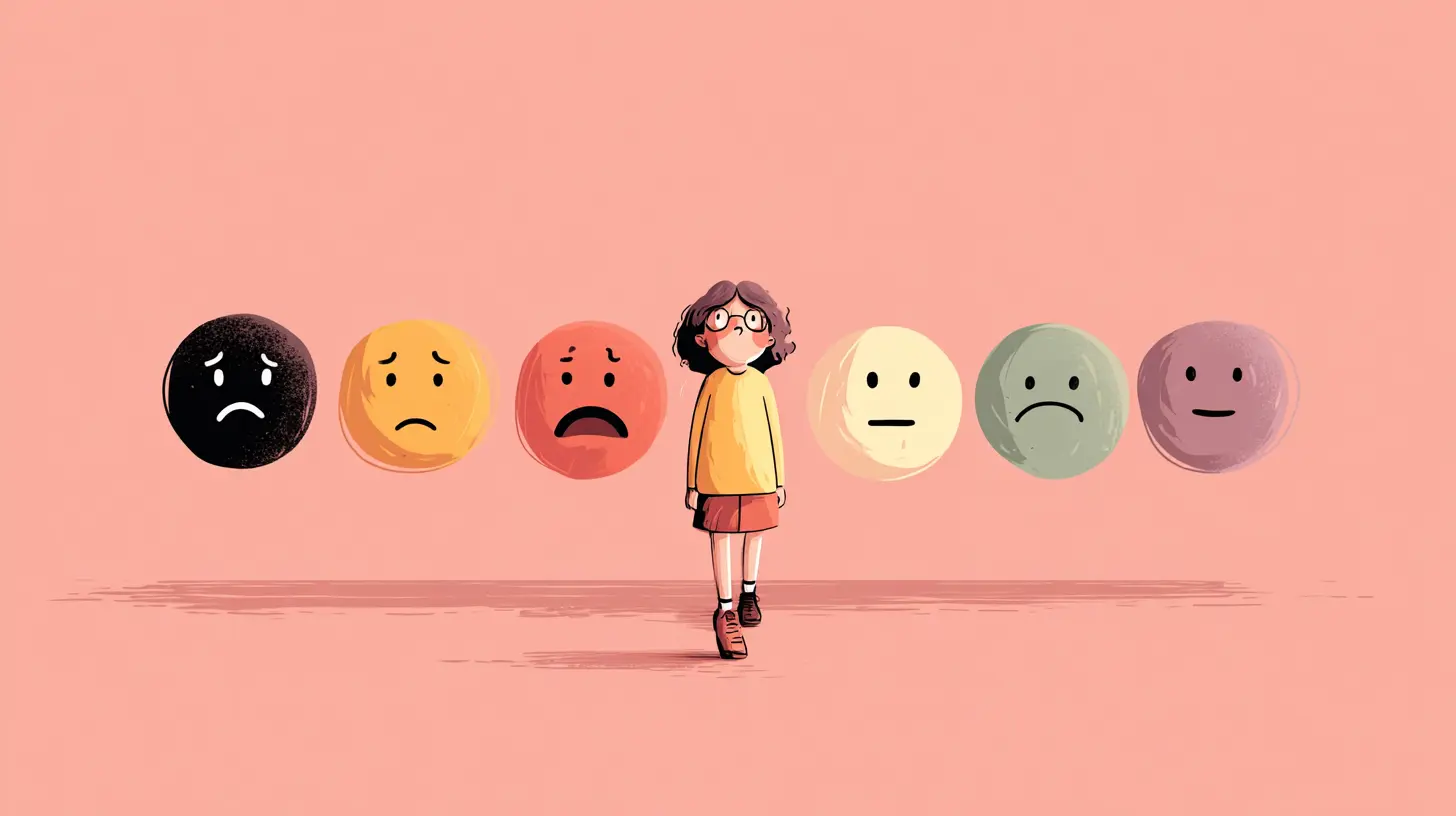
The new core of emotional maturity is adaptive emotional fluency. It’s the ability to read your own emotional currents—the rapids of anxiety, the deep pools of sadness, the sparkling streams of joy—and skillfully navigate them in real-time, adapting to the ever-changing terrain of life. It’s less about rigid control and more about dynamic understanding. It asks not “How do I stop this feeling?” but “What is this data telling me, and how can I work with it to move forward?”
Why this shift? Because the world is moving too fast for static models. The challenges we face—climate anxiety, digital saturation, global uncertainty—don’t respond well to old-school stoicism. They require a nimble, responsive internal system. Maturity will be measured by your capacity to process complex emotional information quickly, integrate it, and use it to make connected, values-driven decisions, even amidst chaos.
The Catalysts of Change: What’s Driving This Evolution?
This isn’t happening in a vacuum. Several powerful forces are acting as accelerants, pushing us toward this new paradigm by 2026.The Digital Double-Edged Sword
Our online lives are a permanent, immersive emotional training ground—for better and worse. Social media exposes us to a barrage of curated joy, performative outrage, and viral grief, often flattening nuanced emotions into simplistic reactions (like, share, rage). This can foster emotional burnout and a kind of cynical detachment.But here’s the twist: it’s also forcing a reckoning. By 2026, we’ll see a stronger pushback and a more intentional use of tech for emotional growth. Think beyond meditation apps. We’re talking about AI-powered journaling tools that identify patterns in your mood, VR exposure therapy that safely practices difficult conversations, and digital communities built not around gossip, but around specific emotional skills like setting boundaries or cultivating compassion. The digital world will become less of a trigger and more of a gym for our emotional muscles.
The Mainstreaming of Therapeutic Literacy
The stigma around mental health is crumbling. Terms like “boundaries,” “trigger,” “attachment style,” and “nervous system regulation” are moving from the therapist’s office to the dinner table. By 2026, a basic understanding of psychological concepts won’t be niche knowledge; it will be a standard part of social and emotional literacy.Imagine a workplace where a manager can say, “I think we’re all in a sympathetic nervous system state—let’s take a breath before deciding,” and everyone understands. Picture a friendship where you can discuss your respective attachment styles to navigate a conflict. This shared language doesn’t make us all therapists, but it gives us a more precise map for our inner worlds and a better toolkit for connecting with others.
The Rise of the "Emotionally Intelligent" Organization
The future of work is emotionally mature, or it will fail. Burnout, quiet quitting, and the demand for purpose have made it clear: psychological safety is a competitive advantage. By 2026, forward-thinking companies won’t just offer yoga classes; they will embed emotional maturity into their operational DNA.This means leadership training focused on vulnerability and empathetic communication. It means performance reviews that assess collaborative emotional skills alongside technical ones. It means designing workflows that respect circadian rhythms and emotional energy, not just output. Work will become a primary arena for practicing and valuing this new form of maturity.

The Hallmarks of the 2026 Emotionally Mature Person
So, what will this look like in a person? What are the specific traits we can cultivate to be ready?1. Comfort with Paradox and Ambiguity
The emotionally mature person of 2026 won’t need to resolve every tension into a neat, clean box. They will be able to hold two opposing truths at once. You can be terrified about the future and deeply committed to building a better present. You can grieve a loss and feel gratitude for what was. You can set a firm boundary and hold immense love for the person on the other side of it. This cognitive-emotional flexibility will be a superpower, allowing for resilience in the face of life’s inherent contradictions.2. Meta-Emotional Awareness: Feeling the Feeling
We all know what anger feels like. But can you feel your relationship to your anger? Are you ashamed of it? Proud of it? Intimidated by it? Meta-emotional awareness is the practice of observing your reactions to your primary emotions. It’s the difference between “I am angry” (identified with the emotion) and “I am noticing a surge of anger, and I also notice I want to suppress it” (observing the emotional process).By 2026, this skill will be fundamental. It creates a crucial pause between stimulus and reaction. It’s the control room where you can see all the monitors—the feeling, the thought about the feeling, the bodily sensation—and choose your response, rather than being hijacked by the loudest alarm.
3. Intentional Digital Emotional Hygiene
Future emotional maturity requires a conscious, curated relationship with technology. It won’t be about wholesale rejection, but about savvy integration. This means having personal protocols: no doomscrolling after 9 PM, curating feeds to include accounts that inspire growth, using messaging apps with intention rather than anxiety, and scheduling regular “digital sabbaths” to reconnect with analog emotional cues—a friend’s tone of voice, your own body’s signals, the stillness of nature.4. Radical Responsibility without Self-Blame
This is a delicate, crucial balance. The old model often slipped into blame (“My emotional reaction is my fault”). The new model is about ownership (“My emotional response is my responsibility to understand and navigate”). It’s the difference between blaming yourself for being triggered by a comment and taking responsibility for understanding why it hooked you and how you want to address it.This empowers you. It means you are not a victim of your emotions or other people’s actions, but the active author of your response. By 2026, this nuanced shift from blame to empowered responsibility will be a cornerstone of mature relationships.
5. Contextual Authenticity
The cry to “just be authentic” is well-intentioned but overly simplistic. Is the same “authentic” anger you feel with a partner appropriate for your boss? The mature individual by 2026 will master contextual authenticity—the ability to know your core, true feeling, and then wisely choose how, when, and to what degree to express it based on the context and your goals. It’s not being fake; it’s being skillful and relational. It’s the emotional equivalent of knowing you can speak, but also knowing when to listen.
Preparing for the Shift: How to Start Cultivating This Now
You don’t have to wait until 2026. The path is being laid right now, and you can start walking it.* Practice Naming the Nuance: Move beyond “good” or “bad.” Use a feelings wheel. Are you just "stressed," or are you actually "overwhelmed," "apprehensive," or "pressured"? Precision in naming is the first step to understanding.
* Introduce the Pause: Before reacting—especially in digital communication—create a mandatory buffer. Ten deep breaths. A walk around the block. A glass of water. This space is where meta-awareness grows.
Audit Your Digital Diet: For one week, track how different apps and interactions make you feel*. Then, prune mercilessly. Your attention is the soil in which your emotions grow; choose what you plant in it.
* Normalize the Conversation: Be the person who gently introduces this new language. “I’m feeling a need to set a boundary here,” or “I notice I’m getting defensive, can we pause?” You give others permission to do the same.
The Ripple Effect: A More Emotionally Mature World
Imagine the collective impact of this shift. If more individuals are practicing adaptive fluency, what happens to our communities? We could see a decline in reactive, polarized discourse, replaced by more dialogue rooted in curiosity. Relationships, both romantic and platonic, could deepen through shared vulnerability and clearer communication. Our institutions, from schools to governments, might begin to prioritize policies that support psychological well-being, not just economic output.The future of emotional maturity by 2026 is not a promise of a pain-free life. Emotions will still be messy, overwhelming, and confusing. But the tools, the language, and the cultural permission to engage with them are changing dramatically. We are moving from a paradigm of suppression and control to one of integration and skillful navigation.
The goal is no longer to build a dam, but to learn to sail—to feel the wind, respect the waves, and chart a course through them, with wisdom, resilience, and a deep connection to the vast ocean of human experience within us all. The future is fluent. And it’s time we all learned to speak its language.
all images in this post were generated using AI tools
Category:
Emotional MaturityAuthor:

Ember Forbes
Discussion
rate this article
1 comments
Kieran Myers
Emotional maturity will redefine relationships; understanding becomes our greatest strength.
April 29, 2026 at 3:22 AM
Ember Forbes
Absolutely, emotional maturity will reshape how we connect. Building understanding will be key in nurturing strong relationships.