Jungian Archetypes in Modern Film and Storytelling
29 September 2026
Carl Jung never set out to write a screenwriting manual. He was a Swiss psychiatrist mapping the structure of the human psyche, not a Hollywood script doctor. Yet his concept of archetypes has become one of the most practical tools available to anyone who tells stories for a living. The reason is simple. Jung noticed that certain characters, symbols, and narrative patterns keep surfacing across cultures that had no contact with each other. He concluded that these patterns come from something shared in the human mind, which he called the collective unconscious. Whether you accept his metaphysics or not, the practical observation holds up. Audiences respond to these patterns with unusual intensity, and storytellers who understand them gain a real advantage.
This article is not a list of twelve archetypes with movie examples pasted underneath. Plenty of those exist, and most of them are shallow. Instead, I want to explain how archetypes actually function in narrative, why they work on the level of psychology rather than decoration, where writers misuse them, and how to apply them without turning your characters into cardboard cutouts.

What an Archetype Actually Is
The word gets thrown around loosely. In casual usage, an archetype often means a stereotype or a stock character. That is the opposite of what Jung meant. A stereotype is a fixed, external pattern. An archetype, in Jung's framework, is a structural tendency of the psyche. It has no fixed content. It expresses itself differently depending on culture, era, and individual.Think of it like a riverbed. The water is different every time it rains. The shape of the channel persists. The archetype is the channel. The specific character, with their name, accent, and backstory, is the water.
This distinction matters enormously for writers. If you treat archetypes as molds, you produce cliches. If you treat them as underlying psychological functions, you produce characters that feel inevitable and fresh at the same time. Luke Skywalker and Frodo Baggins both carry the Hero archetype, yet nobody confuses them. The archetype provides the function. The character provides the texture.
Jung also distinguished archetypes from archetypal images. The image is the concrete symbol, a wise old man, a great mother, a trickster. The archetype is the psychic pattern that generates such images. When filmmakers work with archetypes well, they are working with the pattern, not just copying the image.

Why Archetypes Work on Screen
Film is a compressed medium. You have roughly two hours to make an audience care about people who do not exist. Archetypes accelerate that process because they tap into patterns the audience already carries.When a mysterious mentor figure appears, the audience leans in without being told to. When a character descends into a cave or a basement, the audience feels the weight of it. This is not because they have seen it before, though they almost certainly have. It is because these situations map onto internal psychological experiences: the search for guidance, the confrontation with what we have repressed.
There is a second reason. Archetypes give stories emotional resonance that plot alone cannot deliver. A heist film can be entertaining with pure mechanics, but the ones that linger tend to have a character confronting something internal. The vault is not just a vault. The mask is not just a mask. This double layer is what Jungian analysis calls the symbolic dimension, and it is where the best storytelling lives.
A third reason is cultural durability. Stories built on archetypal foundations travel well. They translate across languages and decades because the underlying pattern is not tied to a specific setting. This is why certain films from the 1970s still feel current while others from the same year feel like museum pieces.

The Main Archetypes and Their Narrative Functions
Jung identified many archetypes, but a working set tends to appear again and again in film and television. I will describe each by its psychological function rather than by a list of traits, because the function is what you actually need when writing.The Self
The Self is the organizing center of the psyche, the whole that the other parts are moving toward. In narrative, the Self appears as the goal of the journey, often symbolized by a treasure, a grail, a hidden truth, or a state of wholeness. It is rarely a character. It is what the story is ultimately about.When writers confuse the Self with a plot objective, the story feels mechanical. When they understand it as the integration the protagonist is reaching toward, the ending lands with weight. The final scene of a well constructed drama is often not a victory but a reconciliation, a moment where the divided parts of the character come together.
The Shadow
The Shadow is everything the conscious self refuses to acknowledge. It holds repressed impulses, unacceptable desires, and capacities the person has disowned. In film, the Shadow often appears as the antagonist, but this is a simplification. The most interesting Shadows are not pure evil. They are the parts of the hero that the hero cannot face.This is why the best villains mirror the protagonist. The Joker is not just Batman's enemy. He is the chaos Batman fears in himself. The antagonist in a strong psychological thriller is often the answer to the question the hero refuses to ask.
A common mistake is to make the Shadow purely external. A monster with no connection to the protagonist is a monster, not a Shadow. The Shadow becomes powerful when the audience senses that defeating it means the hero must also change.
The Persona
The Persona is the social mask, the version of the self presented to the world. In film, it shows up in characters who are performing a role, sometimes literally. The con artist, the spy, the politician, the celebrity. The Persona is not inherently bad. It is necessary for social life. Problems arise when the character identifies completely with the mask and loses touch with what is underneath.Stories about Persona tend to be about authenticity. The moment when the mask slips is often the emotional climax. Think of a character who has spent the whole film projecting competence and control, and then breaks down in private. That break is the narrative payoff.
The Anima and Animus
Jung used these terms for the contrasexual aspects of the psyche, the inner feminine in a man and the inner masculine in a woman. Modern writers often find the terminology dated, and it is. But the underlying idea remains useful. Every character carries an inner counterpart that they project onto others or must integrate within themselves.In film, this often appears as a love interest who functions as a projection. The protagonist falls for someone who embodies what they have not yet integrated. When the projection breaks, either the relationship deepens into something real or it collapses. Both outcomes are dramatically rich.
The Trickster
The Trickster disrupts order, exposes hypocrisy, and forces change through chaos. In film, the Trickster is often a supporting character, sometimes comic, sometimes dangerous. The Trickster is not the main antagonist. The antagonist wants to win. The Trickster wants to unsettle.The Trickster is one of the most misused archetypes. Writers often reduce it to a quirky sidekick. A real Trickster has teeth. They reveal something the protagonist would rather not see. They are agents of necessary disruption.
The Great Mother and the Wise Old Man
These two appear constantly in film. The Great Mother represents nurturing, protection, and the source of life, but also the devouring aspect that refuses to let the child grow up. The Wise Old Man represents guidance, meaning, and the transmission of wisdom, but also the risk of becoming a crutch.Both are prone to cliche. The mentor who dies so the hero can grow is one of the most exhausted patterns in cinema. It works when the mentor's death forces a genuine internal shift in the protagonist, not just a plot complication. It fails when the mentor is only there to deliver exposition and then exit.

Archetypes and the Hero's Journey
Joseph Campbell's monomyth, and Christopher Vogler's adaptation of it for screenwriters, popularized the idea that stories follow a universal structure. Jung's work underlies much of this. The Hero's Journey is essentially a map of individuation, the process by which a person integrates the unconscious and becomes whole.The problem is that the Hero's Journey has been applied so mechanically that it now produces formulaic films. The departure, the initiation, the return, the ordeal, the reward. When these beats are followed without psychological understanding, the result is a checklist, not a story.
The fix is to treat the journey as a description, not a prescription. It describes what happens when a person confronts the unconscious. It does not tell you what your specific character should do next. Use it to diagnose why a draft feels flat, not to generate the draft in the first place.
Common Misconceptions
Several misconceptions about Jungian archetypes cause real damage in the writing room.The first is that archetypes are characters. They are not. They are functions. A single character can carry multiple archetypes, and a single archetype can be distributed across several characters. The mentor function might be split between a teacher, a book, and a memory.
The second is that archetypes are universal in the sense of being identical everywhere. They are universal in structure but infinitely variable in expression. A Trickster in a Japanese folk tale and a Trickster in a Coen brothers film share a function, not a personality.
The third is that using archetypes guarantees quality. It does not. Archetypes are a lens for understanding why something works. They are not a substitute for craft, specificity, or originality.
The fourth is that Jungian analysis is scientific in the way that, say, cognitive psychology is. It is not. Jung's work is interpretive and speculative. That does not make it useless for storytellers. It makes it a framework, not a law.
How to Use Archetypes Without Producing Cliches
The central challenge is this. Archetypes are general. Characters must be specific. The tension between the two is where good writing happens.Start with the function, not the image. Ask what psychological role a character plays in the protagonist's inner journey. Only after you know the function should you decide what they look like, how they speak, and where they come from.
Give the archetype a contradiction. A mentor who is also afraid. A Trickster who genuinely cares. A Shadow who is partly right. Contradiction is what separates a character from a symbol.
Let the archetype emerge rather than announcing itself. If a character walks on screen and behaves exactly like a wise old man, the audience sees the pattern immediately and stops paying attention. If the wisdom emerges slowly, through action and consequence, the pattern lands with force.
Use the archetype to structure conflict, not to label characters. The most useful application of Jungian thinking is in designing the internal opposition a protagonist faces. What part of themselves are they refusing to see? Who or what embodies that refusal?
Test your draft by asking what each major character represents in the protagonist's inner economy. If the answer is nothing, the character may be functional but not resonant. If the answer is too neat, the character may be a symbol rather than a person.
Archetypes in Different Genres
Archetypal patterns behave differently depending on genre, and understanding this helps you calibrate.In horror, the Shadow is often externalized as a monster. The genre works when the monster also represents something the characters and audience have repressed. When the monster is only a monster, the film may still be frightening, but it will not haunt.
In comedy, the Trickster often takes center stage. Comedy thrives on disruption, and the Trickster is the archetypal disruptor. The risk is that comedy can flatten archetypes into jokes. The best comedic films let the Trickster expose something real.
In romance, the Anima and Animus, along with the projection dynamic, do most of the structural work. The question is whether the lovers will see each other as they are or only as projections. The answer determines whether the ending feels earned.
In science fiction, the Self often appears as a question about what it means to be human. The archetype is abstracted into theme. The risk is that the characters become vehicles for ideas rather than people.
In drama, all the archetypes tend to be internalized. The conflict is between parts of the same person. This is the hardest mode to write, because there is no external monster to carry the Shadow.
Practical Advice for Writers
If you want to apply Jungian thinking to your work without turning it into a gimmick, here are concrete steps.First, read Jung directly, at least in summary. Secondary sources tend to flatten his ideas. Man and His Symbols, which he edited and partly wrote, is the most accessible entry point.
Second, analyze films you admire through an archetypal lens. Not to copy them, but to see how the patterns operate. Ask what the antagonist represents in the protagonist's psyche. Ask what the mentor provides that the protagonist cannot provide for themselves.
Third, when a draft feels flat, check whether the archetypal functions are present. Often the problem is not the plot but the absence of a genuine Shadow, or a mentor who does not challenge, or a protagonist who never confronts what they have repressed.
Fourth, resist the urge to make the archetypes explicit. Characters should not announce that they are tricksters or shadows. The pattern should be felt, not stated.
Fifth, remember that archetypes are one tool among many. Character, dialogue, structure, theme, and image all matter. Archetypes are not a shortcut. They are a depth charge.
A Balanced View
It is worth saying clearly that Jungian archetypes are not the only way to understand story, and they are not always the right way. Some excellent films operate with almost no archetypal depth. A well crafted procedural can be satisfying through sheer competence and tension. A comedy can work through rhythm and surprise alone.Archetypal thinking becomes most useful when you want resonance, when you want a story to linger, when you want the audience to feel that something underneath the surface is being addressed. It is less useful when you want pure entertainment with no psychological weight.
There is also a risk of over interpretation. Not every villain is a Shadow. Not every mentor is the Wise Old Man. Sometimes a character is just a character. The skill is knowing when the archetypal lens adds insight and when it adds noise.
Conclusion
Jung's archetypes are not a formula. They are a description of how the human mind organizes experience, and therefore how it responds to story. When filmmakers and writers understand them at the level of function rather than image, they gain access to a deep layer of audience engagement. When they treat them as molds, they produce cliches.The best approach is to hold the archetypes lightly. Use them to diagnose, to deepen, to structure internal conflict. Do not use them to generate characters from scratch. Let the specific person come first. Then ask what psychological role they play, and let the archetype do its quiet work underneath.
That is where the real power lies. Not in the label, but in the layer beneath it. The audience will not name the archetype. They will simply feel that the story matters more than it should. That feeling is the payoff, and it is worth the effort to understand where it comes from.
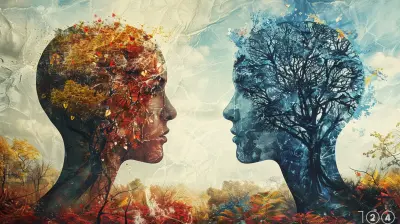
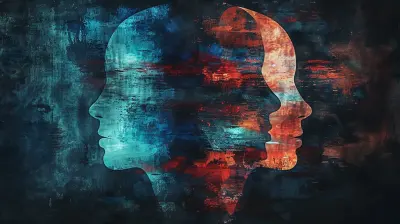
all images in this post were generated using AI tools
Category:
PsychoanalysisAuthor:

Ember Forbes