How Your Brain Tricks You Into Seeing Patterns Everywhere
12 October 2026
A face in the moon. A rabbit in a cloud. A message in a random sequence of numbers. A sign from the universe in a stranger's casual remark. You have experienced this. Everyone has. And most people walk away from the experience believing they have witnessed something meaningful, something real, something that the universe or their own sharp intuition has placed in front of them.
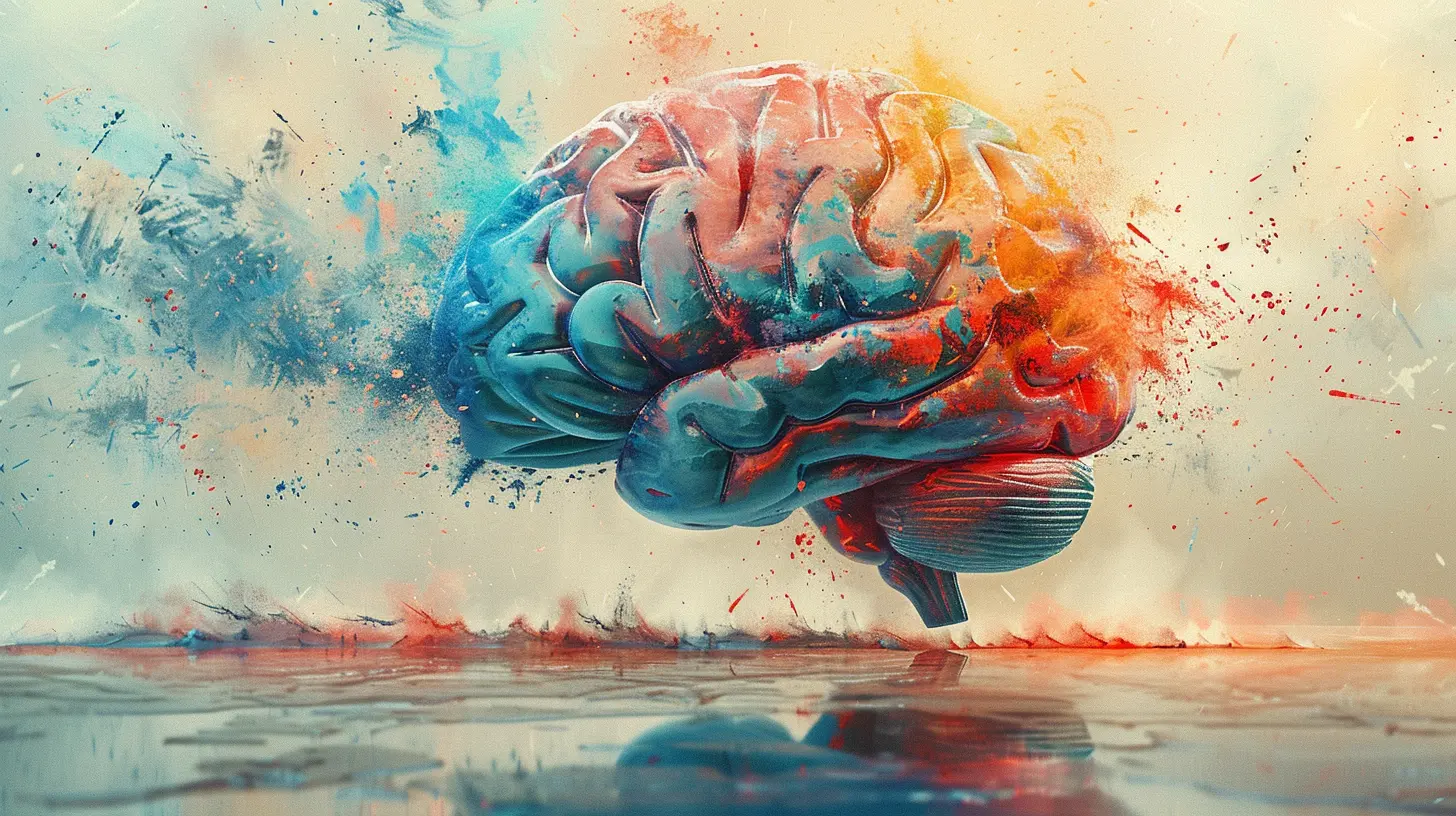
But here is the uncomfortable truth that psychology has spent decades uncovering: the pattern you saw was not out there. It was constructed inside your skull, assembled quietly and instantly by a brain that is wired to find order in chaos, even when no order exists.
This is not a flaw. It is a feature. A deeply adaptive, survival-tested feature that kept your ancestors alive and now, in the modern world, sometimes leads you astray in ways that cost you money, relationships, and peace of mind.
Understanding how this mechanism works is not just an intellectual exercise. It is a practical skill. Once you see the trick, you cannot unsee it. And that changes how you make decisions, how you interpret coincidences, and how you respond to the noisy, ambiguous world around you.

The Machinery Behind the Illusion
Your brain is not a camera. It does not record reality and play it back faithfully. It is a prediction engine, constantly guessing what is out there based on incomplete data, past experience, and a set of built-in assumptions. The technical term for this is predictive processing, and it explains why you can read a sentence with missing letters, understand a muffled voice on a bad phone line, or recognize a friend from across a crowded room.The brain receives a torrent of sensory input every second. It cannot process all of it consciously. So it compresses, filters, and fills in gaps. Pattern recognition is one of its primary compression tools. If it can group information into a recognizable shape, it saves enormous cognitive energy. A pattern is cheaper to process than a thousand disconnected details.
This is why you see animals in clouds. Your visual system is tuned to detect living things, especially threats and faces, because missing a predator was far more costly than mistaking a bush for a bear. The cost of a false positive, seeing a bear that is not there, is minor. The cost of a false negative, missing a bear that is there, is death. Over millions of years, this asymmetry shaped a brain that errs on the side of seeing patterns.
The same logic applies to sound. Hearing a footstep in the wind, a voice in a noisy room, or your name in a conversation you were not part of. Your auditory system is primed to detect signals that matter, even when the signal is weak or absent.
Why Coincidences Feel So Meaningful
Think about the last time you thought about an old friend and then they called you the next day. Or you learned a new word and suddenly saw it everywhere. Or you dreamed about a plane crash and then heard about one on the news.These moments feel profound. They feel like evidence of something beyond random chance. But they are not. They are the predictable output of a brain that notices hits and ignores misses.
Consider the math. You think about hundreds of people every week. You receive dozens of calls, messages, and notifications. The probability that one of your thoughts will match one of your incoming communications is not small. It is actually quite high. But you do not remember the thousands of times you thought about someone and they did not call. You do not remember the countless words you learned without seeing them everywhere. You remember the hits. The misses vanish from memory.
This is called confirmation bias, and it is only one part of the story. The other part is the frequency illusion, sometimes called the Baader-Meinhof phenomenon. When something becomes salient to you, your brain starts noticing it more, not because it appears more often, but because your attention filter has been recalibrated to flag it.
Together, these two mechanisms create a powerful illusion of meaning. The world seems to be sending you messages. In reality, you are sending them to yourself.

The Apophenia Spectrum
Psychologists use the term apophenia to describe the tendency to perceive meaningful connections between unrelated things. It exists on a spectrum. At one end, it is harmless and even useful. At the other end, it becomes a source of serious distress and poor decision-making.Everyday Apophenia
This is the mild, common version. Seeing a face in a power outlet. Finding a "sign" in a random song lyric. Believing that a series of small annoyances means the universe is against you today. These experiences are normal. They do not interfere with your life. They may even add a sense of richness or narrative to your day.Gambler's Fallacy and Hot Hand Thinking
This is where apophenia starts to cost you. The gambler's fallacy is the belief that a random event is more or less likely to happen based on previous outcomes. A coin lands heads five times in a row, so you bet on tails because it is "due." But the coin has no memory. The odds remain fifty-fifty. The hot hand fallacy is the opposite: believing that a player who has succeeded several times in a row is more likely to succeed again, even in games dominated by chance.Both errors come from the same source. Your brain wants to see a pattern in the sequence. It wants to believe that randomness has a rhythm. It does not.
Paranormal and Conspiracy Thinking
At the extreme end, apophenia fuels belief in conspiracies, paranormal phenomena, and elaborate hidden narratives. Every event becomes connected to every other event. Nothing is random. Everything is a clue. This can be intellectually seductive because it offers a sense of control and understanding in a chaotic world. But it is also a trap. The more you look for connections, the more you find them, regardless of whether they are real.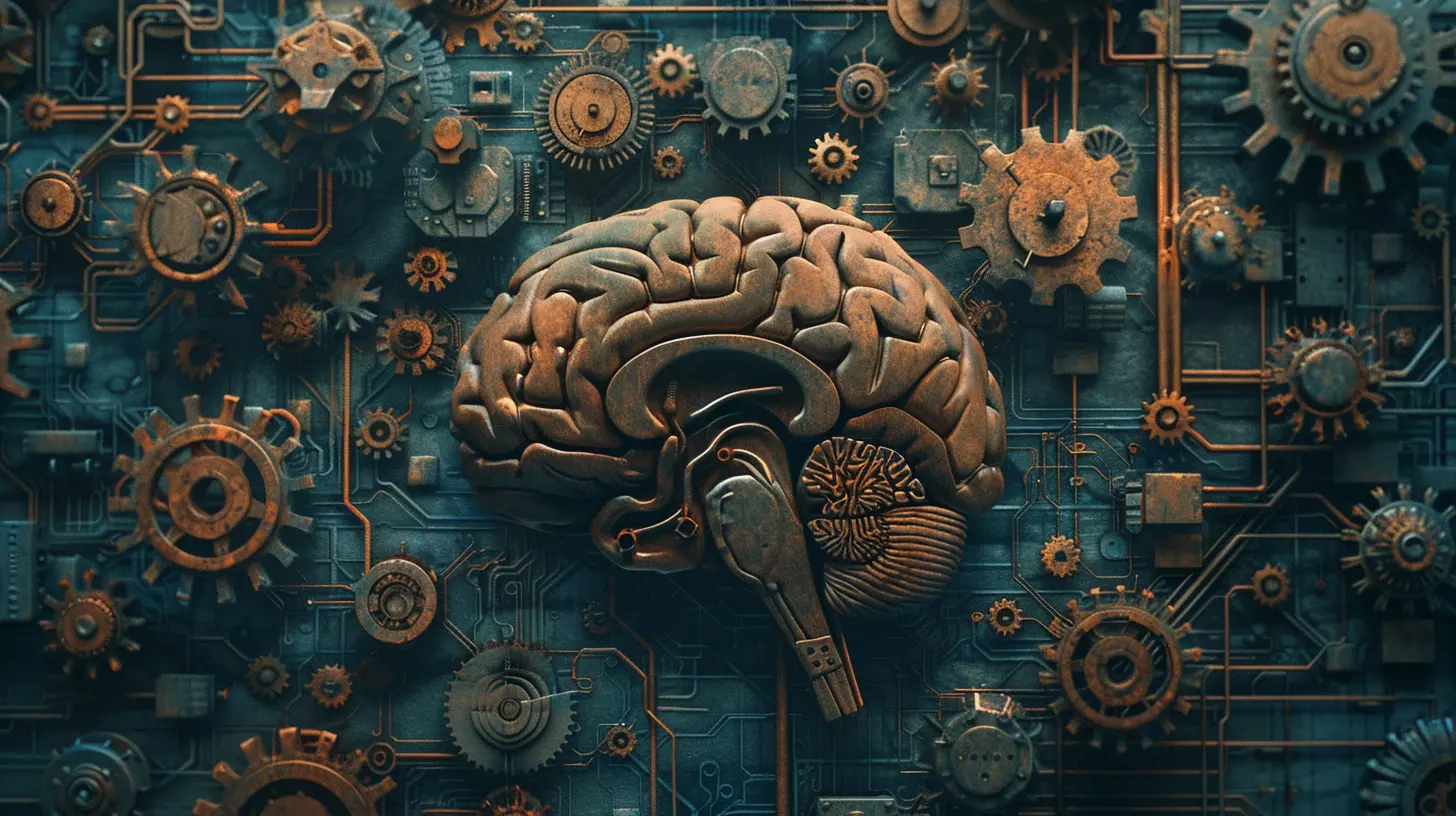
The Evolutionary Trade-Off
Why would evolution build a brain that makes these errors? Because the errors are the price of a system that is extraordinarily good at finding real patterns.Imagine two ancestral humans. One has a brain that is conservative about pattern detection. It only sees a pattern when the evidence is overwhelming. The other has a brain that is liberal, seeing patterns everywhere, even in noise. The conservative brain misses real patterns, like the seasonal migration of prey or the subtle signs of an approaching storm. The liberal brain catches those patterns but also sees false ones, like a predator in every shadow.
In a world where missing a real pattern could mean starvation or death, the liberal brain has a survival advantage. The false positives are annoying but survivable. The false negatives are fatal. So evolution selected for pattern-seeking brains, and we inherited the tendency.
This is why you cannot simply turn off your pattern detector. It is not a bug you can patch. It is a core function of your cognition. But you can learn to manage it.
When Pattern Recognition Becomes a Problem
The same mechanism that helps you read social cues, predict traffic, and solve problems can also lead you into serious errors. Here are the most common ways it goes wrong.Superstition and Ritual
You wear your lucky shirt and your team wins. You knock on wood and nothing bad happens. You perform a small ritual before a big presentation and it goes well. Your brain links the action to the outcome, even though there is no causal connection. This is operant conditioning combined with pattern recognition. The ritual feels powerful because it reduces anxiety, and the reduced anxiety may actually improve your performance. But the shirt has no magic. The ritual has no power beyond its effect on your own psychology.Financial Decision-Making
Markets are complex, noisy, and often random in the short term. But investors see patterns everywhere. They see trends that do not exist. They see reversals that are just noise. They buy because a stock has gone up, assuming it will continue, or sell because it has gone down, assuming it will keep falling. This is pattern recognition run amok, and it costs people real money.Health and Diagnosis
You notice a new mole and suddenly you see moles everywhere. You read about a disease and suddenly you have its symptoms. This is not hypochondria in the clinical sense. It is your brain, primed by new information, scanning for matches. The pattern detector has been given a new template, and it is now finding that template in everything.Relationships
You meet someone new and they remind you of an ex. You start seeing their behavior through the lens of that old relationship. You interpret their words and actions as signs of the same old pattern. Sometimes you are right. Often you are wrong. The pattern you see may be a projection, not a reality.
How to Tell a Real Pattern from a False One
This is the practical heart of the matter. How do you know when a pattern is real and when it is a trick of your brain?Ask About Base Rates
Base rates are the underlying probabilities of an event occurring. If you see a pattern, ask yourself how often that pattern would appear by chance alone. If you flip a coin ten times, you will sometimes get five heads in a row. That is not a pattern. That is expected randomness. If you meet three people named Sarah in one week, that is unusual but not impossible. The question is not "what are the odds of this specific thing happening?" The question is "what are the odds of something like this happening at some point?"Consider the Number of Opportunities
You have thousands of thoughts, experiences, and observations every day. The more opportunities you have for a coincidence, the more likely a coincidence becomes. If you roll a die a million times, you will see some remarkable sequences. That does not mean the die is loaded. It means you rolled it a lot.Look for a Mechanism
A real pattern usually has a mechanism behind it. The sun rises every morning because the Earth rotates. Your friend calls you after you think about them because you share a social circle and they had a reason to call. A false pattern has no mechanism. It is just a correlation, and correlation is not causation.Test the Pattern
If you believe you have found a pattern, test it. Make a prediction based on the pattern and see if it comes true. If it does, test it again. A real pattern will hold up under repeated testing. A false pattern will fall apart. This is the essence of the scientific method, and it is the most reliable tool we have for separating signal from noise.Beware of Emotional Investment
The more you want a pattern to be real, the more likely you are to see it. This is why gamblers keep betting, conspiracy theorists keep digging, and lovers keep ignoring red flags. Emotional investment biases your perception. If you find yourself hoping a pattern is real, that is a warning sign. Step back. Look for disconfirming evidence. Ask yourself what you would need to see to change your mind.Practical Strategies for Clearer Thinking
You cannot eliminate pattern recognition. You would not want to. But you can manage it. Here are some strategies that work.Keep a Decision Journal
Write down your predictions and the reasoning behind them. Then record what actually happens. Over time, you will see where your pattern detection was accurate and where it was not. This is humbling, but it is also one of the fastest ways to calibrate your intuition.Use the "Outside View"
When you are trying to predict an outcome, do not just look at the details of your specific situation. Look at how similar situations have played out for other people. This is called taking the outside view, and it counteracts the tendency to see your situation as unique and pattern-driven.Seek Disconfirming Evidence
For every pattern you think you see, actively look for evidence that contradicts it. This is uncomfortable. It feels like arguing against yourself. But it is the only way to avoid the trap of confirmation bias.Delay Major Decisions
When you feel a strong pattern pulling you toward a decision, wait. Sleep on it. Talk to someone who is not emotionally invested. The pattern will still be there tomorrow if it is real. If it is not, the delay will give you space to see through it.Practice Statistical Thinking
You do not need to be a statistician. But understanding basic concepts like base rates, sample size, and regression to the mean will change how you see the world. Regression to the mean is especially important. Extreme outcomes tend to be followed by more average outcomes, not because of any pattern, but because extreme outcomes are partly caused by luck, and luck does not persist.
The Beauty and the Trap
There is a reason this mechanism exists. It is the same reason you can appreciate a symphony, understand a metaphor, and feel a chill when you read a powerful sentence. Pattern recognition is the foundation of language, art, music, and science. It is what allows you to connect ideas, solve problems, and imagine the future.The trick is not to stop seeing patterns. The trick is to hold them lightly. To treat them as hypotheses, not truths. To enjoy the face in the moon without believing the moon is watching you. To notice the coincidence without assuming the universe is speaking to you. To use your pattern detector as a tool, not a master.
Your brain will keep tricking you. It will keep finding order in chaos, meaning in noise, and signals in static. That is what it does. That is what it is for. But you do not have to be its prisoner. You can learn to watch it work. You can learn to ask better questions. You can learn to tell the difference between a pattern that is real and a pattern that is merely a reflection of your own hopes, fears, and expectations.
And in that learning, you gain something valuable. Not just clearer thinking, but a deeper appreciation for the strange, beautiful, and deeply human machinery that lives inside your skull.
all images in this post were generated using AI tools
Category:
Cognitive BiasesAuthor:

Ember Forbes