How to Spot Biases in Your Everyday Thinking
10 August 2026
You probably think of yourself as a reasonable person. You weigh options, consider evidence, and make decisions based on what makes sense. But the truth is, your brain is not a neutral machine. It is a pattern-recognition engine built for speed, not accuracy. Every day, you make hundreds of judgments that are quietly shaped by mental shortcuts called cognitive biases. These biases are not character flaws. They are features of how the human mind evolved. The problem is that they often lead you astray in a modern world that demands careful thinking.
Spotting your own biases is hard because they feel like truth. When a bias is active, your reasoning seems flawless. The goal is not to eliminate bias entirely, because that is impossible. The goal is to build a habit of noticing when your thinking might be tilted, so you can slow down and correct course before acting on a flawed assumption.
Why Your Brain Takes Shortcuts in the First Place
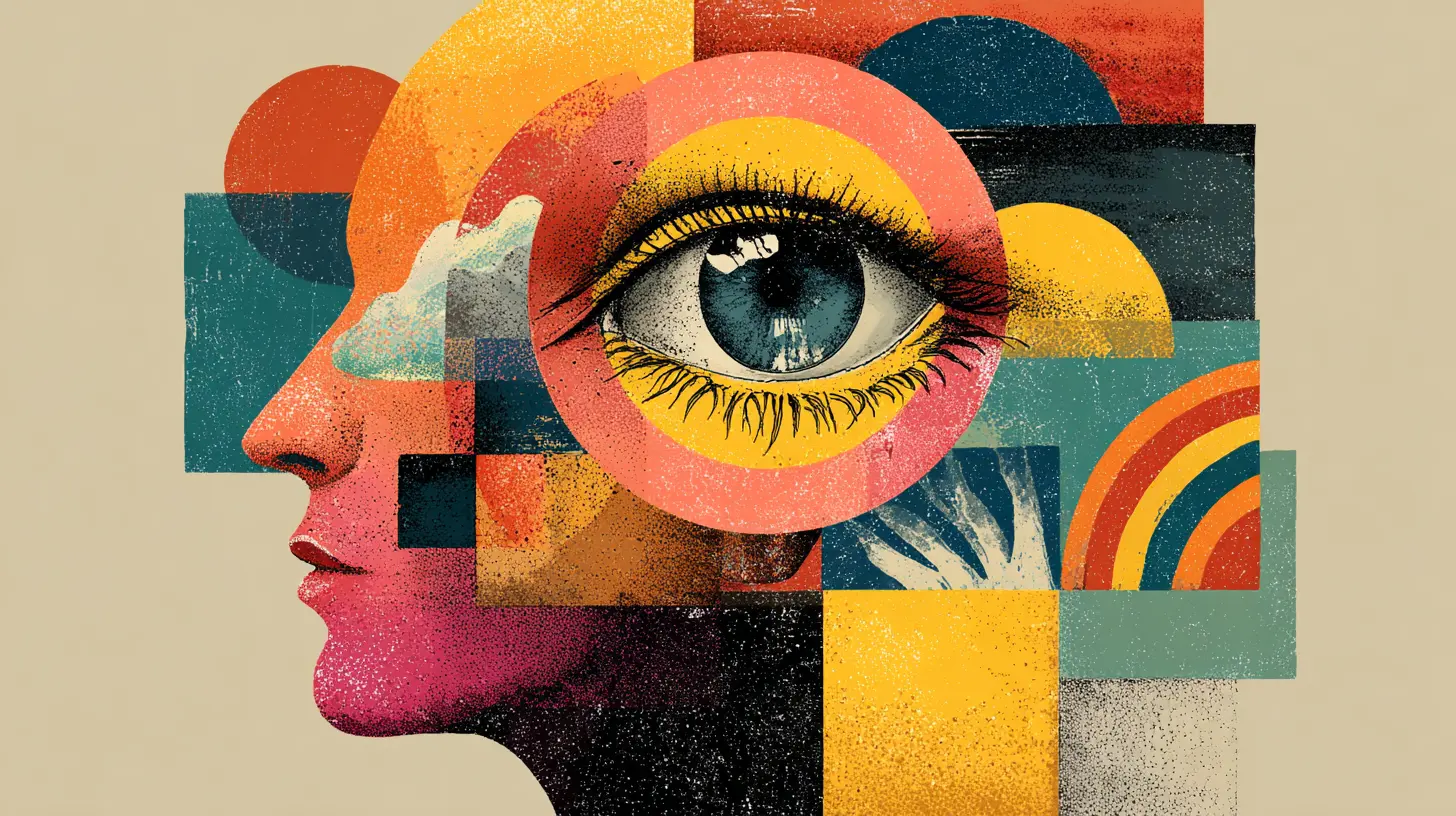
Your brain processes an enormous amount of information every second. Most of it never reaches your conscious awareness. To manage this load, your mind relies on heuristics, which are simple rules of thumb. These rules are usually helpful. They let you react quickly when a car swerves toward you or when you recognize a familiar face in a crowd. But the same rules that keep you safe in split-second situations can distort your judgment in slower, more complex decisions.Think of your brain as a camera with two modes. The first mode is automatic. It snaps a picture instantly, with default settings. The second mode is manual. It lets you adjust focus, exposure, and composition. Most of the time, you shoot in automatic mode because it is effortless. Cognitive biases are the default settings. They are not random errors. They are systematic patterns that push your thinking in predictable directions.
For example, consider how you react to a news headline that confirms what you already believe. It feels right. You accept it without scrutiny. But if the same headline challenges your worldview, you suddenly become a skeptic. You demand more evidence, question the source, and look for flaws. This is not a conscious choice. It is your brain protecting its existing mental model. Understanding this mechanism is the first step toward spotting it in action.
Confirmation Bias: The Filter That Shapes What You See
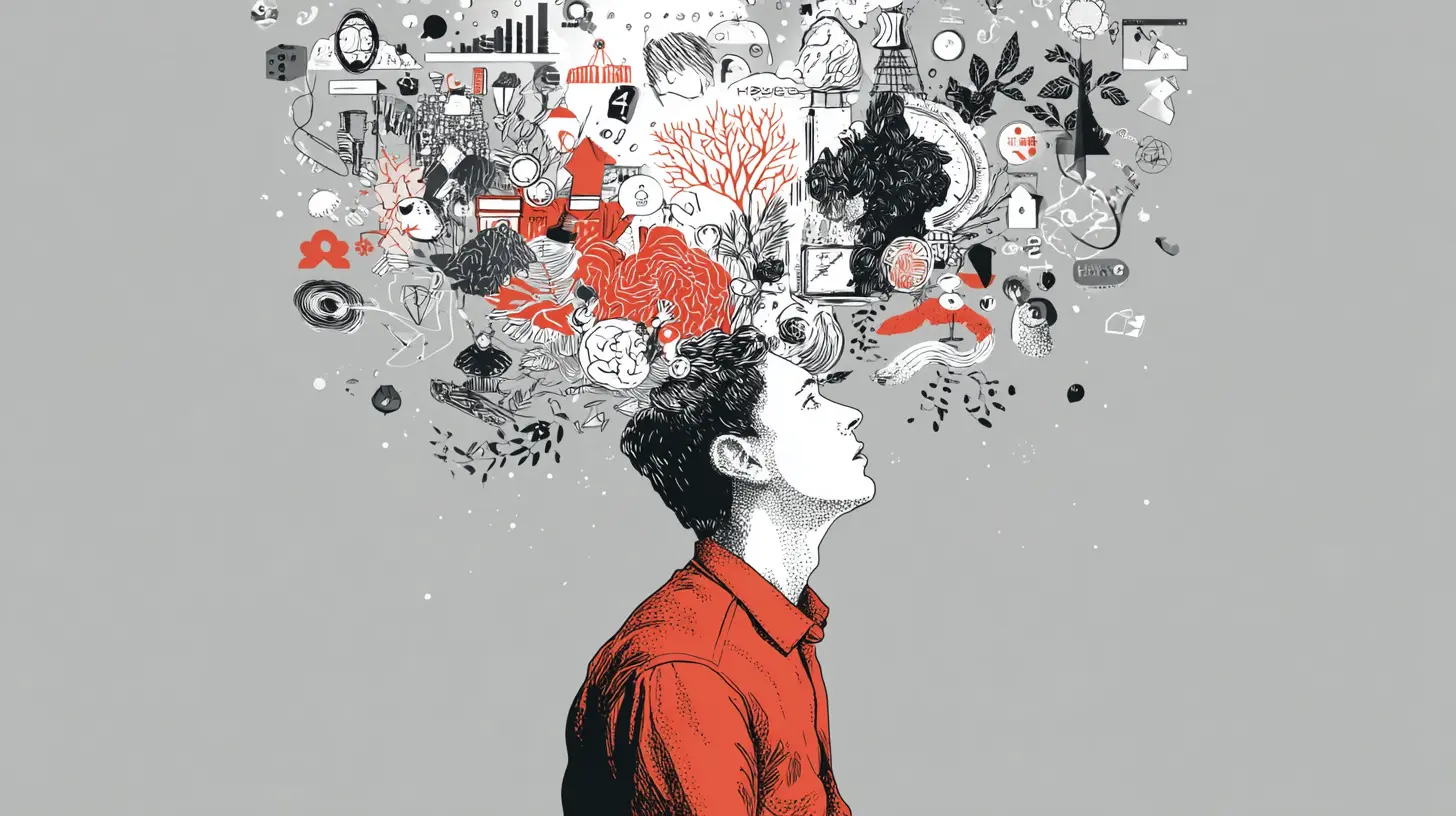
Confirmation bias is the tendency to search for, interpret, and remember information that supports what you already think. It is the most pervasive bias in everyday life. It affects your politics, your relationships, your career choices, and even your memory of past events.Imagine you are considering whether to change jobs. You have a gut feeling that your current workplace is toxic. Suddenly, you notice every small annoyance. A coworker's passive-aggressive email, a late meeting, a vague comment from your boss. Each piece of evidence reinforces your decision to leave. Meanwhile, you ignore the supportive colleague, the flexible hours, and the project that energizes you. Your brain is not lying to you. It is simply highlighting what fits the narrative you already hold.
The danger of confirmation bias is that it creates an echo chamber in your own head. You do not need to seek out like-minded people because your own attention does the filtering for you. To counter this, you need to deliberately seek out disconfirming evidence. Ask yourself: What would have to be true for my current belief to be wrong? Then go looking for that information with the same energy you would use to defend your position.
A practical technique is the "steel man" approach. Instead of trying to prove the other side wrong, try to build the strongest possible version of the opposing argument. Write it down. If you cannot articulate the best case against your belief, you probably do not understand your own position as well as you think.

Anchoring: How the First Number Hijacks Your Judgment
Anchoring occurs when you rely too heavily on the first piece of information you receive. This initial number, or anchor, sets a reference point that influences all subsequent judgments. It works even when the anchor is completely arbitrary.Consider a salary negotiation. If the employer offers $50,000, your counteroffer will likely hover around $55,000 or $60,000. But if the employer starts at $70,000, your expectations shift upward, even if the role is identical. The first number is not just a starting point. It silently rewires your sense of what is fair.
Anchoring also affects everyday purchases. A store that lists a jacket at $200, then marks it down to $120, makes you feel like you are getting a deal. But if the same jacket had always been priced at $120, you would not feel the same excitement. The original price is the anchor, and your brain compares everything to it.
To reduce anchoring effects, you need to pause before accepting any initial figure. Ask yourself: What is the actual basis for this number? Is it based on market data, cost, or just a random starting point? When negotiating, set your own anchor before the conversation begins. Do your research and decide what a fair range looks like, independent of what the other party says. Then, when they make an offer, you can evaluate it against your own reference point rather than theirs.

The Availability Heuristic: What Is Easy to Remember Feels More Likely
The availability heuristic is a mental shortcut where you judge the likelihood of an event based on how easily examples come to mind. Vivid, dramatic, or recent events feel more probable than they actually are. This is why people overestimate the risk of plane crashes, shark attacks, and terrorism, while underestimating the risk of car accidents, heart disease, and falls.Your brain uses ease of recall as a proxy for frequency. If you can easily imagine a scenario, you assume it is common. But what is easy to imagine is not the same as what is statistically likely. The media amplifies this effect by giving disproportionate coverage to rare but shocking events. Every time you see a story about a kidnapping, your brain quietly updates its risk assessment, even though the actual odds have not changed.
You can spot this bias in your own thinking by asking: How did I get this information? If your belief is based on a vivid story you heard recently, rather than on data, you are probably under its influence. To correct it, look for base rates. What is the actual frequency of this event? How many times does it happen per million people? Compare that to the number of times you have personally encountered it. The gap between your gut feeling and the numbers will often surprise you.
Another subtle form of availability bias is the "recency effect." If you just read about a stock market crash, you might feel that investing is too risky, even if the market has historically recovered. If you just heard about a friend's divorce, you might feel pessimistic about your own relationship. The solution is to broaden your information sources and to deliberately recall counterexamples. Ask yourself: When did this event not happen? When did things turn out fine?
The Sunk Cost Fallacy: Why You Keep Throwing Good Money After Bad
The sunk cost fallacy is the tendency to continue an endeavor once you have invested money, time, or effort into it, even when continuing is no longer rational. The investment is already gone. It cannot be recovered. But your brain treats it as a reason to keep going.A classic example is finishing a boring book because you are halfway through. Or staying in a failing relationship because of the years you have already put in. Or continuing to work on a doomed project because of the budget already spent. The logic feels compelling: "I have come this far, I cannot quit now." But the past investment is irrelevant to the decision of what to do next. The only question that matters is: From this point forward, what action gives me the best outcome?
The reason the sunk cost fallacy is so powerful is that quitting feels like admitting failure. Your ego is tied to the investment. Walking away means acknowledging that your earlier decision was wrong. That is painful. But the pain of a small admission now is far less than the pain of compounding losses later.
To break free, reframe the situation. Imagine you are a new person who has just been handed this project, this relationship, or this investment, with no history. Would you start it today? If the answer is no, then the rational choice is to stop. You can also set a pre-committed exit criterion. Before you start something, decide in advance what conditions would make you quit. That way, when the time comes, you are not making the decision under emotional pressure. You are simply following a rule you set when you were clear-headed.
The Dunning-Kruger Effect: Why You Do Not Know What You Do Not Know
The Dunning-Kruger effect describes a pattern where people with low ability in a domain overestimate their competence, while experts tend to underestimate theirs. The reason is simple: To recognize how much you do not know, you need a certain level of knowledge in the first place. If you lack that knowledge, you also lack the ability to see your own gaps.This bias shows up everywhere. Someone who reads one article about nutrition suddenly feels qualified to give diet advice. A person who watches a few videos about investing thinks they can beat the market. A driver who has never had an accident believes they are excellent, even though they have no way to compare their skills to others.
The irony is that the more you learn about a subject, the more you realize how vast it is. Experts are often plagued by doubt because they know the edge cases, the exceptions, and the unknowns. Novices are confident because they only see the surface.
To guard against this bias, you should actively seek feedback from people who are more skilled than you. Ask them to evaluate your work, not just to praise it. Also, look for objective measures of performance. If you think you are a great writer, submit your work to a competitive publication. If you think you are a great negotiator, track your actual outcomes over time. The goal is not to become insecure. It is to calibrate your confidence to match reality.
The Halo Effect: How One Good Trait Colors Everything Else
The halo effect is a cognitive bias where your overall impression of a person influences how you judge their specific traits. If someone is attractive, you assume they are also smart, kind, and competent. If someone speaks confidently, you assume they know what they are talking about. If someone has an impressive title, you assume their judgment is sound.This bias operates automatically and often unconsciously. In a job interview, a candidate who shares your alma mater might seem more qualified. In a meeting, a colleague with a deep voice might seem more authoritative. In a product review, a brand you love might get the benefit of the doubt, while a brand you dislike gets harsh scrutiny.
The halo effect is not just about people. It applies to companies, products, and even ideas. A company with a great reputation can release a mediocre product, and you will rationalize its flaws. A politician you admire can make a questionable decision, and you will find excuses.
To counter the halo effect, you need to separate your judgments. Evaluate each trait on its own merits. If you are assessing a candidate, score them on specific criteria: communication, technical skill, cultural fit, and so on. Do not let one strong impression carry over to all the others. When you catch yourself thinking, "They seem great, so their idea must be great," pause and ask: What is the actual evidence for this specific claim?
The Bandwagon Effect: Why You Follow the Crowd
The bandwagon effect is the tendency to adopt beliefs and behaviors because many other people have adopted them. It is the reason trends spread, stock markets bubble, and political movements gain momentum. The underlying logic is that if many people believe something, it must be true. But popularity is not evidence of correctness.In everyday life, the bandwagon effect shows up in subtle ways. You choose a restaurant because it has a long line. You buy a book because everyone is talking about it. You support a policy because your social circle supports it. The problem is that the crowd is often wrong, and it can be wrong for a long time.
The bandwagon effect is amplified by social media, where likes and shares create a visible measure of approval. When you see that a post has thousands of likes, you are more likely to agree with it, even if you have not read the content carefully. The number itself becomes a signal of validity.
To resist this bias, you need to ask: Why do I believe this? Is it because I have examined the evidence, or because it is popular? You can also practice "inversion thinking." Ask yourself: If everyone believed the opposite, would I still hold my current view? If the answer is no, then your belief is probably driven by social proof, not by reason.
The Framing Effect: How the Same Facts Can Lead to Different Choices
The framing effect shows that the way information is presented changes how you respond to it, even when the underlying facts are identical. A medical procedure with a 90 percent survival rate sounds much better than one with a 10 percent mortality rate, but they are the same statistic. A product labeled "95 percent fat-free" sounds healthier than one labeled "contains 5 percent fat," but they are identical.Framing works because your brain processes losses and gains differently. You are more sensitive to potential losses than to equivalent gains. This is called loss aversion. A discount framed as "save $10" feels less compelling than "avoid losing $10," even though the amount is the same.
In everyday decisions, framing is everywhere. A politician might describe a policy as a "tax relief" rather than a "revenue reduction." A salesperson might say "you will save money over time" instead of "you will pay more upfront." A friend might say "this is a low-risk investment" rather than "this has a 20 percent chance of losing money."
To spot framing effects, you need to translate information into neutral terms. Strip away the emotional language and ask: What are the raw numbers? What is the actual outcome? Then, consider how the same information would look if it were framed differently. If your decision changes based on the framing, then you are not responding to the facts. You are responding to the packaging.
The Self-Serving Bias: Why You Take Credit and Assign Blame
The self-serving bias is the tendency to attribute your successes to internal factors, like your skill or effort, and your failures to external factors, like bad luck or other people. This bias protects your self-esteem, but it also prevents you from learning.When you get a promotion, you think, "I earned this because I am talented and hardworking." When you get passed over, you think, "The manager is biased, or the timing was bad." This pattern feels natural, but it is a distortion. Sometimes your success is due to luck, and sometimes your failure is due to your own mistakes.
The self-serving bias is particularly damaging in relationships and teams. When a project fails, everyone blames everyone else. When it succeeds, everyone takes credit. This creates a culture of defensiveness and prevents honest feedback.
To counter this bias, you need to practice intellectual honesty. After a success, ask: What role did luck play? What did others contribute? After a failure, ask: What could I have done differently? What was my responsibility? This is uncomfortable, but it is the only way to grow. You can also ask trusted colleagues for their perspective. They may see your blind spots more clearly than you do.
Practical Strategies for Reducing Bias in Daily Life
Spotting biases is one thing. Reducing their influence is another. Here are some practical strategies that go beyond simple awareness.First, build in delay. Many biases operate fastest when you are under time pressure or emotional stress. If a decision feels urgent, force yourself to wait. Sleep on it. The extra time allows your deliberate thinking system to catch up with your automatic one.
Second, use checklists. Before making a significant decision, write down your assumptions. Then, for each assumption, ask: What evidence supports this? What evidence would contradict it? This simple act forces you to externalize your thinking, which makes it easier to see flaws.
Third, seek out disagreement. Surround yourself with people who think differently from you. Not to argue, but to test your reasoning. If everyone around you agrees with you, you are not thinking. You are just conforming.
Fourth, track your predictions. Write down what you expect to happen and why. Then, review the outcome later. This builds a feedback loop that calibrates your confidence over time. You will quickly see where you are overconfident and where you are underconfident.
Fifth, practice "premortem" thinking. Before starting a project, imagine that it has failed. Then, write a brief history of how that failure happened. This technique surfaces risks that you would otherwise ignore because you are focused on success.
Common Misconceptions About Cognitive Biases
One common misconception is that biases are always bad. They are not. Many biases are useful shortcuts that save time and energy. The key is knowing when they are appropriate and when they are not. For example, using the availability heuristic to decide whether to carry an umbrella is fine. Using it to decide whether to invest in the stock market is not.Another misconception is that you can eliminate bias through willpower. You cannot. Biases operate below conscious awareness. You cannot simply decide to stop being biased. What you can do is change your environment and your processes to reduce the impact of bias. This is why checklists, diverse teams, and structured decision-making are more effective than trying to be more rational on your own.
A third misconception is that smart people are less biased. Intelligence does not protect you. In fact, smarter people can be more susceptible to some biases because they are better at rationalizing their flawed thinking. They can construct elaborate justifications for their gut feelings. Being smart is not the same as being unbiased.
The Limits of Bias Awareness
It is important to acknowledge that even with all these strategies, you will still be biased. You cannot fully escape your own perspective. The goal is not perfection. It is improvement. You want to catch the most harmful biases in the most important decisions, not to become a purely logical machine.There is also a risk of becoming paralyzed by self-doubt. If you constantly question every thought, you will not be able to function. The solution is to apply bias-checking selectively. For low-stakes decisions, let your intuition run. For high-stakes decisions, slow down and use the tools described above.
Finally, remember that bias is not a personal failing. It is a shared human condition. When you notice bias in yourself, do not beat yourself up. Just note it, correct it if you can, and move on. The more you practice, the better you will get at recognizing the patterns. Over time, you will develop a kind of mental reflex that catches distortions before they cause real harm.
all images in this post were generated using AI tools
Category:
Cognitive BiasesAuthor:

Ember Forbes
Discussion
rate this article
1 comments
Wade Meyers
Biases are everywhere, clouding our judgment and shaping our perceptions. Acknowledging their presence is the first step to clearer thinking. Don't shy away from questioning your own beliefs. Embrace discomfort; it's a pathway to growth. Challenge yourself, and watch your perspective expand.
August 20, 2026 at 4:43 AM
Ember Forbes
You make a great point. Self-reflection is key to recognizing biases. Embracing that discomfort definitely leads to greater understanding and growth. Thanks for sharing your thoughts!