Healing Begins with Honesty, Not Forced Smiles
19 August 2026
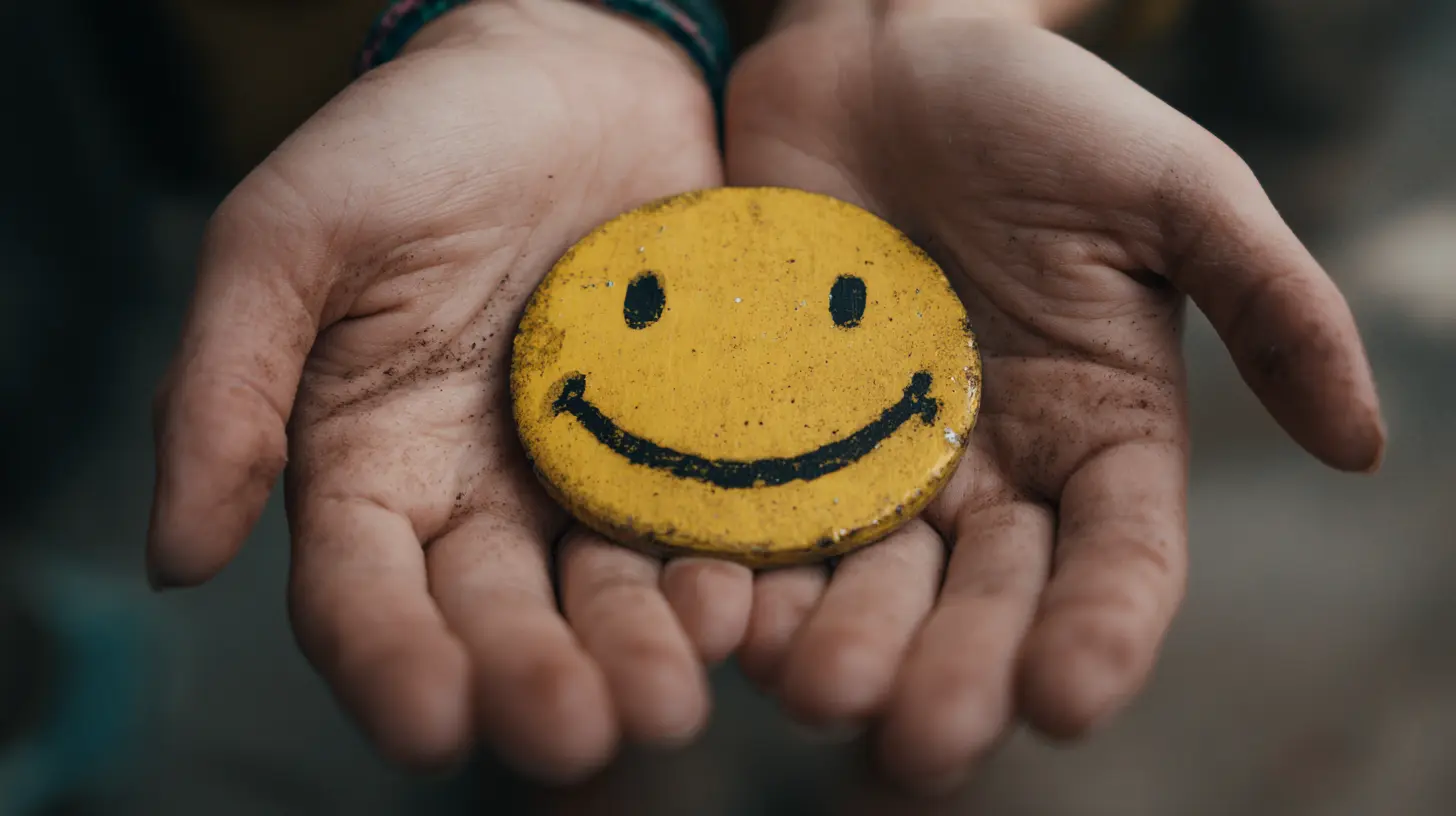
There is a moment that almost everyone recognizes. Someone asks how you are doing, and you feel the corners of your mouth lift automatically, before your brain has even registered the question. The smile arrives on time, polite and predictable, while inside you are holding together something that feels like it is about to collapse. This is not a small thing. It is a reflex that we have been taught, rewarded for, and conditioned to perform since childhood. And it is one of the most significant barriers to genuine healing.
The idea that positivity accelerates recovery is deeply embedded in modern culture. We see it in inspirational quotes, in workplace wellness programs, and in the way we talk to friends who are struggling. We tell them to look on the bright side, to count their blessings, to remember that others have it worse. We mean well. But well-meaning advice is not the same as effective support. In fact, the pressure to appear happy can actively delay the process of working through pain, trauma, and emotional distress.

The Problem with Performative Positivity
When you force a smile, you are not just hiding your feelings from others. You are also hiding them from yourself. This is the core issue. Emotional suppression is not a neutral act. It requires energy, constant vigilance, and a subtle but persistent denial of your internal reality. Over time, this takes a measurable toll on your mental and physical health.Research in psychology has long distinguished between two ways of regulating emotion: reappraisal and suppression. Reappraisal involves changing how you think about a situation to alter its emotional impact. Suppression involves hiding the outward signs of emotion while the internal experience remains unchanged. The latter is consistently associated with poorer outcomes, including higher levels of anxiety, depression, and even cardiovascular strain. When you smile when you are not happy, you are engaging in suppression. You are not changing the feeling; you are only changing what others see.
The problem is that suppression does not stay contained. It leaks. It shows up in tense shoulders, in a tight jaw, in a vague sense of exhaustion that follows social interactions. It shows up in the way you snap at a partner after a long day of pretending to be fine at work. The forced smile is not a tool for healing. It is a tool for postponing the inevitable confrontation with what you actually feel.

Why We Are Taught to Hide Pain
This behavior does not emerge from nowhere. It is learned, often very early. Children are told to stop crying, to smile for the photo, to be polite and not burden others with their problems. The message is subtle but clear: your negative emotions are inconvenient. They make others uncomfortable. They are something to be managed, minimized, and hidden.As adults, this translates into a social contract. We ask "How are you?" but we do not actually want the full answer. We want a brief, socially acceptable response that allows the conversation to move forward. When someone breaks this contract and tells the truth, we often do not know how to respond. We feel awkward. We rush to fix it, to offer platitudes, to change the subject. This reaction reinforces the idea that honesty about pain is unwelcome.
The result is a culture where people suffer in silence, not because they lack insight, but because they lack permission. They have learned that their pain is a burden to others. And so they smile. They say they are fine. They convince themselves that if they act normal long enough, they will eventually become normal. This is a myth, and a dangerous one.

The Difference Between Honesty and Catharsis
It is important to clarify what honesty means in this context. Being honest about your feelings does not mean dumping every raw emotion on everyone you meet. It does not mean crying in meetings or describing your trauma to a stranger at a bus stop. That is not honesty; that is a lack of boundaries. Honesty is about accuracy. It is about acknowledging to yourself what is real, and then choosing how and with whom to share that truth.There is a common misconception that expressing emotion is the same as processing it. It is not. Venting can feel good in the moment, but it does not necessarily lead to insight or change. In fact, some forms of rumination, where you repeatedly talk about a problem without moving toward understanding or action, can make things worse. The goal is not to express every feeling as it arises. The goal is to be truthful about the existence of those feelings, and then to work with them deliberately.
This is where the forced smile becomes particularly damaging. It prevents the first step of accurate recognition. If you are constantly telling yourself that you are fine, you lose the ability to distinguish between "I am actually fine" and "I am telling myself I am fine because I do not want to deal with the alternative." This confusion is at the root of many mental health struggles. People come to therapy saying they do not know why they are unhappy. They have been performing happiness for so long that they have lost touch with their own internal signals.
What Honest Healing Actually Looks Like
Healing is not a linear process. It does not follow a neat timeline where you feel bad, then you talk about it, then you feel better, and then you move on. It is messy. It involves setbacks. It involves feeling worse before you feel better, because you are finally allowing yourself to feel things that you have been avoiding for a long time.The first step is often the hardest: stopping the performance. This does not mean you need to announce your pain to the world. It means you stop pretending to yourself. You acknowledge that you are struggling. You name the emotion, even if only in your own mind. "I am sad." "I am angry." "I am scared." This simple act of naming is more powerful than it sounds. It moves the feeling from the vague, diffuse realm of bodily discomfort into the clearer domain of conscious thought. Once you can name something, you can begin to examine it. You can ask why it is there, what it is telling you, and what you might need to do about it.
This process is not passive. It requires active engagement. You might need to write about your feelings, not in a polished journal entry, but in a raw and unfiltered way. You might need to talk to a therapist, not to get advice, but to have a space where you can speak without performing. You might need to sit with discomfort, resisting the urge to distract yourself with work, social media, or alcohol. These are not pleasant activities. But they are the activities that lead to genuine change.
The Role of Acceptance in Recovery
A key concept here is psychological flexibility. This is the ability to stay present with your thoughts and feelings, even the difficult ones, without being controlled by them. It is not about eliminating negative emotions. It is about changing your relationship to them. You learn that a feeling is just a feeling. It is a temporary state, not a permanent identity. You can observe it, describe it, and let it pass, without needing to act on it or suppress it.This is fundamentally different from the forced smile approach. The forced smile tries to skip the feeling entirely. It says, "If I look happy, I will become happy." Acceptance says, "I am feeling this now, and that is okay. I do not have to fix it immediately. I just have to be with it." This may sound passive, but it is actually quite active. It takes courage to sit with pain without running away.
Acceptance also involves a shift in how you evaluate yourself. When you are constantly forcing positivity, you are implicitly telling yourself that your negative feelings are a failure. You are not being strong enough, grateful enough, or positive enough. This creates a cycle of shame. You feel bad, then you feel bad about feeling bad, and then you feel bad about feeling bad about feeling bad. Acceptance breaks this cycle by removing the judgment. It says that your feelings are not good or bad. They just are. And they are information.
Practical Steps to Replace Forced Smiles with Honest Coping
If you recognize yourself in this description, you might be wondering what to do differently. The answer is not to start telling everyone exactly how you feel at all times. That would be overwhelming and socially impractical. Instead, you can take gradual, deliberate steps to introduce more honesty into your emotional life.Start by checking in with yourself at set times during the day. When you wake up, before meals, before bed, ask yourself a simple question: "What am I actually feeling right now?" Do not try to change it. Do not judge it. Just notice it. You might be surprised at what comes up. Many people realize that they have been carrying tension, sadness, or anxiety that they were not consciously aware of.
Next, create a space where honesty is allowed. This could be a journal, a trusted friend, or a therapist. The key is that this space has clear boundaries. You are not looking for someone to fix you. You are looking for someone to witness you. If you are using a journal, you can write without worrying about grammar, coherence, or being interesting. Just let the words come out. If you are talking to a person, you can set the expectation in advance. Say, "I do not need advice right now. I just need to say this out loud."
Another practical step is to practice saying "I am not okay" in low-stakes situations. This does not mean sharing details. It means being honest about your state without elaborating. If someone asks how you are, you can say, "I have been better, but I am managing." This is a small act of truth-telling. It might feel uncomfortable at first, but it gets easier with practice. And it has a surprising side effect: it often invites others to be honest with you in return.
The Social Dimension of Honest Healing
Healing does not happen in a vacuum. It happens in relationships, and relationships are built on honesty. When you stop performing happiness, you give others permission to stop performing it too. This can transform your connections in profound ways. Friendships become deeper. Conflicts become more resolvable. Intimacy becomes more genuine.However, this is not always easy. Some people in your life will not welcome your honesty. They will prefer the version of you that smiles and says everything is fine. They might become uncomfortable, dismissive, or even angry when you start telling the truth. This is not a sign that you are doing something wrong. It is a sign that the relationship was built on a foundation of performance, and that foundation is now shifting. You have to decide whether those relationships are worth maintaining, and if so, whether they can adapt to a more honest version of you.
There is also a cultural dimension to consider. In some cultures, emotional restraint is highly valued. Expressing pain openly is seen as a sign of weakness or a lack of discipline. In others, emotional expression is more accepted. You have to navigate your own cultural context. Honesty does not require you to violate your cultural norms. It requires you to find ways to be truthful within those norms. This might mean being honest with a close family member rather than a wider group. It might mean expressing your feelings through art, music, or writing rather than direct conversation. The form can vary. The principle remains the same.
Common Mistakes on the Path to Honest Healing
One common mistake is confusing honesty with negativity. People who start being honest about their feelings sometimes swing too far in the other direction. They become fixated on their pain, talking about it constantly, and identifying with it as a core part of who they are. This is not healing. This is a new form of performance, where the sad story replaces the happy one. The goal is not to become a person who is always in pain. The goal is to become a person who can acknowledge pain when it is present and also acknowledge joy when it is present.Another mistake is using honesty as a weapon. "I am just being honest" is a phrase that is often used to justify cruelty. True honesty is not about hurting others. It is about being truthful about your own experience. If you are using your feelings to blame, shame, or manipulate others, you are not being honest. You are being aggressive. The distinction is important. Honesty takes responsibility for your own experience. Aggression assigns blame for it to others.
A third mistake is expecting immediate results. If you have been suppressing your emotions for years, you cannot undo that in a week. Your brain has developed habits. Your body has developed tension patterns. Your relationships have developed expectations. Changing all of this takes time. You will have setbacks. You will have days when you fall back into the forced smile because it is easier. This is normal. It does not mean you have failed. It means you are human.
The Practical Benefits of Honesty
honesty is not just morally superior to forced positivity. It is also more effective. When you are honest about your state, you can make better decisions. If you admit that you are exhausted, you can rest. If you admit that you are angry, you can address the source of that anger. If you admit that you are sad, you can seek comfort. The forced smile blocks all of these adaptive responses. It keeps you running on empty, ignoring warning signals, and making choices that are not aligned with your actual needs.Honesty also improves your relationships. People can only support you if they know what you need. If you tell them you are fine, they will treat you as if you are fine. They will not offer help, because you have told them none is needed. This is not their failure. It is yours. You have denied them the information they need to be a good friend to you. When you are honest, you give them the chance to show up for you. And in doing so, you also give yourself the chance to receive support, which is one of the most powerful healing forces we have.
When Forced Smiles Might Be Appropriate
To be fair, there are moments when a forced smile is the right choice. If you are in a professional setting, giving a presentation, or meeting someone for the first time, it is not always appropriate to share your emotional state. Social norms exist for a reason. They make interactions predictable and comfortable. There is nothing wrong with being polite, even when you do not feel like smiling.The problem is not the occasional performance. The problem is when the performance becomes your default mode, when you are always on, when you never allow yourself to drop the act. The key is to have a clear distinction between the times when you are choosing to perform and the times when you are being genuine. If you are aware that you are performing, and you have chosen to do so for a specific reason, that is a conscious decision. It is not suppression. It is strategy. The danger arises when you lose the ability to tell the difference, when the mask becomes so familiar that you forget it is a mask.
A Realistic Path Forward
The path to healing is not about being happy all the time. It is about being real. It is about allowing yourself to be a full human being, with a full range of emotions, without apologizing for the ones that are uncomfortable. This is hard work. It requires courage, patience, and a willingness to sit with discomfort. But it is the only path that leads to lasting change.Start small. Be honest with yourself about one thing today. Just one. It could be that you are tired. It could be that you are lonely. It could be that you are angry about something that happened last week. Whatever it is, acknowledge it. Do not try to fix it. Do not try to explain it away. Just let it be true. Then, if you can, share that truth with one person you trust. Not in a dramatic way. Just as a statement of fact. "I am having a hard day." "I am feeling anxious about the future." "I am not okay right now."
You might be surprised at what happens. The other person might not judge you. They might not try to fix you. They might just nod, and say, "I understand." And in that moment, you will realize that the forced smile was never protecting you. It was only isolating you. The honesty that felt so risky is actually what connects you to others. And that connection is where healing begins.
all images in this post were generated using AI tools
Category:
Toxic PositivityAuthor:

Ember Forbes
Discussion
rate this article
1 comments
Dorothy Lozano
This article captures a crucial truth: authenticity is the foundation of healing. Pretending to be fine only prolongs suffering. Embracing vulnerability and sharing our genuine feelings fosters deeper connections and real growth. It's time to prioritize honesty over facade; that's where true healing starts.
August 20, 2026 at 4:43 AM